
Rock music didn’t just appear one day. It was built by people who took the blues, country, gospel, and rhythm and blues, mashed them together, and turned up the volume. These weren’t just musicians-they were rebels. They broke rules, defied norms, and made soundtracks for a generation that refused to sit still. If you’ve ever headbanged to a guitar riff or screamed along to a raw vocal, you owe it to these pioneers.
Chuck Berry: The Storyteller with a Guitar
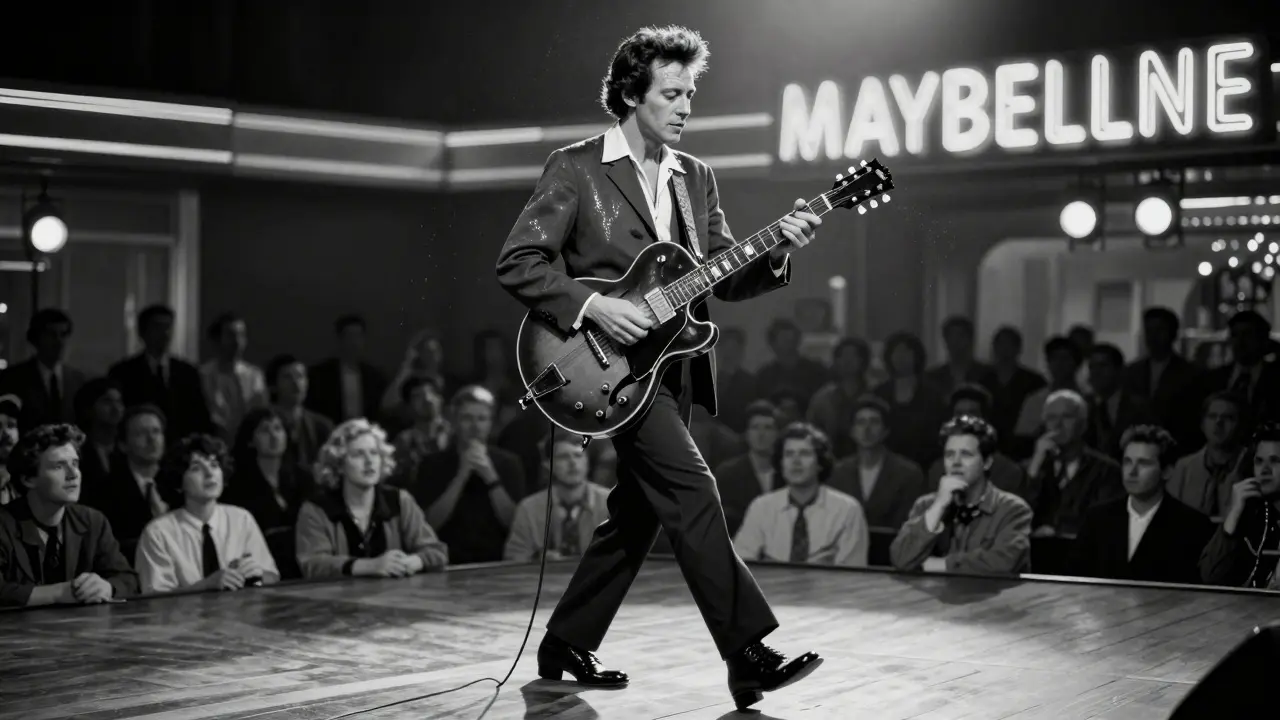
Chuck Berry didn’t just play guitar-he told stories. His songs were about cars, girls, school, and teenage life, and they hit like a lightning bolt. "Johnny B. Goode" isn’t just a classic. It’s the blueprint. The opening riff? Imitated by every rock guitarist since. His stage move-the duck walk-wasn’t just showmanship; it was a middle finger to the stiff performances of the time. Berry wrote his own lyrics, played his own guitar parts, and refused to let anyone tell him how to sound. He didn’t just influence rock-he gave it a voice. In 1955, when he released "Maybellene," he didn’t know he was starting a revolution. He just wanted to get heard.
Little Richard: The Explosion in a Sequin Suit
If Chuck Berry was the storyteller, Little Richard was the explosion. With his wild energy, pounding piano, and voice that cracked like thunder, he turned music into a party that no one could ignore. Songs like "Tutti Frutti" and "Long Tall Sally" weren’t just hits-they were cultural earthquakes. He didn’t care about being polite. He screamed, he shouted, he flung his arms wide, and he made it clear: this wasn’t background music. This was something you felt in your bones. His flamboyance scared some, thrilled others, and broke down barriers no one else dared touch. He was Black, queer, and unapologetic in a time when all three were dangerous. He didn’t just play rock-he redefined what it could look like.
Elvis Presley: The Catalyst, Not the Creator
Elvis didn’t invent rock, but he made it explode. He took the raw energy of Black rhythm and blues and brought it to white audiences who had never heard anything like it. His hips moved. His voice cracked. He sang like he meant every word. When he appeared on television in 1956, parents were horrified. Teens were hooked. Sales of records and tickets skyrocketed. He didn’t write the songs, but he had the rare gift of making them feel personal. He didn’t just perform-he embodied the spirit of rock before anyone else could. Without Elvis, rock might have stayed underground. With him, it became a global force.
Jerry Lee Lewis: The Piano That Burned
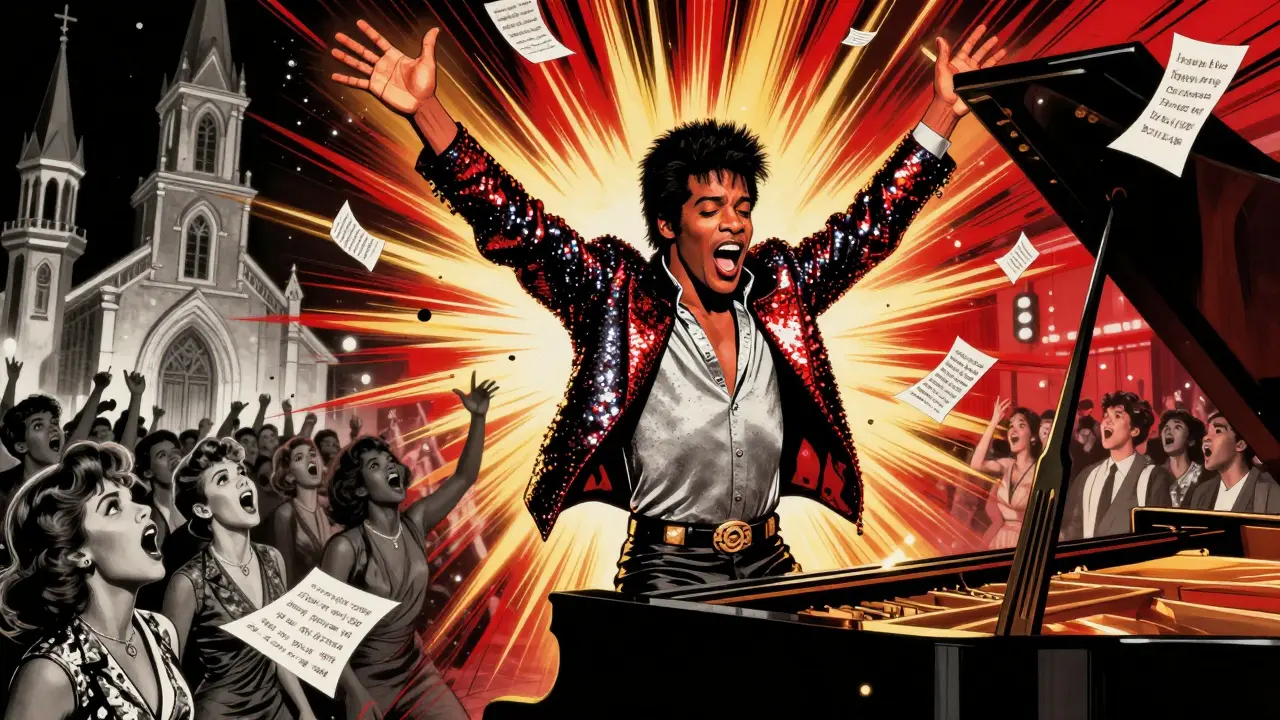
While others played piano, Jerry Lee Lewis attacked it. He kicked over the bench, stood on the keys, and played like his life depended on it. "Great Balls of Fire" and "Whole Lotta Shakin’ Goin’ On" weren’t just songs-they were sonic wildfires. His style came straight from Southern gospel and boogie-woogie, but he turned it into something wilder, faster, louder. He didn’t just play music-he performed a dare. He was the first rock star to make the piano as dangerous as the electric guitar. And when he married his 13-year-old cousin, the scandal only made him more legendary. He didn’t care about being accepted. He cared about being heard.
Bo Diddley: The Beat That Changed Everything
Bo Diddley didn’t just play guitar-he created a new rhythm. The "Bo Diddley beat"-a syncopated, driving pattern-wasn’t borrowed from blues or country. It was pulled from African rhythms, church chants, and street drumming. His self-titled 1955 hit "Bo Diddley" sounded like nothing else on the radio. It was primitive, hypnotic, and irresistible. Bands like The Rolling Stones, The Who, and even The Beatles copied that beat. He didn’t use fancy effects or studio tricks. Just a slapped rhythm, a twangy guitar, and a voice that growled like a dog in a storm. He proved rock didn’t need a three-chord structure to be powerful. It just needed a heartbeat.
Gene Vincent: The Bad Boy with a Broken Leg
Gene Vincent’s voice was cracked, gritty, and full of pain. His 1956 hit "Be-Bop-A-Lula" was the anthem of rebellious teens everywhere. He didn’t look like a star-he looked like a guy who’d just crawled out of a greasy diner after a fistfight. He wore leather, he smoked, he rode motorcycles, and he sang like he’d been kicked in the chest. His career was cut short by a near-fatal car crash in 1960, but his influence never faded. Eddie Vedder, Johnny Cash, and even The Clash named him as a major inspiration. He was the original punk before punk had a name.
The Roots Were Deeper Than You Think
None of these pioneers worked in a vacuum. They stood on the shoulders of Black musicians who were often erased from history. Sister Rosetta Tharpe, a gospel guitarist, played with such fire and technique that Elvis and Chuck Berry openly cited her as their inspiration. She was recording electric guitar solos in the 1930s-decades before rock was named. Then there was Fats Domino, whose piano-driven hits like "Ain’t That a Shame" crossed over to white charts long before Elvis. And don’t forget Ray Charles, who fused gospel with R&B to create a sound that rock would later borrow. Rock didn’t come from nowhere. It came from the Black American experience, from juke joints, churches, and sharecropper camps. The pioneers we celebrate today were standing on a foundation built by others who never got the credit.
Why They Still Matter
Today’s rock bands might use digital amps and auto-tune, but the spirit is the same. It’s still about rebellion, energy, and honesty. When you hear a guitar solo that makes your skin tingle, or a vocal that sounds like it’s about to break, you’re hearing echoes of Chuck Berry’s riffs, Little Richard’s screams, and Bo Diddley’s beat. These pioneers didn’t just make music-they made a movement. They gave voice to the restless, the angry, the lonely, and the hopeful. They didn’t ask permission. They just played. And in doing so, they changed the world.
Who is considered the first rock and roll artist?
There’s no single answer, but many historians point to Ike Turner’s 1951 track "Rocket 88" as the first true rock and roll record. The song had a driving backbeat, electric guitar, and a raw vocal style that defined the genre. However, Chuck Berry, Little Richard, and Elvis Presley were the ones who turned that sound into a movement. Turner didn’t get the fame, but his music was the spark.
Why were these pioneers so controversial?
They broke every social rule of the time. They mixed Black and white musical styles, which was forbidden in many places. Their performances were seen as sexually suggestive-Elvis’s hips, Little Richard’s flamboyance, Jerry Lee Lewis’s wild energy. Radio stations banned them. Parents feared they’d corrupt their kids. But that controversy is what made rock powerful. It wasn’t just music-it was a challenge to the status quo.
Did these pioneers write their own songs?
Some did, some didn’t. Chuck Berry and Bo Diddley wrote nearly all of their own material. Little Richard wrote most of his hits. Elvis Presley rarely wrote-he recorded songs written by others, but his delivery made them his own. Jerry Lee Lewis wrote a few, but mostly performed others’ songs. The key wasn’t who wrote them-it was who brought them to life. These artists made songs feel personal, even if they didn’t pen them.
How did rock music spread so fast?
Three things: radio, records, and television. Radio stations like WDIA in Memphis played R&B for Black audiences, but teens across the country stole those signals. Records were cheap and easy to copy. Then came TV shows like "American Bandstand," where Elvis and others performed live. Suddenly, a kid in Ohio could see someone in Tennessee shaking his hips and think, "I want to do that too." It wasn’t just music-it was a visual revolution.
Why aren’t more Black pioneers credited in rock history?
Because the music industry was built on racial exploitation. Black artists like Sister Rosetta Tharpe, Fats Domino, and Little Richard were often blocked from mainstream exposure. White artists covered their songs, got radio play, and became famous. Record labels marketed rock as "white music," even though its roots were Black. It took decades for historians to dig up the truth. Today, we’re slowly correcting that record-but the damage was done.