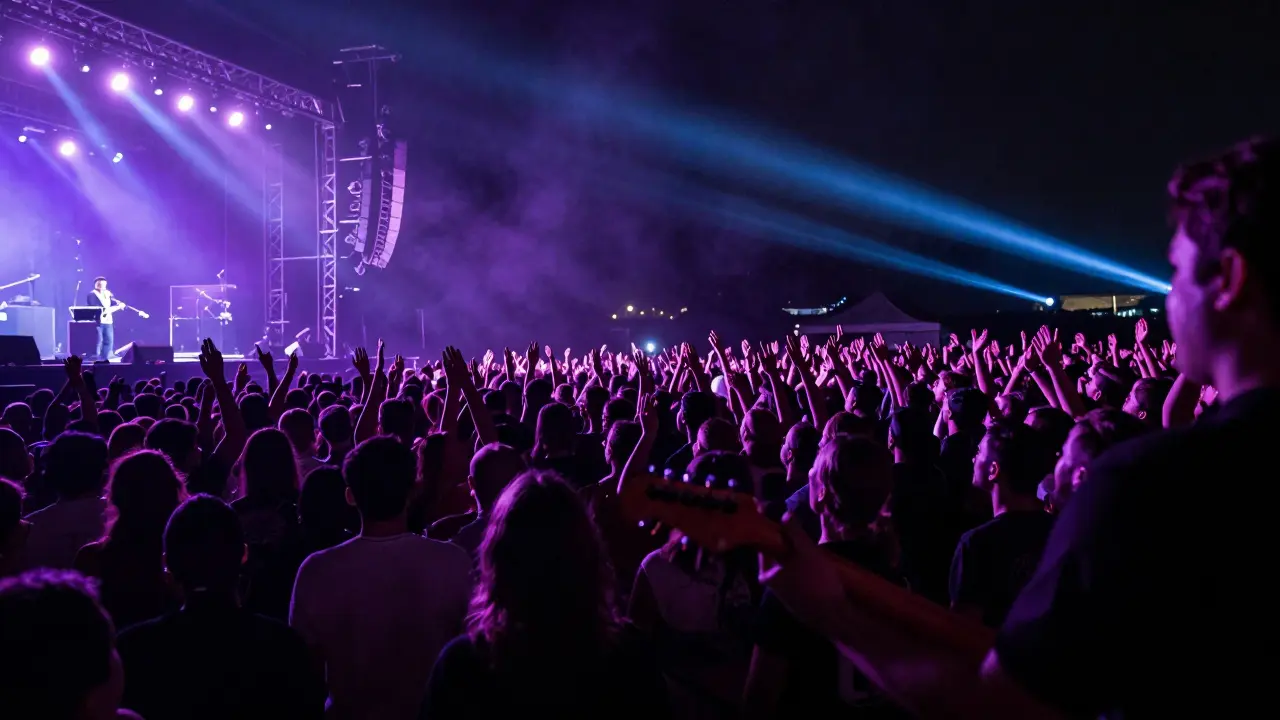
There is a specific moment in every rock music concert when the air feels heavy enough to cut with a knife. The lights dim, the crowd holds its breath, and then the first distorted chord hits. It’s not just noise; it’s a physical force. You feel it in your chest before you even hear the lyrics. This visceral reaction is why rock has survived decades of changing trends. It isn’t about polished perfection or algorithmic playlists. It is about raw energy, rebellion, and the unfiltered expression of human emotion.
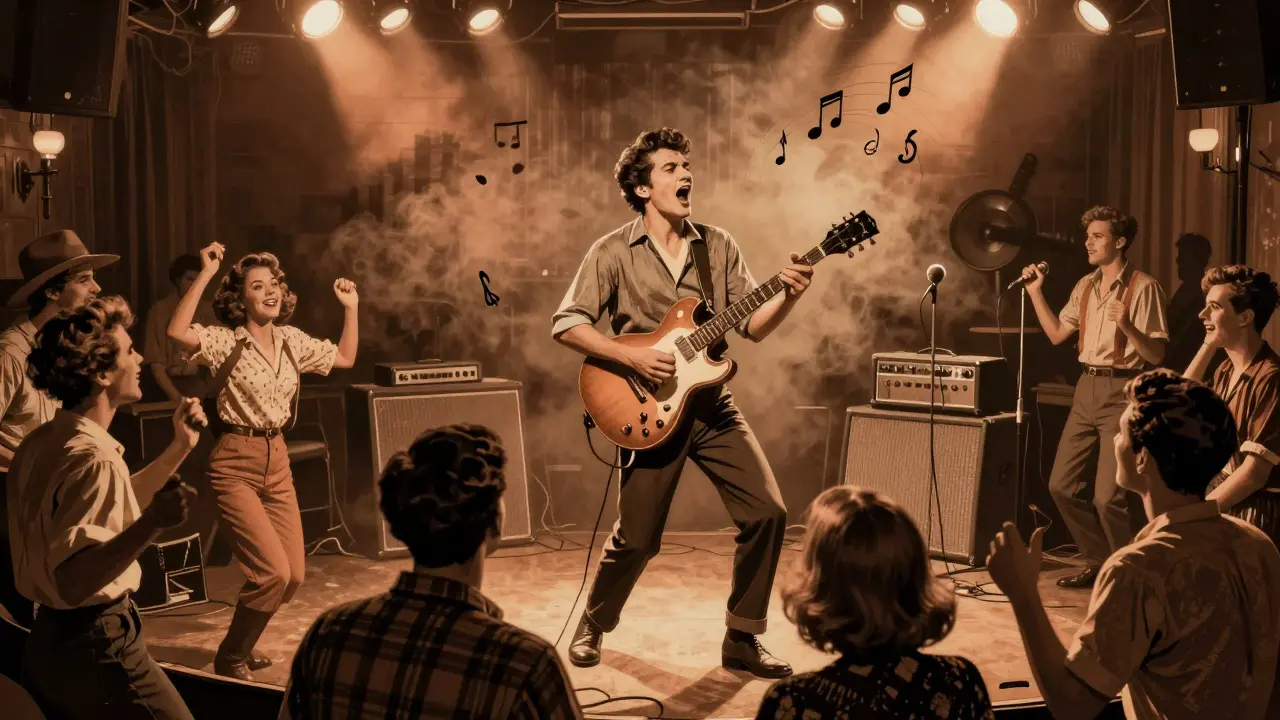
When we talk about rock, we aren't just discussing a genre defined by time signatures or instrumentation. We are talking about a cultural phenomenon that reshaped society. From the smoky clubs of 1950s America to the stadium tours of today, rock music serves as the soundtrack for defiance. It gives voice to anger, joy, heartbreak, and hope. But what makes this blend of passion and power so enduring? Let's break down the mechanics behind the magic.
The Blueprint of Rebellion
To understand rock, you have to look at where it started. It didn't emerge from a vacuum. It was born from a collision of styles. Imagine taking the rhythmic drive of blues, the storytelling tradition of country music, and injecting it with the urgency of rhythm and blues. Add some post-war anxiety and a generation ready to reject their parents' values, and you get the foundation of rock and roll.
In the mid-1950s, artists like Chuck Berry and Little Richard began playing faster, louder, and with more attitude than anyone before them. They weren't trying to write polite songs for radio play. They were capturing the feeling of being alive. This shift wasn't just musical; it was social. Rock became a tool for breaking down racial barriers in the US, bringing black and white audiences together in a way few other mediums could. The power here wasn't just in the volume-it was in the unity.
The Electric Guitar: The Voice of Anger and Joy
If rock music has a heartbeat, it’s the electric guitar. Before the invention of the solid-body electric guitar, instruments were limited by acoustic physics. You couldn't make them loud enough to fill a large hall without feedback or distortion. Then came the Fender Telecaster and the Gibson Les Paul. Suddenly, musicians could sustain notes indefinitely. They could bend strings to mimic human cries. They could create sounds that had never existed in nature.
This technological leap changed everything. A guitarist like Jimi Hendrix didn't just play chords; he used feedback, wah-wah pedals, and volume swells to paint pictures with sound. He turned the guitar into an orchestra. When you listen to a classic rock solo, you’re hearing someone pushing the boundaries of what an instrument can do. It’s technical mastery meets emotional release. That’s the "passion" part of the equation. The "power" comes from the amplification-the sheer ability to project that emotion to thousands of people at once.
The Rhythm Section: The Engine Room
You can’t have rock without a driving rhythm. While the guitar grabs the spotlight, the drums and bass guitar provide the skeleton. In many genres, the bass supports the melody. In rock, the bass often locks in with the kick drum to create a monolithic groove. Think of John Paul Jones in Led Zeppelin or Jack Casady in Jefferson Airplane. Their lines weren't just background noise; they were melodic hooks that drove the song forward.
The drum kit, particularly after the adoption of the Ludwig Super Classic kits in the late 60s, became a powerhouse. Drummers like Keith Moon and John Bonham played with a ferocity that seemed dangerous. They didn't keep time; they pushed it. This aggressive approach to rhythm creates tension. It makes you want to move. It’s the difference between walking and running. Rock demands movement. It demands energy. If the rhythm section is weak, the whole structure collapses.
From Garage Bands to Stadium Anthems
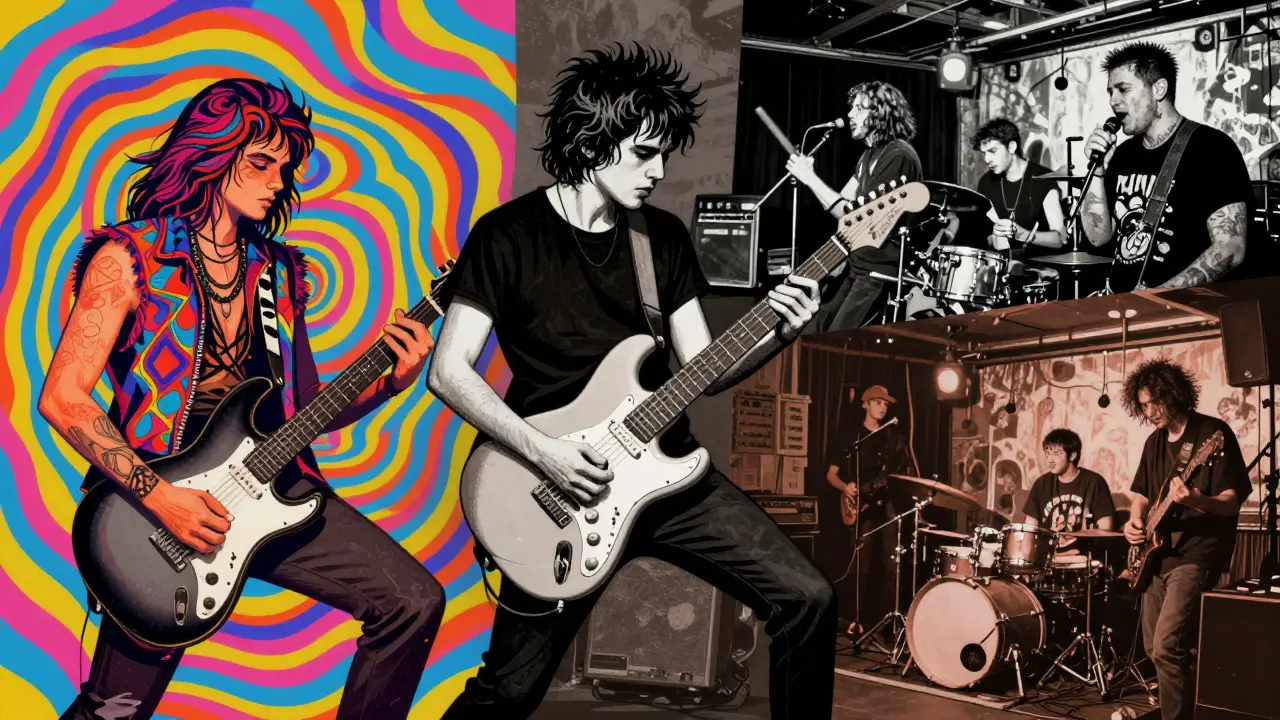
One of the most appealing aspects of rock is its accessibility. You don’t need a conservatory degree to start a rock band. You need three chords, a lot of practice, and a willingness to be loud. This democratization led to an explosion of subgenres. In the late 1960s, psychedelic rock explored altered states of consciousness through swirling melodies and complex structures. Bands like Pink Floyd and The Doors turned concerts into immersive experiences.
Then came the punk revolution of the mid-1970s. Bands like The Sex Pistols and The Ramones stripped away the technical excesses of progressive rock. They returned to the basics: fast, loud, and angry. Punk proved that rock didn't need virtuosity to be powerful. It needed authenticity. This cycle of complexity and simplicity continues today. Modern rock bands might incorporate elements of electronic music or hip-hop, but the core ethos remains the same: honesty over polish.
| Era | Subgenre | Key Characteristic | Iconic Example |
|---|---|---|---|
| 1950s | Rock and Roll | Upbeat rhythms, simple structures | Chuck Berry |
| 1960s | Psychedelic Rock | Experimental sounds, long solos | Jimi Hendrix |
| 1970s | Punk Rock | Fast tempo, anti-establishment lyrics | The Ramones |
| 1980s | Heavy Metal | Distorted guitars, powerful vocals | Metallica |
| 1990s | Grunge | Raw production, introspective lyrics | Nirvana |
The Live Experience: Where Magic Happens
Recording technology has advanced immensely since the days of analog tape. We can now produce crystal-clear audio in our bedrooms. Yet, rock music still thrives on the live experience. Why? Because perfection is boring. There is something magnetic about watching a band sweat through a setlist, improvising on solos, and feeding off the crowd's energy. A mistake in a studio recording is edited out. A mistake in a live show becomes part of the story.
Consider the legendary performances at Woodstock in 1969 or Live Aid in 1985. These weren't just concerts; they were communal events. People gathered not just to listen, but to belong. The shared experience of hearing a massive wall of sound creates a psychological bond among strangers. This is the "power" of rock in its purest form. It connects us. It reminds us that we are not alone in our struggles or our joys.
Why Rock Still Matters in 2026
In an era dominated by streaming algorithms and short-form video content, rock music might seem old-fashioned. Some argue that the genre is dying. I disagree. Rock is evolving. Look at the resurgence of garage rock in indie scenes or the influence of rock riffs in modern pop-punk. Artists like Olivia Rodrigo and Billie Eilish have brought rock aesthetics back to mainstream audiences, proving that the appetite for real instruments and raw emotion is still there.
The core values of rock-authenticity, rebellion, and connection-are timeless. As long as there are people who feel misunderstood, who want to scream their frustrations, or who need a boost of energy to get through the day, rock will exist. It adapts. It absorbs new influences. But it never loses its soul. The perfect blend of passion and power isn't just a marketing slogan; it's the reason we keep turning up the volume.
What defines rock music compared to other genres?
Rock music is primarily defined by its use of electric guitars, a strong backbeat rhythm, and a focus on amplified sound. Unlike jazz, which emphasizes improvisation within complex harmonies, or classical music, which relies on orchestral arrangements, rock centers on the band dynamic and often features a verse-chorus structure designed for high-energy performance.
Is rock music still popular in 2026?
Yes, rock music remains popular, though its dominance has shifted. While pop and hip-hop lead streaming charts, rock maintains a strong following through live touring and festival circuits. Additionally, elements of rock are increasingly influencing younger artists in pop-punk and alternative scenes, keeping the genre relevant to new generations.
What role does the electric guitar play in rock?
The electric guitar is the cornerstone of rock music. It provides the main melodic hooks, rhythmic drive, and textural depth. Through effects like distortion and reverb, the guitar can emulate emotions ranging from aggression to melancholy, serving as the primary vehicle for musical expression in the genre.
How did rock music influence social change?
Rock music played a significant role in the civil rights movement and counterculture of the 1960s and 70s. By integrating black and white musicians and audiences, it challenged segregation. Its lyrics often addressed political issues, war, and personal freedom, giving voice to dissent and encouraging individualism against societal norms.
What are the key differences between punk rock and heavy metal?
Punk rock emphasizes speed, simplicity, and anti-establishment lyrics, often using minimal instrumentation and raw production. Heavy metal, conversely, focuses on technical proficiency, complex guitar solos, heavier distortion, and themes often related to fantasy, mythology, or darker subject matter. Both share roots in rock but diverge in musical complexity and lyrical focus.