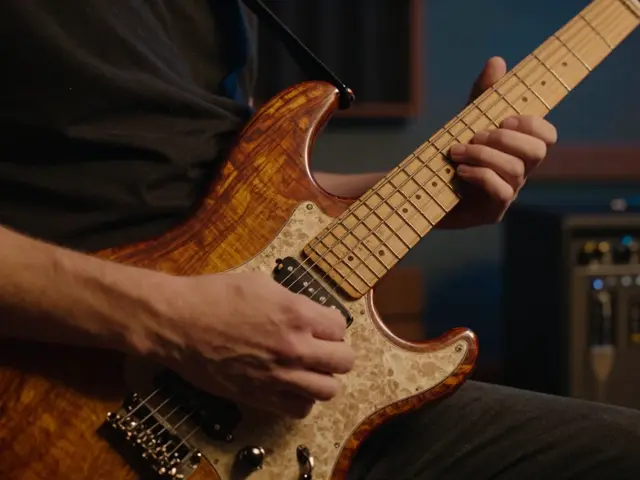

Imagine trying to play a solo in a packed stadium with an acoustic instrument. You’d be shouting over the drums and bass before anyone heard your first note. That was the reality for musicians until the electric guitar changed everything. It didn’t just get louder; it fundamentally rewired how we create, consume, and feel music. From the smoky blues clubs of Chicago to the massive rock festivals of today, this instrument is the heartbeat of modern sound.
We often take the electric guitar for granted now. But its arrival wasn't just a technological upgrade-it was a cultural earthquake. It gave birth to entire genres, created new icons, and turned playing music into a visual spectacle. If you want to understand why pop, rock, and jazz sound the way they do in 2026, you have to look at the wires, magnets, and wood that made it possible.
The Problem with Acoustic Limits
In the 1930s, big bands were dominating the airwaves. Bands like those led by Duke Ellington or Benny Goodman had dozens of players. The acoustic guitar, no matter how skilled the player, was simply too quiet. It got swallowed up by trumpets, saxophones, and drums. Musicians needed a solution, but early attempts were clumsy. Some tried attaching horn-like cones to guitars (resonator guitars), which helped slightly but still lacked true power.
The real breakthrough came from a different angle: electricity. Instead of making the body bigger to project sound, engineers figured out how to capture string vibrations electronically. This concept, known as electromagnetic induction, allowed the guitar’s signal to be sent through a cable to an amplifier. Suddenly, volume wasn't limited by the size of the wooden box. It was limited only by the power of the amp.
Leo Fender and the Birth of Mass Production
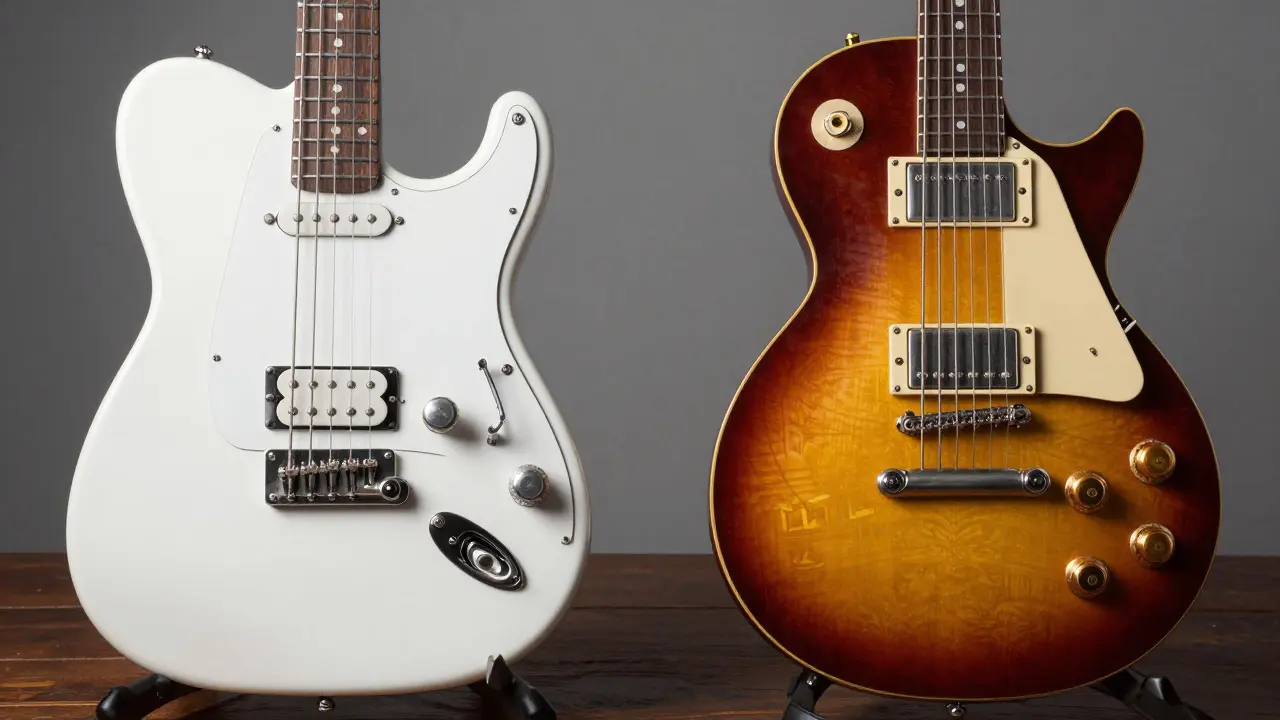
If the electric guitar had a father figure in terms of accessibility, it was Leo Fender. Before Fender, guitars were mostly handcrafted, expensive, and fragile. In 1950, Fender released the Fender Broadcaster, later renamed the Telecaster. This was a game-changer for several reasons.
- Solid Body Design: Unlike hollow-body guitars that feedback easily at high volumes, the Telecaster’s solid ash or alder body could handle loud amps without screaming.
- Mass Production: Fender used assembly line techniques similar to car manufacturing. This made guitars affordable for average musicians, not just wealthy professionals.
- Interchangeable Parts: If a part broke, you could replace it easily. This durability changed how musicians treated their instruments.
The Telecaster’s bright, cutting tone became the backbone of country music, rockabilly, and early rock 'n' roll. Players like James Burton and Brad Paisley built careers on its versatility. It proved that an electric guitar didn’t need to be ornate to be effective.
Les Paul and the Musical Innovation
While Fender focused on production, Les Paul was obsessed with tone and experimentation. A virtuoso guitarist and inventor, Les Paul worked with Gibson to create the Gibson Les Paul model in 1952. His approach was different. He wanted warmth, sustain, and richness.
The Les Paul featured a heavier mahogany body and maple top, along with humbucker pickups designed to eliminate the buzzing noise common in single-coil pickups. This thicker, smoother tone appealed to blues and rock players who wanted more emotional depth. Artists like Chuck Berry, Jimmy Page, and Slash defined rock history using Les Pauls. The instrument became synonymous with heavy riffs and soaring solos.
Les Paul also pioneered multi-track recording. He stacked multiple guitar recordings on tape to create complex harmonies. This technique influenced everyone from The Beatles to modern producers, showing that the electric guitar could be a studio instrument as well as a live one.
The Role of Amplification and Effects
A guitar is only half the story. The other half is the amplifier. In the 1950s, amps were small and clean. But as bands played larger venues, they cranked the volume knobs. When tubes in an amp are pushed to their limit, they distort. What started as a technical flaw became a musical feature.
This "overdrive" sound added grit and aggression. Bands like The Rolling Stones and Led Zeppelin embraced distortion as a core part of their identity. Later, effects pedals expanded the palette even further. Reverb simulated large spaces, delay created echoing rhythms, and fuzz pedals produced thick, saturated tones. By the 1970s, the electric guitar was no longer just mimicking acoustic sounds-it was creating entirely new sonic landscapes.
| Feature | Fender Telecaster | Gibson Les Paul |
|---|---|---|
| Body Material | Ash or Alder (Lighter) | Mahogany (Heavier) |
| Pickups | Single-Coil (Bright, Twangy) | Humbucker (Warm, Thick) |
| Weight | ~7-8 lbs | ~9-10 lbs |
| Ideal Genre | Country, Rockabilly, Indie | Hard Rock, Blues, Metal |

Cultural Impact Beyond Sound
The electric guitar did more than change audio; it changed attitude. It became a symbol of rebellion. Think of Elvis Presley shaking his hips or Jimi Hendrix burning his guitar on stage. These acts weren't just performances; they were statements. The electric guitar empowered youth culture to challenge norms.
It also democratized fame. You didn’t need classical training to become a star. You needed creativity, passion, and a six-string weapon. This lowered barrier to entry fueled the explosion of garage bands in the 1960s and punk movements in the 1970s. Bands like The Ramones proved you didn’t need technical mastery-just raw energy and three chords.
In Australia, this impact was felt deeply. Bands like AC/DC and Midnight Oil used the electric guitar to craft anthems that resonated globally. The instrument became a tool for storytelling, addressing social issues, and connecting diverse audiences through shared emotion.
Modern Evolution and Digital Integration
Today, the electric guitar stands at a crossroads. On one side, traditionalists preserve vintage craftsmanship. On the other, technology pushes boundaries. Companies like Fender and Gibson now offer models with digital tuning systems, MIDI capabilities, and app connectivity.
Players can route signals directly to computers, bypassing amps entirely. Software plugins simulate classic tube sounds with incredible accuracy. This allows bedroom producers to record professional-quality guitar tracks without expensive gear. Meanwhile, hybrid instruments blend strings with sensors, enabling control over synthesizers and drum machines.
Yet, despite these advances, the core appeal remains unchanged. People still crave the tactile connection between hand and string. The physical act of bending a note, strumming a chord, or hitting a fret provides an emotional release that digital interfaces struggle to replicate. The electric guitar endures because it bridges the gap between human expression and technological possibility.
Who invented the first practical electric guitar?
George Beauchamp and Adolph Rickenbacker are credited with creating the first commercially successful electric guitar, known as the "Rickenbacker Frying Pan," in 1932. However, Leo Fender and Les Paul later refined the design into the solid-body instruments we recognize today.
Why did solid-body guitars replace hollow-body designs?
Hollow-body guitars produce unwanted feedback (a screeching noise) when amplified at high volumes. Solid-body guitars, introduced by Leo Fender and Les Paul, eliminated this issue, allowing musicians to play louder without distortion caused by acoustic resonance.
What is the difference between single-coil and humbucker pickups?
Single-coil pickups (found on Telecasters and Stratocasters) produce a bright, crisp tone but can pick up electrical interference (hum). Humbuckers (found on Les Pauls) use two coils wired together to cancel out hum, resulting in a warmer, thicker sound ideal for heavy distortion.
How did the electric guitar influence rock music?
The electric guitar provided the driving force behind rock's rhythm and melody. Its ability to sustain notes, create distortion, and cut through a mix allowed guitarists to become lead voices in bands. Icons like Chuck Berry, Jimi Hendrix, and Eric Clapton defined rock's sonic identity through their innovative use of the instrument.
Are electric guitars harder to learn than acoustic ones?
Electric guitars generally have lighter strings and lower action (string height), making them physically easier to press down. However, mastering techniques like bending, vibrato, and speed requires dedicated practice. Many beginners find electric guitars more forgiving initially, but both types require consistent effort to master.