To really get why people love it, we need to look at the heart of the sound: Jazz music is a broad musical tradition originating in the African American communities of New Orleans in the late 19th and early 20th centuries, characterized by complex harmonies and strong improvisation. It isn't just about playing a melody; it's about how you manipulate that melody to tell a story. If you've ever felt a song 'breathe' or heard a musician sound like they are speaking through their instrument, you've experienced the core of jazz.
The Secret Sauce of Improvisation
When people hear 'improvisation,' they often think it means playing random notes. It's actually the opposite. To improvise well, a musician needs a deep understanding of Music Theory, which is the study of the practices and possibilities of music. Imagine a jazz player as a chef. They aren't just throwing random spices into a pot; they know exactly how salt reacts with acid. They just choose to experiment with the proportions on the fly.
In a typical jazz session, the band might agree on a 'head'-the main melody of the song. Once they play that, they enter the improvisation phase. This is where the magic happens. One player takes a solo, and the others support them. They listen for a specific phrase or a rhythmic 'hit' and respond to it. It's like a high-stakes debate where the only goal is to find the most beautiful argument possible. If a trumpet player hits a daring, dissonant note, the pianist might shift the chord to make that note sound like a stroke of genius rather than a mistake.
From New Orleans to the World: The Evolution
Jazz didn't just appear; it evolved from a collision of cultures. It took the structure of European marching bands and combined it with the soul, rhythm, and emotion of African musical traditions. This happened primarily in New Orleans, a port city where different cultures rubbed shoulders. The result was a sound that felt both disciplined and wild.
Over the decades, jazz branched out into different styles, each reflecting the mood of the era. In the 1930s, we had the Big Band era, where the focus was on danceability and massive horn sections. Then came Bebop, a style that emerged in the 1940s. Unlike the danceable swing of the previous decade, Bebop was 'musician's music.' It featured incredibly fast tempos, complex chord progressions, and intellectual rigor. Artists like Charlie Parker turned the saxophone into a machine gun of notes, forcing listeners to pay close attention rather than just tap their toes.
| Style | Key Era | Main Focus | Vibe |
|---|---|---|---|
| Swing | 1930s | Danceability & Big Bands | Upbeat and social |
| Bebop | 1940s | Harmonic Complexity | Fast and intellectual |
| Cool Jazz | 1950s | Relaxed Tones & Space | Calm and atmospheric |
| Fusion | 1960s-70s | Electric Instruments | Experimental and loud |

The Instruments That Define the Sound
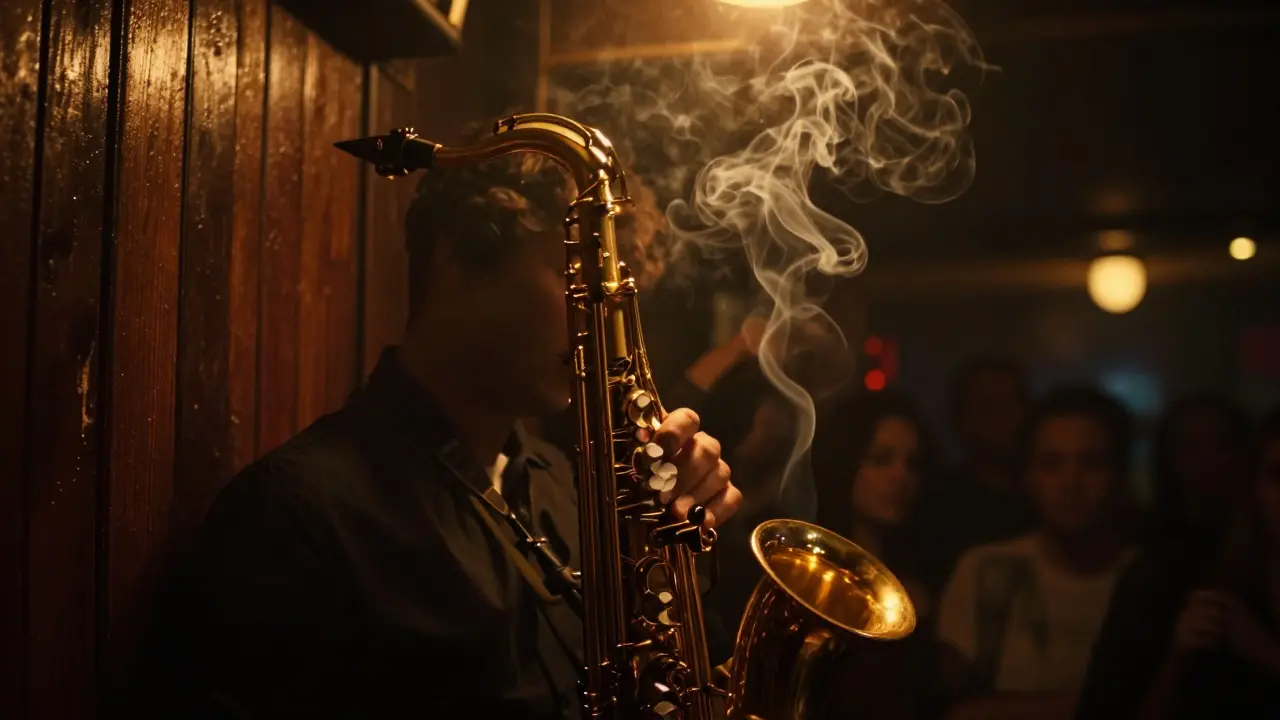
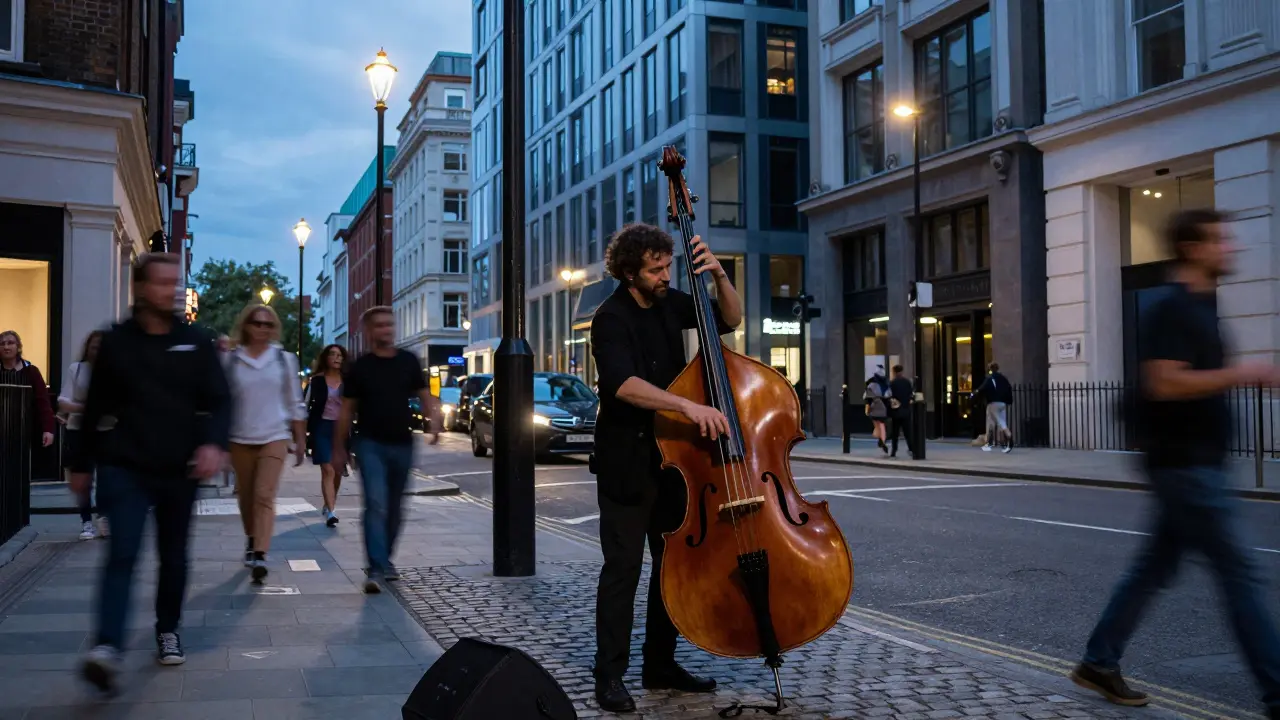
While any instrument can play jazz, a few are the undisputed icons. The Saxophone is often seen as the voice of jazz because of its ability to mimic human emotion, from a guttural growl to a piercing wail. Then there is the Double Bass, which provides the heartbeat. In jazz, the bass doesn't just play a root note; it often performs a 'walking bass line,' a steady quarter-note pulse that keeps the rest of the band moving forward even when the soloist is playing with the timing.
We can't talk about jazz without the Piano. The piano in jazz serves two roles: it provides the harmonic foundation (the chords) and it acts as a melodic voice. A jazz pianist has to be a conductor and a performer at the same time, filling the gaps in the music and guiding the soloist through the changes of the song.
Understanding 'The Swing' and Syncopation
If you've ever tried to clap along to jazz and felt like you were slightly off, it's probably because of Syncopation. In most pop music, the beat is predictable. In jazz, the musicians deliberately play 'off' the beat. They emphasize the weak beats or delay a note just a fraction of a second. This creates a tension and release that makes the music feel alive.
This leads us to the Swing Feel. Swing isn't just a genre; it's a rhythmic approach where the first note of a pair is held slightly longer than the second. This gives the music a rolling, galloping quality. It's the difference between a robotic march and a natural walk. When a band 'swings,' it feels like the music is leaning forward, pulling the listener into the groove.
How to Listen to Jazz Without Feeling Lost
For a beginner, a ten-minute jazz track can feel like a maze. The trick is to stop looking for a catchy chorus and start following a single instrument. Pick the bass and follow the line. Then, switch your attention to the drums. Notice how the drummer isn't just keeping time but is actively commenting on what the soloist is doing. If the sax player hits a high note, the drummer might respond with a crash of the cymbal.
Another tip is to listen for the 'head.' Most jazz songs start with the main melody, go into a series of solos, and then return to the main melody at the end. Once you recognize this structure, the solos don't feel like rambling; they feel like a journey away from home and a triumphant return. It's like watching a movie where you know the ending, but you're fascinated by how the characters get there.
The Legacy of Jazz in Modern Music
You might think jazz lives only in old clubs or textbooks, but it is actually the DNA of almost everything we listen to today. Blues Music and jazz grew up together, sharing the same roots of expression and pain. Later, the rhythmic freedom of jazz paved the way for the improvisational nature of Hip Hop and the complex chord structures found in modern R&B.
Even in electronic music, the concept of 'jamming' and real-time manipulation of sound owes a debt to the jazz spirit. When a DJ reads a crowd and changes the beat to keep people dancing, they are practicing a form of social improvisation. The spirit of jazz-the willingness to take a risk and the courage to be spontaneous-is what keeps music from becoming static and boring.
Is jazz music difficult to learn?
Yes, it is generally considered more challenging than pop or rock because it requires a deeper knowledge of harmony and the ability to think quickly. However, you don't need to be an expert to start; learning basic scales and practicing simple improvisations over a steady beat is the best way to begin.
What is the difference between Jazz and Blues?
While they share roots, Blues is typically more focused on a specific chord structure (the 12-bar blues) and a raw, emotional expression of struggle. Jazz tends to have more complex harmony, faster tempos, and a greater emphasis on intricate improvisation and instrumental virtuosity.
Do I need to know music theory to enjoy jazz?
Not at all. You don't need to know how a chord is built to feel the emotion of a song. Listening is an intuitive experience. The 'beauty' of jazz is in the feeling and the surprise, not the mathematical breakdown of the notes.
Why is improvisation so important in jazz?
Improvisation is what makes jazz a 'living' art. It allows the musician to express their current mood and react to the other players in the room. Without it, jazz would just be another form of composed music rather than a spontaneous conversation.
Who are some essential jazz artists I should listen to?
For a great start, listen to Louis Armstrong for the roots of the sound, Duke Ellington for the elegance of swing, Miles Davis for the evolution into cool jazz and fusion, and John Coltrane for spiritual and complex explorations.