There is a specific moment every acoustic guitar player knows. You sit down to play, your fingers are stiff, and the instrument feels like a foreign object. Then, ten minutes in, something clicks. The chords ring out clear, the rhythm locks in, and for a few minutes, you actually sound like the players you admire. But then you stop, try to replicate that feeling, and it vanishes. This guide isn’t about magic tricks or secret shortcuts. It is about building the muscle memory and mental framework that turns those fleeting moments of clarity into a consistent skill set.
The Foundation: Tuning and Posture
Before you worry about complex songs, you need to address the two things most players ignore: tuning and posture. If your guitar is out of tune, no amount of technique will save you. Your ear needs to hear correct intervals to develop pitch recognition. Use a clip-on tuner or a reliable app, but do it before every session, not just once a week. Humidity changes in Melbourne can warp wood and detune strings faster than you think.
Your posture dictates your endurance. Slouching over the neck restricts blood flow to your hands, leading to cramping and slower progress. Sit upright with the guitar resting comfortably on your leg. If you are right-handed, angle the neck slightly upward so your fretting hand doesn't have to bend awkwardly at the wrist. This small adjustment prevents strain and allows for cleaner chord shapes.
Mastering Chord Transitions
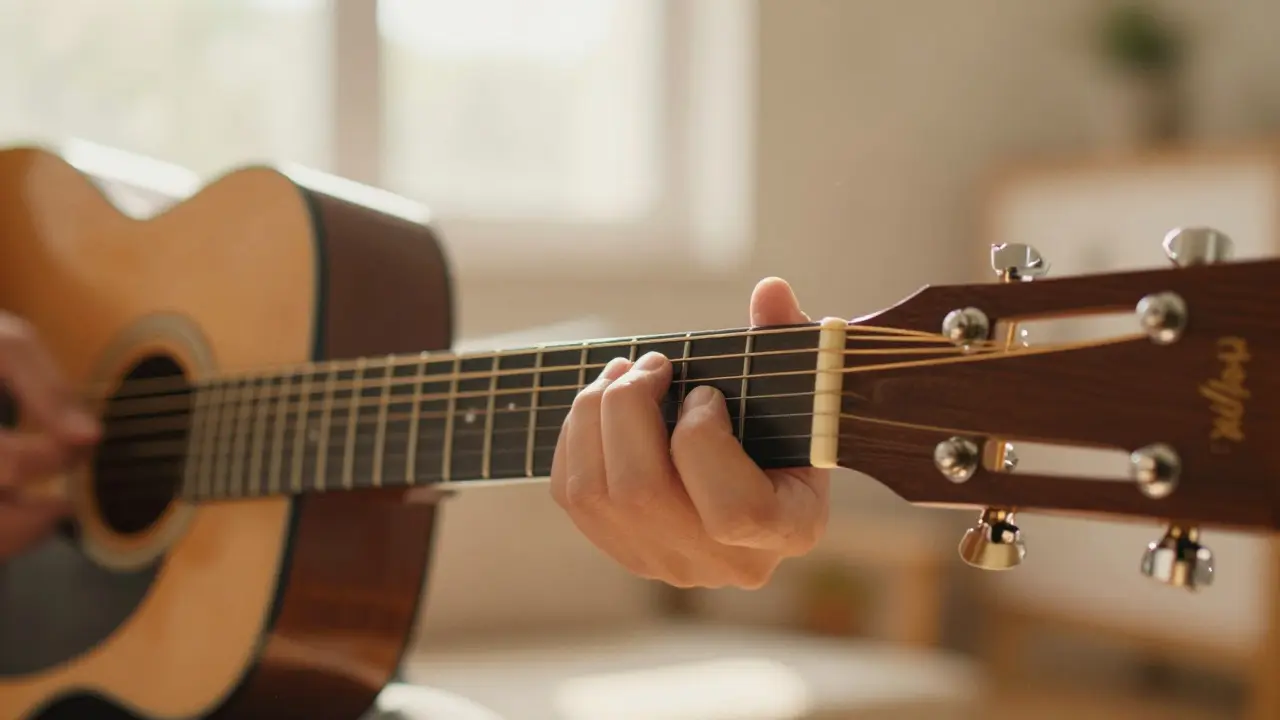
The biggest hurdle for beginners is switching between chords smoothly. You might know the shapes for C Major, G Major, and Am, but moving between them feels like a clumsy dance. The solution is isolation. Don't play the whole chord yet. Focus only on the movement.
- Identify Anchor Fingers: Look for one or two fingers that stay on the same string or move together. For example, when moving from C to G, your middle and ring fingers often shift as a unit.
- Practice Without Strumming: Place the first chord, lift all fingers off the strings, place the second chord, and repeat. Do this until you can switch without looking at your hand.
- Add the Thumb: Once the transition is smooth, add the strum. Start slow. Speed is a byproduct of accuracy, not a goal in itself.
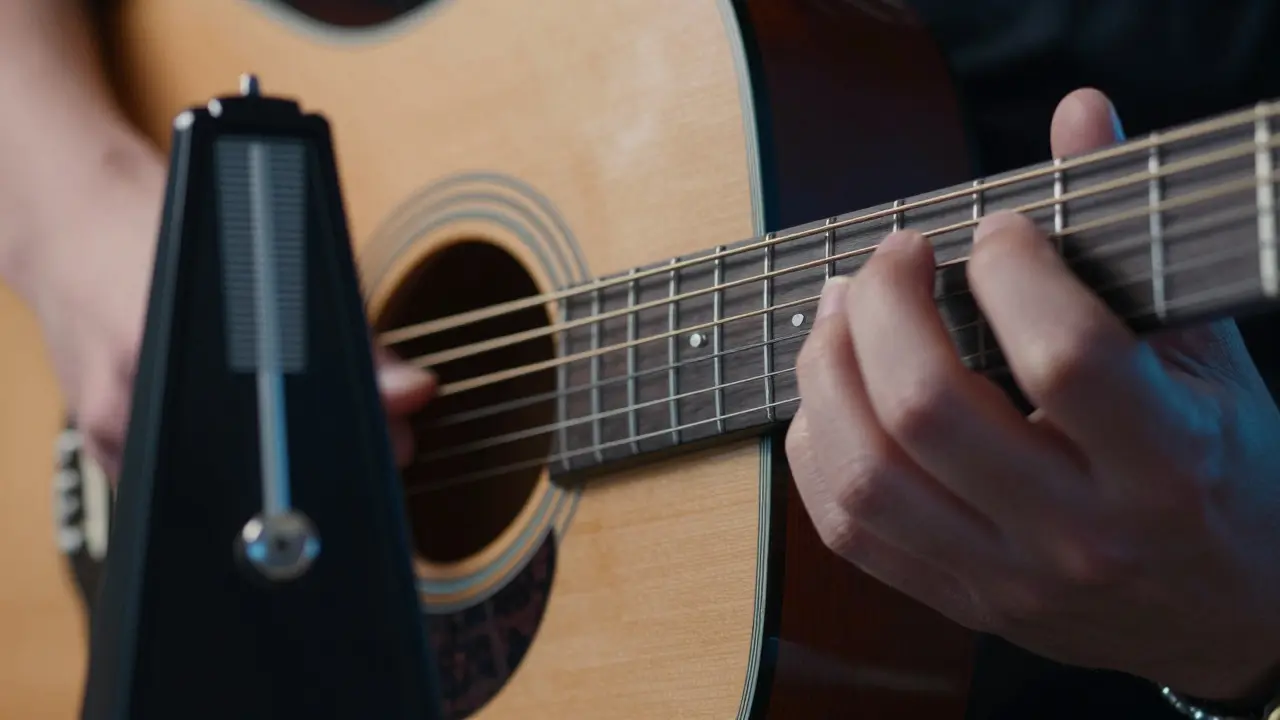
Use a metronome. Set it to a slow tempo, like 60 BPM. Change chords on each beat. If you hesitate, slow the metronome down. Consistency beats speed every time.
Developing Fingerpicking Patterns
Fingerpicking adds depth and texture to your playing. Unlike strumming, which relies on arm momentum, fingerpicking requires independent control of each digit. Start with the Travis picking pattern, a foundational style used in folk and country music.
The pattern alternates between a bass note and treble strings. Assign your thumb (P) to the bass strings (E, A, D) and your index (I), middle (M), and ring (A) fingers to the higher strings (G, B, e). A common pattern is P-I-M-A. Practice this over a simple C Major chord. Keep your fingers curved, striking the strings with the tips, not the pads. This ensures clarity and reduces noise.
If your fingers feel tangled, slow down. Play one note at a time. Ensure each note rings out clearly before moving to the next. Over time, your brain will map these movements, and the pattern will become automatic.
Rhythm and Timing
Rhythm is what makes people nod their heads. Many players focus so much on notes that they neglect timing. To improve, listen to the space between the beats, not just the beats themselves. Count out loud: "1, 2, 3, 4." Strum on each count. Then try strumming on the "and" between beats: "1-and-2-and-3-and-4-and."
| Pattern Name | Count | Direction | Feel |
|---|---|---|---|
| Basic Down-Up | 1, 2, 3, 4 | D, U, D, U | Steady, Folk |
| Island Skank | 1, 2, 3, 4 | Mute, U, Mute, U | Bouncy, Reggae |
| Boom-Chick | 1, 2, 3, 4 | Bass, Treble, Bass, Treble | Country, Blues |
Use a metronome or drum track. Play along with recorded songs. Try to match the drummer's kick and snare hits with your strums. This trains your internal clock to sync with external rhythms.
Ear Training and Theory Basics
You don't need to read sheet music to be a great guitarist, but understanding basic theory helps you improvise and write songs. Learn the major scale. On an acoustic guitar, the C Major scale uses open strings and simple frets. Knowing where notes live on the fretboard allows you to create melodies, not just chords.
Start by identifying root notes. If you are playing a G Major chord, find the G note on the low E string (3rd fret). Now, try plucking individual strings within that chord shape. Hear how each note contributes to the harmony. This active listening builds a connection between your ears and your hands.

Maintenance and Gear
Your strings affect your tone and playability. Old, dirty strings sound dull and are harder to press down. Change them every month if you practice daily. Use light gauge strings (0.11-0.52) if you are still building finger strength. They are easier on the fingertips and allow for faster progress.
Keep your guitar clean. Wipe down the fretboard with a soft cloth after playing. Sweat and oils corrode metal parts and dry out wood. A well-maintained instrument stays in tune better and feels more responsive, encouraging you to play more.
Setting Realistic Goals
Progress is non-linear. Some days you will feel like a virtuoso; other days, you will forget how to play an E Major chord. This is normal. Set small, achievable goals. Instead of "learn to play fast," aim for "play this song at 80 BPM without mistakes." Track your progress in a journal. Note what worked and what didn't. This reflection turns random practice into deliberate improvement.
How long does it take to see improvement in acoustic guitar skills?
Most players notice significant improvement in chord clarity and rhythm after 3 to 6 months of consistent practice, roughly 15-20 minutes a day. Mastery takes years, but functional competence is achievable quickly with focused effort.
Should I use a pick or my fingers for acoustic guitar?
Both methods have merits. Picks offer volume and precision for strumming, while fingers provide dynamic control and polyphony for fingerstyle. Beginners should start with fingers to build independence, then experiment with picks as needed.
Why do my fingers hurt when playing acoustic guitar?
Finger pain is normal initially as calluses form. Use lighter gauge strings and ensure your posture is correct to minimize strain. If pain persists beyond mild discomfort, take breaks and check for improper finger placement or excessive pressure.
What is the best way to practice chord transitions?
Isolate the movement. Practice switching between two chords without strumming. Use a metronome to enforce steady timing. Identify anchor fingers that stay in place to reduce movement distance. Slow, accurate repetition builds muscle memory.
Can I learn acoustic guitar without knowing music theory?
Yes, you can play many songs using tabs and chord charts. However, basic theory helps you understand why chords work together, enabling improvisation and songwriting. Learning scales and key signatures enhances your musical intuition.