Remember the last time you picked up a guitar that felt like an extension of your arm? Or sat at a piano where the keys had just enough resistance to make every note feel earned? That tactile connection is what musicians have chased for centuries. But look around any modern studio or stage today, and you’ll see something different. We are standing on the edge of a massive shift in how we create sound. The tools we use to make music are changing faster than ever before.
It isn’t just about better speakers or louder amps. The very definition of a musical instrument is a device designed or adapted to make musical sounds, evolving from wood and wire to silicon and code. By 2026, the line between physical craftsmanship and digital innovation has blurred completely. You don't need a crystal ball to see it; you just need to look at the gear hitting the market right now.
The Rise of Hybrid Acoustic-Electric Instruments
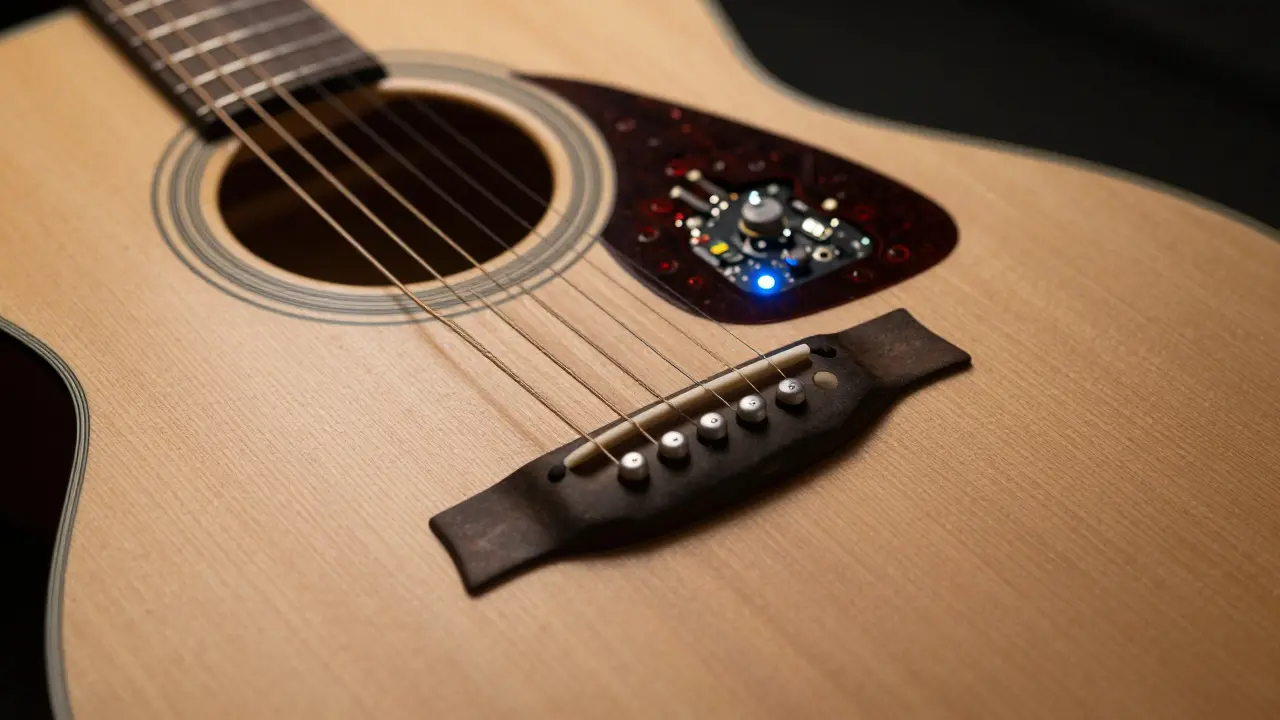
Gone are the days when you had to choose between the warm, organic tone of an acoustic guitar and the convenience of electric amplification. The new wave of hybrid instruments bridges this gap seamlessly. Think of brands like L.R. Baggs and manufacturers specializing in piezoelectric pickups integrating directly into the body of violins, cellos, and guitars during the manufacturing process, not as an afterthought.
These instruments use advanced sensors to capture the vibration of the strings and the resonance of the body simultaneously. The result? A sound that feels alive in a small room but can cut through a festival mix without feedback issues. For session musicians, this means less time tweaking EQs and more time playing. It’s practical, reliable, and respects the tradition of the instrument while embracing modern needs.
- Piezoelectric Sensors: Capture string vibrations directly, offering clarity and noise reduction.
- Mic Integration: Built-in microphones capture the natural air movement and body resonance.
- Digital Signal Processing (DSP): Onboard chips allow players to adjust tone, reverb, and compression in real-time via a smartphone app.
Haptic Feedback and Force-Sensitive Controllers
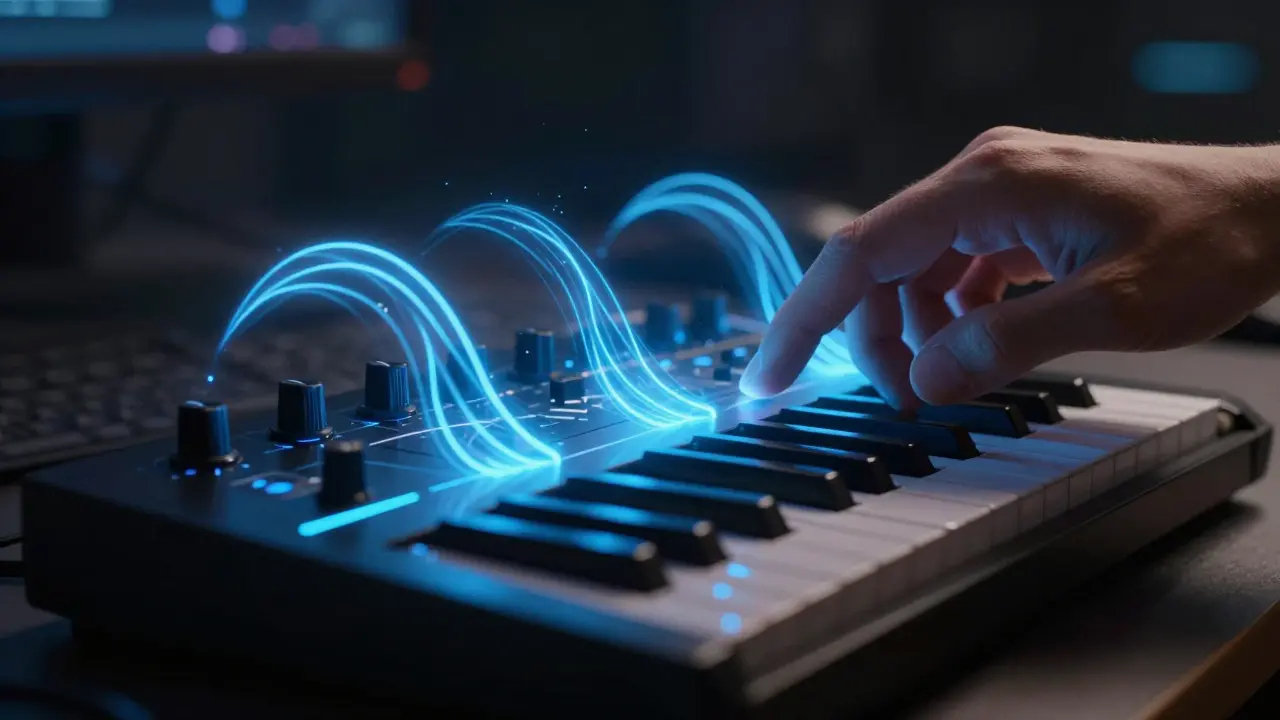
If you’ve ever tried to play a synthesizer using a mouse or a touchscreen, you know it lacks soul. The problem with early digital controllers was the lack of physical resistance. This is where haptic technology is the science of applying the sense of touch to user interaction changes everything. New MIDI controllers and electronic wind instruments now use linear resonant actuators to simulate the feeling of pressing a key or blowing into a reed.
Imagine a flute controller that vibrates against your lips exactly like a metal flute would, giving you immediate feedback on pitch and airflow. Companies like Roli and innovators in touch-sensitive technology have been pioneers here, but the tech is getting cheaper and more widespread. This allows producers who don’t own expensive vintage synths to still play them with expressive nuance. It’s not just about triggering notes; it’s about the performance data-the velocity, the aftertouch, the timing-that makes a recording human.
AI-Driven Instrumentation and Smart Tuning
Artificial Intelligence isn’t replacing musicians; it’s becoming their best engineer. Modern smart instruments come with built-in AI assistants that analyze your playing style in real-time. Take the Yamaha YC series or similar digital pianos with intelligent voice modeling. These instruments don’t just sample a grand piano; they use machine learning algorithms to model how a specific piano reacts to different dynamics over time.
For beginners, this is a game-changer. Smart apps connected to these instruments can detect if your posture is causing tension or if your intonation is slightly off, offering gentle corrections. For pros, AI helps in sound design. Instead of spending hours tweaking knobs on a software synthesizer, you can describe the sound you want-"warm analog bass with slight distortion"-and the AI generates a patch that fits your track. It speeds up the creative workflow significantly, letting artists focus on melody and harmony rather than technical setup.
| Feature | Traditional Acoustic | Hybrid/Digital Future |
|---|---|---|
| Tone Source | Physical vibration only | Physical + Digital Modeling |
| Portability | Bulky, fragile | Compact, durable materials |
| Customization | Limited to physical mods | Infinite via software/firmware |
| Learning Curve | Steep, requires teacher | Assisted by AI tutorials |
Sustainability and New Materials
We can’t talk about the future of instruments without talking about the environment. The demand for rare woods like rosewood and ebony has led to unsustainable harvesting practices. The industry is responding with innovative alternatives. Carbon fiber, Kevlar, and recycled composites are no longer seen as cheap substitutes; they are premium materials that offer superior stability and durability.
A carbon-fiber violin doesn’t crack in Adelaide’s dry heat or Melbourne’s humidity. It stays in tune regardless of the climate. Brands like Eastman String Instruments and makers of composite string instruments are leading this charge. These materials also allow for shapes and designs that were impossible with wood, enabling new ergonomic benefits for players suffering from repetitive strain injuries. It’s a win for the planet and a win for player health.
The Virtual Stage and Remote Collaboration
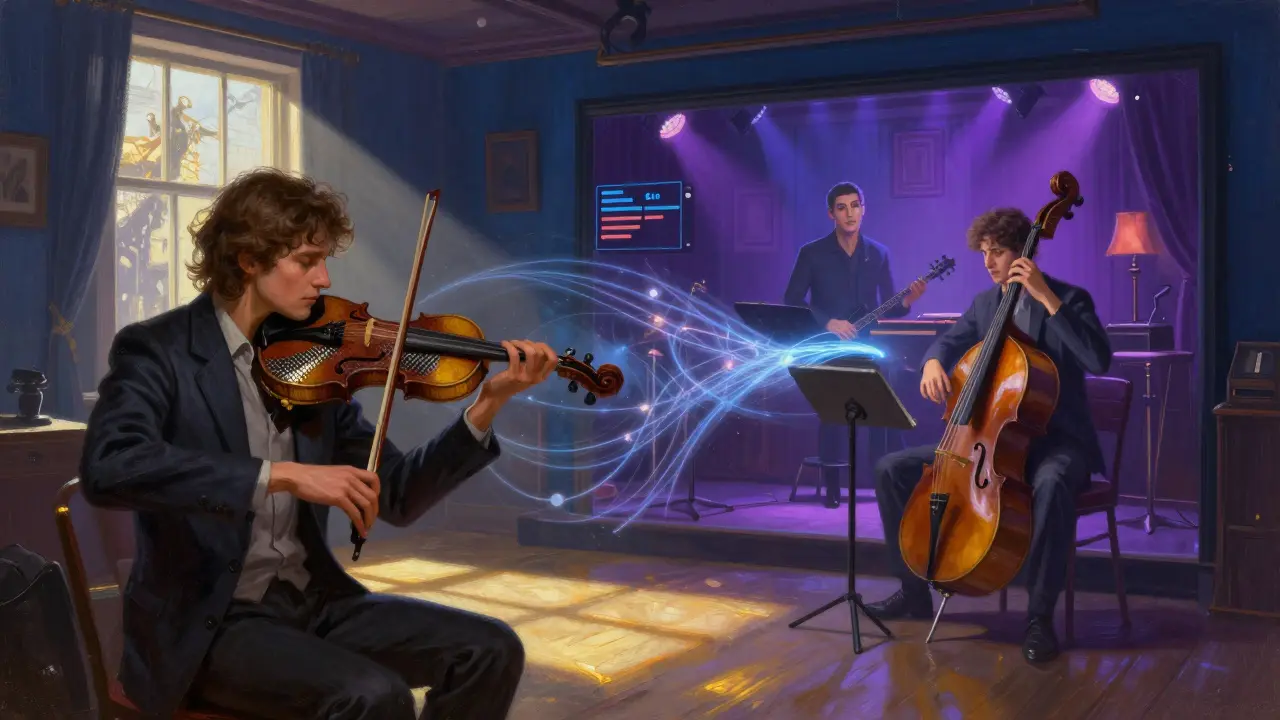
The pandemic taught us that remote collaboration is possible, but latency was always the enemy. Now, with improved internet infrastructure and specialized audio-over-IP protocols, playing together online is becoming viable. Platforms like Sonobus and low-latency audio streaming services allow musicians in different cities to jam together with near-zero delay.
This changes how instruments are designed. We’re seeing more integration with VR headsets. Imagine putting on a headset and sitting in a virtual jazz club in New York while your drummer is in London. Your instrument tracks your movements, and the avatar plays along. This isn’t just for gamers; serious composers are using these environments to sketch out ideas with collaborators across the globe without booking expensive studio time. It democratizes access to top-tier talent and expands the creative pool immensely.
Accessibility and Inclusive Design
Perhaps the most exciting development is how technology is making music accessible to everyone. Adaptive instruments are moving from niche medical devices to mainstream products. Eye-tracking software allows musicians with limited mobility to control synthesizers and drum machines with just their gaze. Mouth-controlled MIDI controllers enable quadriplegic artists to compose complex symphonies.
Companies are realizing that inclusive design benefits everyone. A volume knob that works for someone with arthritis is easier for everyone to use. As the industry focuses on removing barriers, we’ll see a surge in new voices and styles that were previously unheard. This diversity enriches our culture and pushes the boundaries of what music can be.
What This Means for Musicians Today
You might wonder if all this tech will make traditional skills obsolete. The opposite is true. Understanding music theory, rhythm, and emotion is more valuable than ever. Technology handles the technical heavy lifting, freeing you to focus on expression. Whether you stick with a vintage acoustic guitar or embrace a fully digital setup, the core remains the same: connecting with others through sound.
The future isn’t about choosing between old and new. It’s about blending them. Use the precision of digital tuning to enhance your ear training. Use AI to spark inspiration, then refine it with your human touch. The tools are changing, but the heart of music beats stronger than ever.
Will AI replace human musicians?
No. AI is a tool for assistance and enhancement, not replacement. While AI can generate melodies and harmonies, it lacks the emotional intent, cultural context, and lived experience that human musicians bring to a performance. AI serves as a collaborator, helping with tasks like mixing, mastering, and idea generation, but the artistic vision remains human.
Are digital instruments worth the investment for beginners?
Yes, especially for those living in apartments or on a budget. Digital pianos and silent guitars allow for headphone practice at any hour without disturbing neighbors. They often include built-in lessons and metronomes, providing a self-guided learning path that can be more affordable than private teachers initially.
How do hybrid instruments affect resale value?
High-quality hybrid instruments from reputable brands hold their value well, particularly if they retain acoustic integrity. However, purely digital components may become outdated faster than wooden bodies. Buyers should research specific models and consider whether the electronic features are modular or integrated, as modularity can extend the instrument's lifespan.
Is carbon fiber really as good as wood for string instruments?
Carbon fiber offers superior durability, weather resistance, and consistency. While some purists argue it lacks the "warmth" of aged wood, modern manufacturing techniques have closed the tonal gap significantly. For traveling musicians or those in extreme climates, carbon fiber is often the more practical and reliable choice.
Can I play live with someone remotely without lag?
With dedicated low-latency platforms like Sonobus or JamKazam, yes, you can achieve playable latency levels (under 50ms) over high-speed internet connections. Standard video conferencing tools like Zoom are not suitable for synchronized musical performance due to higher latency and audio compression artifacts.