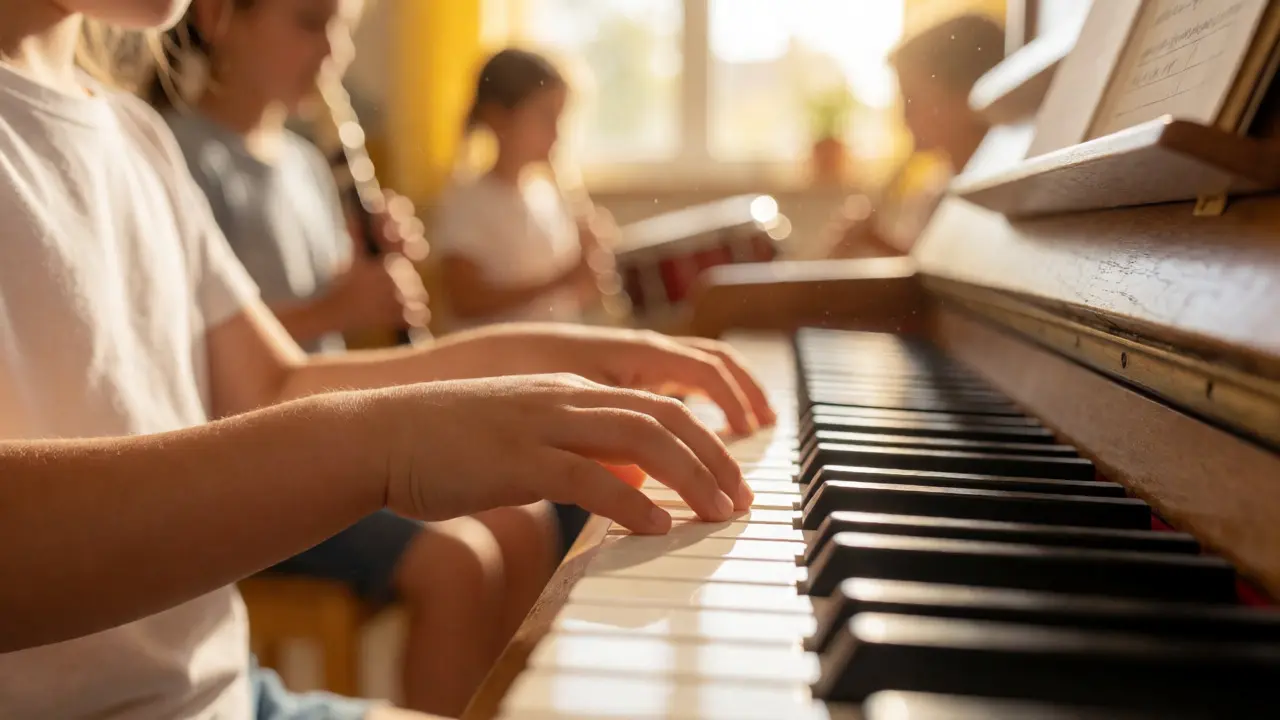
Think back to your own school days. Did you ever pick up a recorder, bang on a drum, or fumble through scales on a piano? For many of us, that was just a blip in the timetable. But ask any educator or neuroscientist today, and they’ll tell you that musical instruments are far more than classroom props; they are powerful tools for cognitive and emotional growth. In an era where screens dominate our attention spans, the tactile, physical act of playing an instrument offers something digital apps simply can’t replicate. It’s not just about making noise-it’s about wiring the brain differently.
The Brain on Instruments: More Than Just Ear Training
When a student learns to play an instrument, they aren’t just memorizing notes. They are engaging in one of the most complex multitasking exercises known to human biology. Reading sheet music, coordinating finger movements, listening to pitch, and keeping time all happen simultaneously. This process strengthens the corpus callosum, the bridge between the left and right hemispheres of the brain. Research from institutions like the University of Zurich has shown that children who undergo musical training show enhanced structural and functional connectivity in these areas. You’re essentially building a faster, more efficient internet connection inside the skull.
But it’s not just about structure. The discipline required to master an instrument translates directly to other academic subjects. A study published in the Journal of Educational Psychology found a strong correlation between music participation and improved performance in mathematics and reading. Why? Because music is math in motion. Fractions, ratios, and patterns are embedded in rhythm and melody. When a child understands that a quarter note is half of a half note, they are grasping fractional concepts intuitively, long before they see them on a whiteboard.
Emotional Regulation and Social Skills
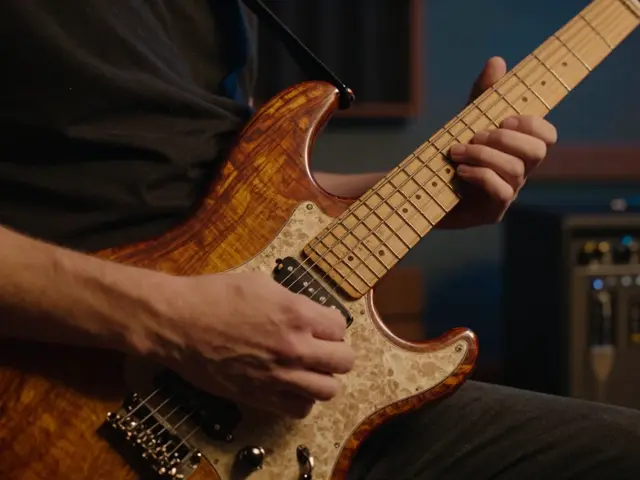
Let’s be honest: school can be stressful. Tests, social pressures, and rigid schedules create anxiety. Playing an instrument provides a unique outlet for emotional expression. Unlike writing an essay, where words might fail you, music allows for immediate, non-verbal communication of feelings. For a teenager struggling with anger or sadness, shredding a guitar riff or pouring emotion into a cello piece can be therapeutic. This aligns with findings from the American Psychological Association, which notes that active music-making reduces cortisol levels-the body’s primary stress hormone.
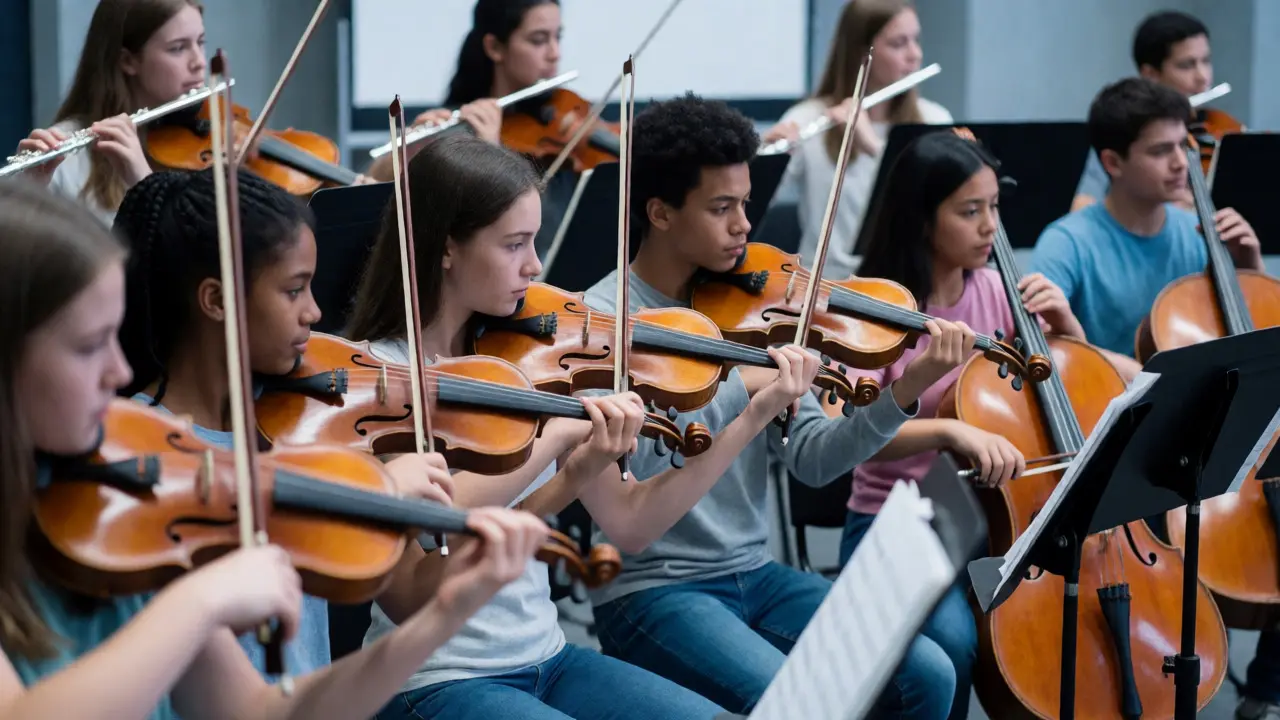
Beyond individual therapy, instruments foster community. Joining a school band or orchestra requires cooperation. You have to listen to others, adjust your volume, and stay in sync. There is no hiding in a string quartet. If you rush, everyone hears it. If you drag, the whole group suffers. This shared responsibility teaches empathy and teamwork in a way that group projects often miss. It creates a sense of belonging, which is crucial for adolescent mental health.
Choosing the Right Instrument: A Practical Guide
So, how do you choose which instrument to introduce to a student? It’s not always about what sounds coolest. It’s about fit. Age, physical size, interest, and even personality type play roles. A shy child might thrive on the violin, where they can blend into a section, while an outgoing kid might prefer the trumpet or drums, where their energy is channeled into leadership roles.
| Instrument | Best Age Range | Primary Skill Developed | Physical Demand | Social Dynamic |
|---|---|---|---|---|
| Piano | 5+ years | Hand independence, theory | Low (seated) | Individual or Duet |
| Violin | 4-6 years | Pitch accuracy, fine motor skills | Medium (posture critical) | Sectional Ensemble |
| Recorder | 6-8 years | Breath control, basic notation | Low | Class-wide Group |
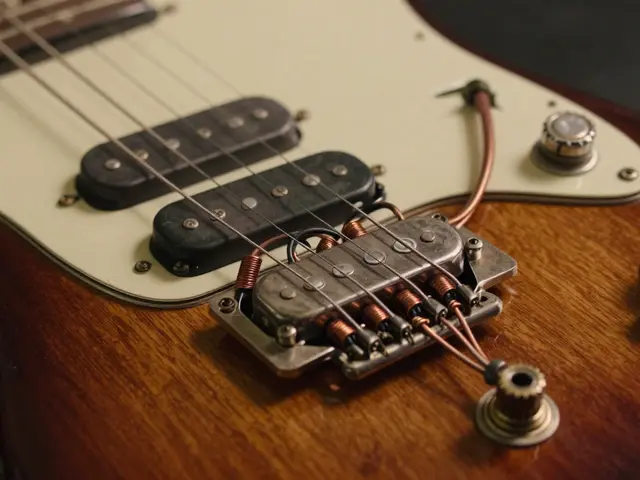
| Guitar | 8+ years | Chord shapes, rhythm | Medium (finger strength) | Small Groups/Bands |
| Drums | 7+ years | Coordination, timing | High (physical stamina) | Band Leader Role |
Notice how the piano is often recommended first? It’s visual and logical. Keys are laid out linearly, making theory easier to grasp. However, don’t overlook the humble recorder. Despite its reputation for screechy high notes, it’s inexpensive, portable, and teaches breath support-a foundational skill for wind players later on. The key is matching the instrument to the child’s current capabilities. Pushing a five-year-old onto a full-sized cello is a recipe for frustration and bad posture.
Overcoming the Practice Plateau
Here’s the hard truth: nobody enjoys practicing every single day. The initial excitement fades once the novelty wears off, usually around month three. This is where parents and teachers need to shift tactics. Instead of demanding "practice for 30 minutes," focus on consistency over duration. Five minutes of focused, mindful practice daily beats two hours of distracted plunking on Sundays.
Use gamification. Apps like Simply Piano or Yousician turn practice into a game, but don’t let tech replace the teacher entirely. The feedback loop needs to be personal. Encourage students to record themselves. Hearing their own progress-or lack thereof-is a powerful motivator. Also, mix it up. If a student loves pop songs, let them learn chords for Taylor Swift hits rather than forcing Mozart sonatas exclusively. Motivation drives repetition, and repetition builds muscle memory.
The Long-Term Payoff: Lifelong Benefits
You might wonder, "What if my child quits? Was the money wasted?" Absolutely not. Even short-term engagement yields long-term dividends. Former student musicians often report higher resilience and better problem-solving skills in adulthood. The ability to break down a complex task-like a difficult passage of music-into manageable chunks is a transferable life skill. Whether they become engineers, doctors, or artists, the neural pathways forged during those early lessons remain.
Furthermore, music literacy opens doors culturally. Understanding the structure of a symphony or the improvisation in jazz enriches how we consume media and art. It fosters open-mindedness and cultural appreciation. In a globalized world, being able to appreciate diverse musical traditions is a soft skill that stands out in professional settings.
Frequently Asked Questions
At what age should a child start learning a musical instrument?
Most experts suggest starting between ages 4 and 6 for instruments like piano or violin, where fine motor skills are developing. For larger instruments like guitar or drums, waiting until age 7 or 8 is often better due to physical size requirements. However, general musical exposure through singing and rhythmic games can begin as early as infancy.
Does playing an instrument really improve grades in other subjects?
Yes, studies consistently show correlations between music education and improved performance in math, reading, and spatial-temporal reasoning. The discipline and pattern recognition skills developed through music practice transfer to academic tasks, though it is not a guaranteed shortcut to straight As.
What is the best instrument for a beginner with no prior experience?
The piano is widely considered the most accessible starting point because its layout visually represents musical theory clearly. The ukulele is another excellent option for younger children due to its small size and simple chord structures. Ultimately, the "best" instrument is the one the student is genuinely interested in playing.
How much should a student practice each day?
For beginners, 15 to 20 minutes of focused practice per day is sufficient to build habits without causing burnout. Consistency is more important than length. As skills advance, this can gradually increase to 30-45 minutes. Quality of attention matters more than quantity of time.
Can adults benefit from learning an instrument too?
Absolutely. Adult learners often bring better discipline and motivation than children. While neuroplasticity decreases with age, learning an instrument helps maintain cognitive function and can delay symptoms of dementia. It also provides a creative outlet and social opportunities through community ensembles.