Key Takeaways
- Consistent, focused daily practice beats marathon sessions in building muscle memory and technical skill.
- Proper posture and hand position are non-negotiable foundations for preventing injury and achieving tone control.
- Understanding basic music theory transforms note-reading from memorization to intuitive comprehension.
- Repertoire selection should balance challenge with enjoyment to maintain motivation through plateaus.
- Recording yourself is the most effective tool for objective self-assessment and progress tracking.
You sit down at the keyboard. Your fingers hover over the keys. You want to play that complex Chopin nocturne or that catchy pop chord progression, but your hands feel stiff, your timing is off, and you keep hitting wrong notes. This frustration is universal. Whether you are a complete beginner who just bought a digital piano or an intermediate player stuck in a rut, the path to piano playing is the art of producing musical sound by striking strings with felt-covered hammers via a lever system activated by keys mastery is rarely linear. It requires more than just talent; it demands strategy, patience, and smart work habits.
Many players quit because they practice incorrectly. They repeat mistakes until those mistakes become permanent habits. Others burn out because they lack a structured approach to learning. This guide strips away the mystery. We will look at the physical mechanics, the mental frameworks, and the practical routines that separate hobbyists from proficient musicians. By the end of this article, you will have a clear roadmap to improve your skills, regardless of your current level.
The Foundation: Posture and Hand Position
Before you even touch a key, your body must be set up for success. Bad posture leads to tension, and tension kills speed and expression. If your shoulders are hunched or your wrists are collapsing, you are fighting against your own anatomy.
Sit on the front half of the bench. Your feet should be flat on the floor, providing a stable base. Adjust the bench height so that your forearms are parallel to the floor when your hands rest on the keys. This alignment ensures that your weight flows naturally from your back, through your arms, and into the keys, rather than relying solely on finger strength.
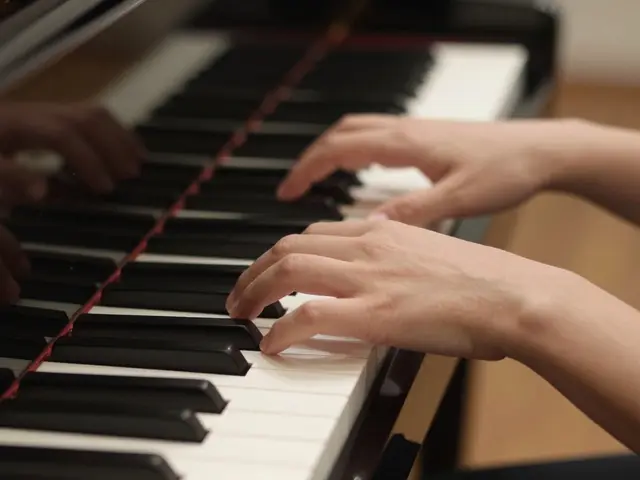
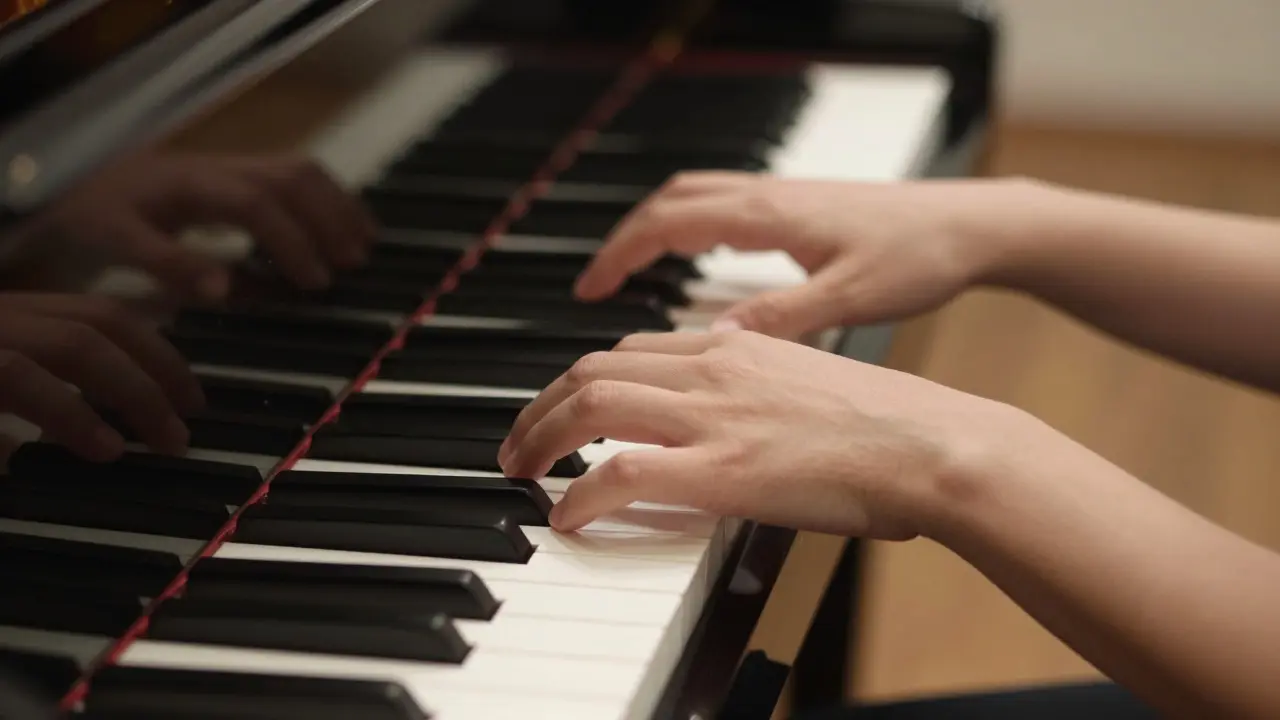
Now, look at your hands. The classic advice is to make a "C" shape, as if you are holding an orange. Keep your thumbs relaxed and slightly tucked, not sticking out awkwardly. Your fingertips should contact the keys, except for the thumb, which plays with its side tip. This curved hand position allows for maximum agility and power. If your knuckles collapse (a common issue known as "flat fingering"), you lose leverage and speed. Practice lifting your hand into the air and letting it drop gently onto the keys, maintaining that curve. This "drop" exercise helps you feel the weight transfer without tension.
Building Technique: Scales, Arpeggios, and Hanon
Technique is the vehicle that carries your musical ideas. Without it, you are limited to simple melodies and chords. The core of piano technique revolves around scales, arpeggios, and specific finger exercises.
Scales are sequential patterns of notes following a specific interval structure, fundamental to understanding key signatures and finger movement. Start with C Major, then move to G Major, F Major, and so on. Do not rush. Use a metronome. Play slowly enough that every note is even in volume and timing. Focus on the thumb-under movement in major scales. The transition should be smooth, not jerky. Aim for all twelve major and minor scales eventually. This knowledge unlocks any piece of music you might encounter.
Arpeggios are broken chords played note-by-note rather than simultaneously, essential for fluid harmonic accompaniment and melodic runs. They teach your hand to stretch and contract efficiently. Practice root position arpeggios first, then inversions. Notice how your hand shape changes slightly for each inversion. This flexibility is crucial for playing romantic-era repertoire or jazz comping.
For finger independence, many pianists use Hanon exercises, which are a series of mechanical finger drills designed to strengthen fingers and improve dexterity through repetitive patterns. Charles-Louis Hanon’s "The Virtuoso Pianist" contains 60 exercises. Start with Exercise No. 1, playing five notes per hand, moving up one key at a time. Keep your wrists loose. If you feel pain, stop immediately. These exercises are tools, not goals. Use them to warm up, not to replace musical playing.

Decoding Music Theory: Why It Matters
You do not need a degree in music theory to play the piano, but ignoring it limits your growth. Theory is simply the logic behind the music. It explains why certain chords sound good together and why a melody resolves the way it does.
Start with the basics: note names, intervals, and chord construction. Understand what a major triad (root, major third, perfect fifth) sounds like compared to a minor triad (root, minor third, perfect fifth). Learn the circle of fifths. This diagram shows the relationship between the 12 tones of the chromatic scale, their corresponding key signatures, and the associated major and minor keys. It is the map for modulation and harmony.
Apply theory directly to your practice. When you learn a new piece, identify the key signature. Find the tonic chord. Look for the dominant seventh chord that creates tension. Recognize these patterns, and you will stop seeing sheets of music as random dots and start seeing them as logical structures. This speeds up sight-reading significantly. Instead of reading every single note, you recognize chunks of information-chords, scales, arpeggios-and process them faster.
Smart Practice Strategies
How you practice matters more than how long you practice. An hour of focused, deliberate practice is worth ten hours of mindless repetition. Here is how to structure your sessions for maximum efficiency.
- Set Specific Goals: Don’t say, "I will practice Bach." Say, "I will master measures 15-20 of the Prelude in C Major, focusing on evenness in the left hand."
- Chunking: Break pieces into small sections. Master four measures at a time before moving to the next. Once you know two chunks, combine them. Then add another chunk. This builds the piece logically.
- Slow Practice: If you cannot play it slowly, you cannot play it fast. Slow down until you can play the passage perfectly three times in a row. Only then increase the tempo by 5-10 BPM on your metronome.
- Hands Separate: Always learn difficult passages with each hand individually. The brain processes motor skills better when isolated. Combine hands only when each part is comfortable.
- Vary Your Approach: Change rhythms. Play staccato, then legato. Play accents on different beats. This forces your brain to pay attention to every note, preventing autopilot mode.
Avoid the "start-to-finish" trap. Beginners often play from the beginning of a piece every time they practice. This means you rehearse the easy parts dozens of times while neglecting the hard spots. Identify your problem areas and attack them directly.
Selecting Repertoire: Balance and Enjoyment
Your repertoire is your identity as a pianist. Choosing what to play is critical. If everything is too hard, you get frustrated. If everything is too easy, you get bored. You need a balanced diet of music.
Follow the "Three-Piece Rule":
- One Technical Study: A piece that challenges your fingers, such as a Czerny etude or a Scarlatti sonata.
- One Musical Piece: Something expressive that focuses on phrasing and dynamics, like a Schubert impromptu or a Debussy waltz.
- One Fun Piece: A song you love, whether it’s a Beatles cover, a movie theme, or a jazz standard. This keeps you motivated.
Don’t ignore genre diversity. Classical training builds discipline, but exploring jazz, blues, or contemporary styles develops improvisation and ear training. Listening to great pianists across genres expands your musical vocabulary. Watch live performances online. Analyze how they handle rubato (speed flexibility) and dynamics. Mimic their interpretations initially, then develop your own voice.
Overcoming Plateaus and Staying Motivated
Progress is not a straight line. You will hit plateaus where it feels like you are not improving. This is normal. Often, improvement is happening subconsciously. Trust the process.
To break through a plateau, change something. Try a different teacher for fresh perspectives. Record yourself playing. Listening to a recording reveals issues you miss while playing-rhythm inconsistencies, uneven tone, rushing tempos. It is painful but invaluable. Set short-term milestones. Celebrate small wins, like mastering a tricky measure or improving your sight-reading speed.
Join a community. Play with others. Duetting, chamber music, or even informal jam sessions provide social accountability and joy. Teaching someone else, even a beginner, reinforces your own understanding. Explaining a concept forces you to clarify it in your own mind.
Comparison of Practice Approaches
| Aspect | Effective Approach | Ineffective Approach |
|---|---|---|
| Tempo | Start slow, increase gradually with metronome | Play at performance speed immediately |
| Focus | Target specific problem measures | Play entire piece repeatedly |
| Hands | Practice hands separately first | Always practice both hands together |
| Feedback | Record and listen critically | Rely solely on feeling during play |
| Posture | Relaxed, aligned, weight-supported | Tense, slouched, finger-driven |
Frequently Asked Questions
How long does it take to learn piano?
There is no fixed timeline. Basic proficiency (playing simple songs) can be achieved in 6-12 months with consistent practice. Intermediate level (playing complex classical pieces or improvising) typically takes 3-5 years. Mastery is a lifelong journey. Progress depends on practice quality, frequency, and natural aptitude.
Do I need to read sheet music to learn piano?
While you can learn by ear or using chord charts, reading sheet music provides a comprehensive understanding of music. It allows you to access a vast library of repertoire and communicate effectively with other musicians. However, ear training and improvisation are equally valuable skills to develop alongside literacy.
Is a digital piano as good as an acoustic piano for learning?
A high-quality digital piano with weighted keys and good sound sampling is excellent for beginners and intermediates. It offers advantages like headphone practice, tuning stability, and lower maintenance. However, acoustic pianos provide superior touch sensitivity and tonal nuance, which are important for advanced expression. Choose based on budget and space constraints.
How often should I practice piano?
Consistency is key. Daily practice of 30-60 minutes is better than one long session once a week. Short, focused sessions help build muscle memory and prevent fatigue. If you are busy, even 15 minutes of deliberate practice daily yields results. Quality of focus matters more than duration.
What should I do if I get stuck on a difficult passage?
Slow it down. Isolate the problematic few notes. Practice hands separately. Use rhythmic variations. Check your fingering-is it optimal? Sometimes changing fingering solves the problem. If still stuck, take a break. Sleep often consolidates motor learning. Return to it fresh the next day.