Key Takeaways
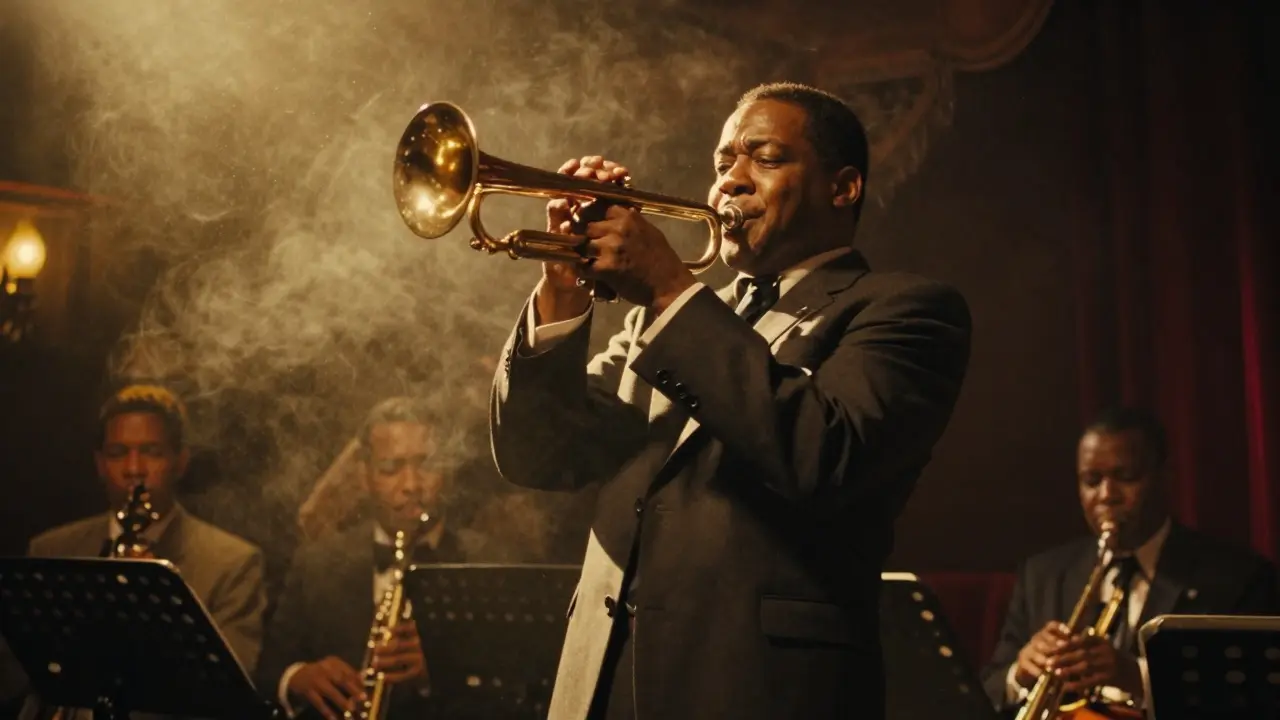
- Louis Armstrong shifted the focus of jazz from collective improvisation to the individual soloist.
- Duke Ellington elevated jazz to a sophisticated art form through complex orchestral compositions.
- Miles Davis repeatedly reinvented the genre, moving from Bebop to Cool Jazz and Fusion.
- The genre evolved through a constant tension between structured composition and spontaneous freedom.
The Man Who Changed Everything: Louis Armstrong
You can't talk about Louis Armstrong is the foundational figure of jazz who shifted the music's focus from group improvisation to the individual soloist. Also known as Satchmo or Pops, he brought a level of technical mastery to the trumpet that was unheard of in the early 1900s. Before Armstrong, jazz was largely about a group of musicians playing a melody together in a loose, slightly chaotic way. He changed the game by stepping forward and delivering solos that were logically structured, rhythmically daring, and deeply emotional.
Think about his influence on the concept of "swing." It wasn't just about a beat; it was about the placement of the note-playing slightly behind or ahead of the pulse to create tension. When he recorded his "Hot Five" and "Hot Seven" sessions in the 1920s, he provided a blueprint for every pop and jazz singer who followed. His gravelly voice and effortless phrasing proved that the human voice could be treated as an instrument, paving the way for the expressive styles we hear in modern soul music.
The Architect of Elegance: Duke Ellington
While Armstrong was the heart of the solo, Duke Ellington was the brain of the ensemble. As a prolific composer and bandleader who wrote over 1,000 compositions, Ellington viewed his orchestra as his primary instrument. He didn't just write for a generic saxophone or trumpet; he wrote for the specific tonal qualities of the musicians in his band, creating a deeply personalized sound.
Ellington moved jazz out of the dance halls and into the concert halls. He proved that Jazz could be as complex and structured as a symphony without losing its spontaneous spirit. His work with the "Ellington Orchestra" introduced a level of sophistication in harmony and color that influenced classical composers and future jazz arrangers. Have you ever wondered why some jazz feels like a conversation and others feel like a painting? That's the influence of Ellington's approach to tonal color.
| Feature | Louis Armstrong | Duke Ellington |
|---|---|---|
| Primary Focus | Individual virtuosity and soloing | Orchestral composition and arrangement |
| Musical Contribution | Developed the concept of 'Swing' | Elevated jazz to a concert art form |
| Key Instrument | Trumpet / Vocals | Piano / Conducting |
| Lasting Impact | Defined the role of the soloist | Expanded the harmonic language of jazz |
The Chameleon of Sound: Miles Davis
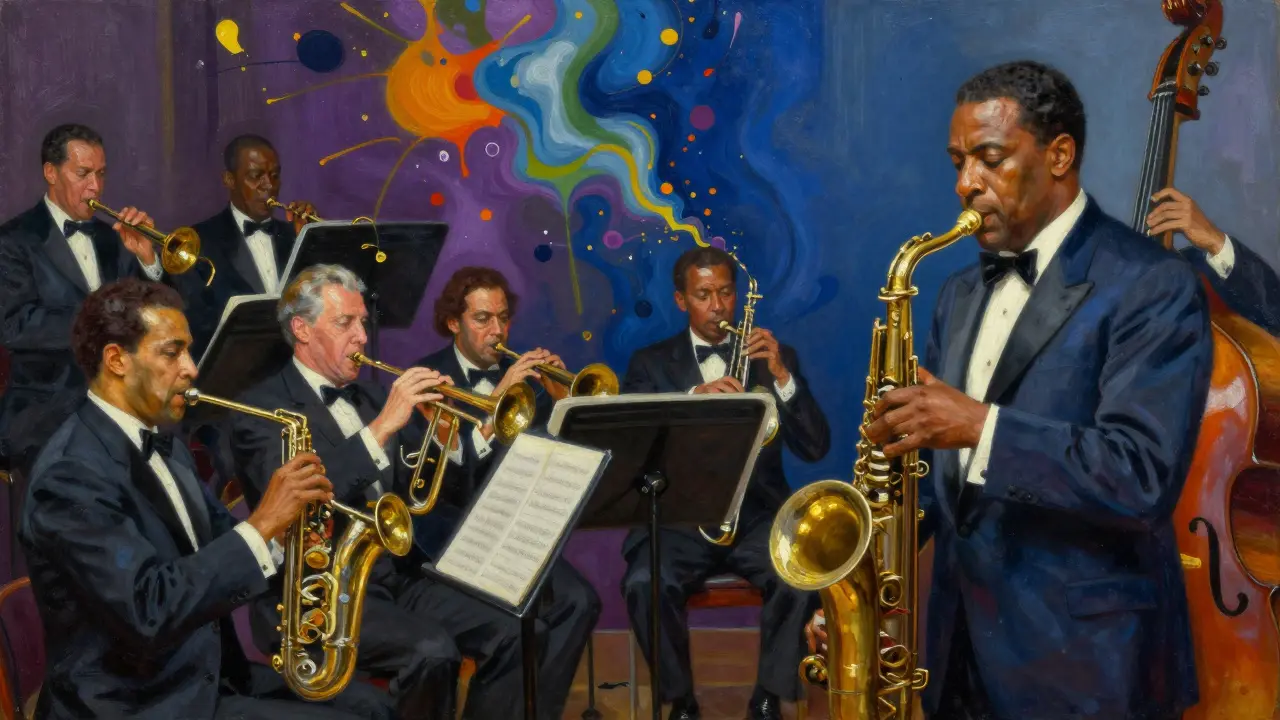
If Armstrong founded the house and Ellington decorated it, Miles Davis was the one who kept tearing down the walls to build something new. He is perhaps the most restless artist in history. He didn't just master one style; he helped create four or five different ones. He started in the Bebop era, playing with Charlie Parker, but he eventually found the frenetic pace of that style too limiting.
Davis pioneered Cool Jazz, a more relaxed, understated approach that emphasized space and melody over raw speed. Then, he shifted toward Modal Jazz with the legendary album Kind of Blue. Instead of following complex chord changes every few seconds, he based the music on scales (modes), giving the soloists more room to breathe and explore. Later in his career, he shocked the world by plugging in electric instruments and blending jazz with rock and funk, creating Jazz Fusion. He taught us that the most important part of art isn't the tradition, but the evolution.
The High Priestess and the Virtuosos
Jazz wasn't just a man's world, although history books sometimes make it seem that way. Billie Holiday brought a level of psychological depth to jazz vocals that was unprecedented. She didn't have the powerhouse range of some of her peers, but she used her voice like a horn, bending notes and manipulating timing to convey raw pain and longing. Her contribution was an insistence on emotional honesty over technical perfection.
Then you have the technicians of the a-list, like John Coltrane. Coltrane took the saxophone to its absolute physical and spiritual limit. In his early work, he played "sheets of sound," packing so many notes into a phrase that it sounded like a blur of harmony. Later, he moved into "Free Jazz," where the traditional rules of melody and rhythm were discarded in favor of a spiritual, conversational flow. Coltrane's journey shows that jazz music legends weren't just musicians; they were seekers trying to reach a higher state of consciousness through sound.
How These Legends Changed the Way We Listen
When we look at the timeline of these artists, we see a pattern of liberation. First, they liberated the rhythm (Armstrong), then they liberated the structure (Ellington), and finally, they liberated the harmony and the very idea of a "genre" (Davis and Coltrane). This progression created the foundation for almost every modern music production technique we use today.
For example, the concept of the "groove" in hip-hop comes directly from the swing feel established in the 1930s. The use of complex chords in Neo-Soul is a direct descendant of the modal experiments of the 1950s. Even the way a modern rock guitarist might improvise a long solo is an echo of the bebop era's emphasis on individual expression. These legends didn't just make songs; they created a language. If you're a musician today, you're speaking a language that was written by these people.
But the real magic of these contributions lies in the tension between control and chaos. Every great jazz performance is a tightrope walk. You have the composition-the "map"-and then you have the improvisation-the "journey." The legends were the ones who knew exactly when to follow the map and when to throw it away entirely to see where the music would take them.
What is the difference between Bebop and Cool Jazz?
Bebop is fast, complex, and aggressive, characterized by rapid chord changes and virtuosic solos. Cool Jazz, pioneered by Miles Davis, is the opposite: it's slower, more melodic, and emphasizes a relaxed, subdued tone with more space between the notes.
Why is Louis Armstrong considered the most important jazz musician?
Armstrong shifted jazz from a collective ensemble style to a soloist's art. He introduced the world to the concept of swing and demonstrated that a single musician's personal expression could drive the entire direction of a piece of music.
What is Modal Jazz?
Unlike traditional jazz, which relies on a series of shifting chords (functional harmony), Modal Jazz uses musical modes (scales) as the basis for improvisation. This gives the performer more freedom to explore melodies without being tied to a strict chord progression.
How did Duke Ellington influence classical music?
Ellington brought sophisticated orchestral techniques to jazz, using extended forms and complex harmonies. His ability to blend different instrumental colors influenced 20th-century classical composers and pushed the boundaries of what was considered "serious" music.
What is Jazz Fusion?
Jazz Fusion is a hybrid genre that blends the improvisational nature of jazz with the electric instruments, rhythms, and amplification of rock and funk. Miles Davis's album 'Bitches Brew' is often cited as the catalyst for this movement.
Where to Start Your Jazz Journey
If you're new to this world, don't feel like you have to study it like a textbook. The best way to understand these legends is to hear the evolution in real-time. Start with Louis Armstrong's early recordings to feel the birth of swing. Move to Duke Ellington's "Take the A Train" to see how a band can sound like a single, breathing organism. Then, listen to Miles Davis's Kind of Blue-it's widely considered the best entry point for any new listener because of its accessibility and mood.
Once you're comfortable, dive into the challenging waters of John Coltrane's A Love Supreme. It's not just music; it's a spiritual experience. If you find yourself loving the grit and emotion, look for Billie Holiday's recordings. The key is to listen for the "conversation." In jazz, the musicians are talking to each other. One plays a phrase, another responds, and they build a story together in the moment. When you start hearing that dialogue, you're truly listening to jazz.