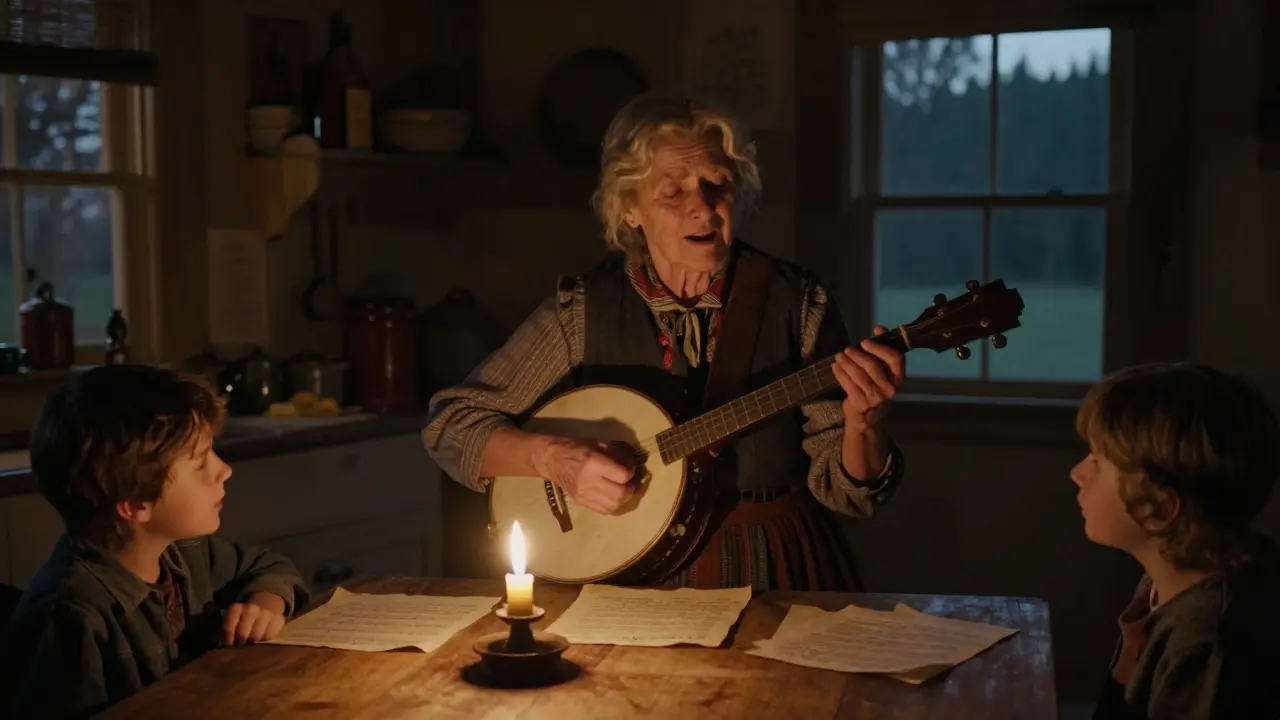
Look at any hit song on the radio today - whether it’s a pop ballad, a country tune, or a hip-hop track with a soulful sample - and you’re hearing echoes of folk music. Not the kind you might picture from a campfire or a dusty record store, but the raw, storytelling backbone that quietly built the foundation of almost every genre we love now. Folk music didn’t just influence popular music. It became its DNA.
Where It All Began: The Oral Tradition
Folk music isn’t about polished studios or record deals. It started as songs passed down through families, villages, and work camps. A farmer in Appalachia sang a tune to keep his rhythm while harvesting. A factory worker in Manchester hummed a protest chant to lift spirits. A sailor on the Atlantic sang sea shanties to coordinate hauling ropes. These weren’t performances - they were survival tools. And because they were shared by word of mouth, they changed with every singer. A verse got dropped. A melody bent. A lyric shifted to fit a new hardship or joy. That’s why folk songs never stayed still. They evolved.
This living, breathing quality made folk music the original open-source project. No copyright. No gatekeepers. Just people singing what mattered. And when commercial music industries started taking shape in the early 1900s, they didn’t invent their sounds - they dug into these old songs.
The Blues: Folk’s First Child
There’s no way to talk about modern music without talking about the blues. And the blues? It’s folk music with a guitar and a heartache. African American workers in the Deep South took spirituals, work songs, and field hollers - all rooted in West African oral traditions - and turned them into something new. The 12-bar structure? It came from call-and-response patterns sung by laborers. The bent notes? They mirrored the vocal inflections of preaching and crying out in pain.
When artists like Robert Johnson and Muddy Waters recorded in the 1930s and 40s, they weren’t creating a new genre. They were documenting a culture’s emotional language. Later, rock and roll musicians like Chuck Berry and Elvis Presley didn’t "invent" rhythm and blues - they borrowed it directly from these folk roots. The raw energy, the simple chord progressions, the focus on personal struggle - all came from folk.
Country Music: The Urban Folk Story
Country music didn’t start with cowboy hats and pickup trucks. It started with fiddles, banjos, and ballads brought over by Scottish and Irish immigrants to the American South. Songs like "The Ballad of Jed Clampett" or "Cotton-Eyed Joe" were originally folk tunes sung in homes, not on radio stations. When radio became popular in the 1920s, broadcasters needed content. They turned to rural performers who still sang these old songs.
That’s how "hillbilly music" became country. And even today, country’s biggest hits - think Chris Stapleton’s "Tennessee Whiskey" or Miranda Lambert’s "The House That Built Me" - are built on the same storytelling formula: a person, a place, a loss, and a memory. That’s folk music dressed in denim.
Rock and Pop: The Folk Revival That Changed Everything
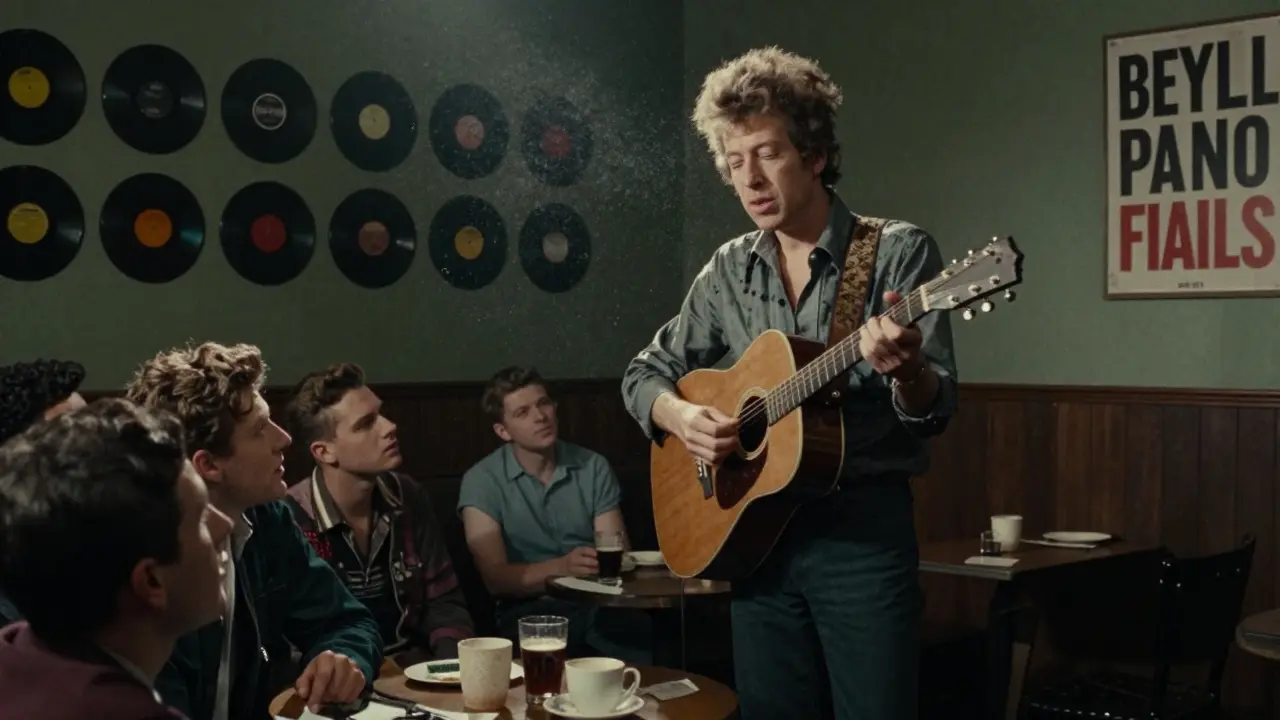
In the 1960s, a wave of young musicians in the U.S. and UK went back to the roots. Bob Dylan picked up an acoustic guitar and sang about civil rights and nuclear fear. Joan Baez sang traditional ballads with haunting clarity. The Byrds turned a Dylan song into a jangly hit with "Mr. Tambourine Man."
This wasn’t nostalgia. It was rebellion. These artists proved that simple songs with honest lyrics could move millions. And they didn’t stop at folk. They fused it with electric guitars, drums, and studio effects. The result? Rock music gained depth. Pop music gained soul.
Think about The Beatles’ "Let It Be." The harmony, the structure, the way the lyrics feel like a prayer - that’s folk. Or Simon & Garfunkel’s "The Boxer," with its layered harmonies and tale of a lonely fighter. Even today, artists like Fleet Foxes, Iron & Wine, or Phoebe Bridgers carry that same quiet, poetic weight. They’re not trying to be folk artists. They’re just singing like folk singers - because it works.
Hip-Hop and R&B: The New Storytellers
You might not think of rap as folk music. But think again. Folk music has always been about telling stories from the margins. Hip-hop is the same - just with a beat instead of a banjo.
Early rappers like Grandmaster Flash and Public Enemy didn’t just rhyme over drum machines. They sampled old soul records, gospel choirs, and blues licks - all of which trace back to African American folk traditions. The call-and-response in a rap verse? That’s the same as a field holler. The narrative structure of a song like Kendrick Lamar’s "HUMBLE." or J. Cole’s "Middle Child"? That’s a modern folk ballad, with bars instead of verses.
R&B artists like Alicia Keys, Sam Smith, or H.E.R. use vocal runs and emotional phrasing that come straight from gospel and blues - both born from folk roots. Even when the production is slick, the heart is still the same: a person speaking truth, not to entertain, but to be heard.
Why Folk Still Matters Today
Modern music has never been more produced. Auto-tune. AI drums. Viral hooks. But the songs that stick - the ones that move people for decades - still follow the folk model: simple chords, honest words, emotional truth.
Look at Olivia Rodrigo’s "good 4 u." It’s a pop-punk anthem. But the structure? Verse-chorus-verse. The lyrics? A teenager venting about betrayal. That’s folk. It’s not about the production. It’s about the feeling.
Folk music doesn’t need to be played on a fiddle to be folk. It’s in the way a songwriter says, "I was just a kid when I left home," or "I still hear your voice when the rain falls." It’s in the quiet spaces between notes. It’s in the songs we sing when we’re alone, or when we need to remember who we are.
The Invisible Thread
There’s a reason you can trace a line from an old Appalachian ballad to a Taylor Swift lyric, from a Delta blues riff to a Billie Eilish whisper, from a sea shanty to a TikTok trend. Folk music never died. It just changed its clothes.
It moved from the hearth to the radio. From the field to the studio. From a handwritten notebook to a streaming playlist. But the core never changed: people using music to say what they couldn’t say any other way.
So next time you hear a song that makes you feel something deep - not because of the beat, but because of the words - you’re not just listening to pop. You’re listening to folk. Still alive. Still singing.
Is folk music still being made today?
Yes - and it’s thriving. Modern folk artists like Phoebe Bridgers, Big Thief, and The Decemberists blend traditional storytelling with indie rock, lo-fi production, and personal lyricism. Even outside the "folk" label, songwriters across genres - from Lizzo to Arlo Parks - use folk’s core tools: honesty, simplicity, and emotional clarity. Folk isn’t a genre anymore. It’s a mindset.
What’s the difference between folk music and country music?
Country music is one branch of folk music, not a separate thing. Folk music includes all traditional songs passed down through communities - from Irish ballads to African American work songs. Country emerged when those songs were recorded and marketed to rural audiences in the U.S. in the 1920s. Today, country often uses polished production and Nashville-style songwriting, but its roots are still in folk. You can’t have country without folk.
Did folk music influence rock music?
Absolutely. The 1960s folk revival directly shaped rock. Bob Dylan went electric and brought folk’s lyrical depth into rock. The Beatles borrowed harmonies from Simon & Garfunkel. Led Zeppelin sampled old Appalachian ballads. Even punk rock - with its raw, DIY energy - was inspired by folk’s anti-establishment spirit. Rock didn’t replace folk. It grew from it.
Can hip-hop be considered folk music?
Many scholars and musicians say yes. Hip-hop shares folk music’s core traits: oral storytelling, community expression, and adaptation over time. Rap verses function like modern ballads - telling stories of struggle, identity, and survival. Sampling old blues and soul records is like a modern folk musician borrowing an old tune. The tools changed - turntables instead of fiddles - but the purpose didn’t.
Why do modern pop songs still sound like folk songs?
Because the most powerful songs aren’t about complexity - they’re about connection. Folk music teaches us that simple chords, repetitive structures, and honest lyrics create the deepest emotional impact. Even the biggest pop hits - like Ed Sheeran’s "Photograph" or Adele’s "Someone Like You" - use folk’s formula: a voice, a story, and a heart. Technology can enhance music, but it can’t replace that human truth.