When you hear a beat with a warm, looping horn stab or a vocal sample that cracks with emotion, you're not just hearing a hip-hop track-you're hearing the ghost of soul music. It’s everywhere. From the gritty drums of early East Coast rap to the melodic hooks of today’s trap anthems, soul is the hidden backbone of hip-hop. This isn’t just influence. It’s inheritance.
The Roots Are in the Groove
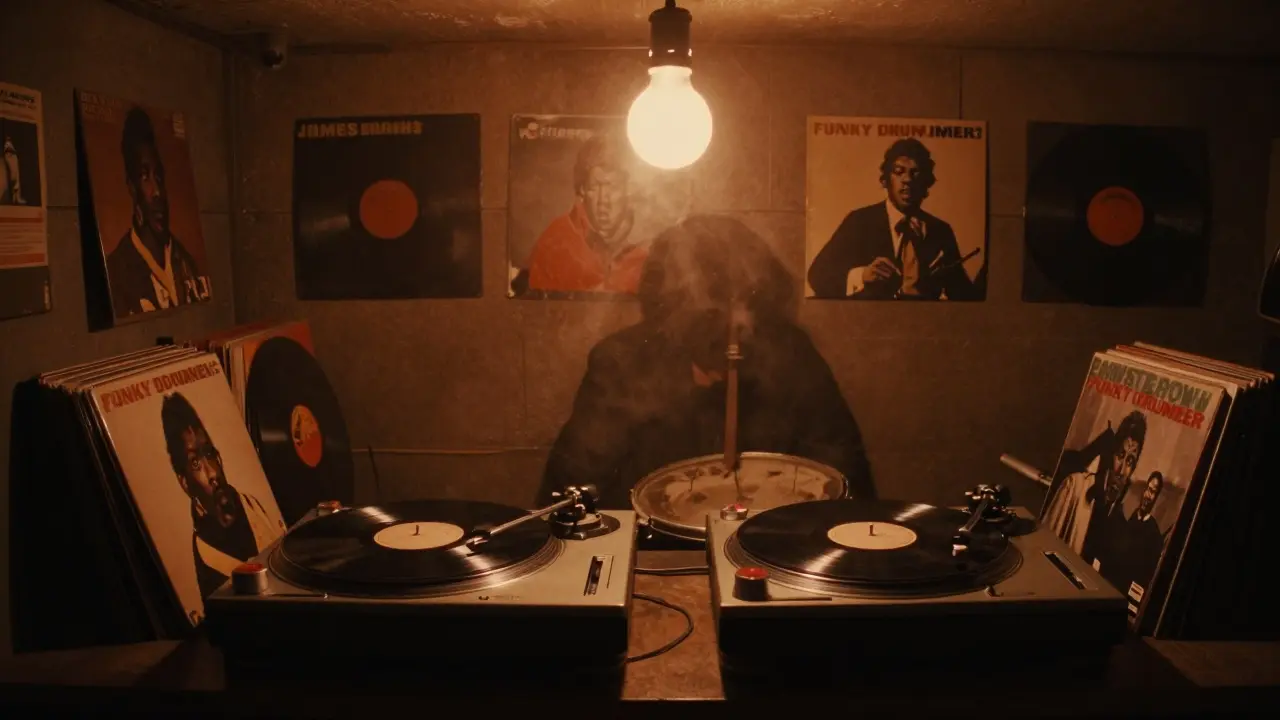
Soul music didn’t just inspire hip-hop-it gave it its heartbeat. In the 1960s and 70s, artists like James Brown, Aretha Franklin, Marvin Gaye, and Curtis Mayfield built songs around raw emotion, call-and-response vocals, and tight, danceable rhythms. These weren’t just songs. They were stories told with grit, gospel fire, and a deep sense of Black resilience. When hip-hop emerged in the Bronx in the late 1970s, DJs didn’t have expensive gear. They had turntables and two copies of the same record. And what did they loop? Soul tracks. Specifically, the breaks. The moments where the drums locked in, the bass surged, and the horns screamed.
James Brown’s “Funky Drummer” isn’t just a song. It’s the most sampled drum break in hip-hop history. Producers like Pete Rock, DJ Premier, and RZA didn’t just borrow it-they built entire albums around it. The snare crack on that track became the heartbeat of Wu-Tang Clan’s “C.R.E.A.M.” and Nas’s “N.Y. State of Mind.” You don’t need to know the name of the song to feel its weight. That’s the power of a good groove.
Sampling as Reverence, Not Theft
Early hip-hop producers didn’t sample soul records because they were lazy. They sampled them because those records carried something digital gear couldn’t replicate: humanity. A vinyl crackle. A singer’s breath between lines. The slight warble in a vocal take that meant the artist was feeling it. That’s why producers spent hours digging through thrift store bins in Harlem, searching for obscure 45s. They weren’t looking for hits. They were looking for feeling.
Take Marvin Gaye’s “I Heard It Through the Grapevine.” The 1982 version by Gladys Knight & The Pips was sampled by DJ Jazzy Jeff & The Fresh Prince for “Parents Just Don’t Understand.” The original track’s tension, its slow-building drama, became the perfect backdrop for a teenager’s plea to his parents. The sample didn’t just fit-it deepened the story.
Aretha Franklin’s “Chain of Fools” was chopped into a loop for The Notorious B.I.G.’s “Big Poppa.” The horns didn’t just add flavor. They added dignity. In a genre often painted as aggressive or cold, that sample whispered: You are worthy of this groove.
The Emotional DNA of Hip-Hop
Soul music taught hip-hop how to cry. How to rage. How to celebrate without losing the pain underneath. You can hear it in Kendrick Lamar’s “Alright.” The horns? A direct nod to classic soul arrangements. The call-and-response chorus? Straight out of a 1968 Rev. James Cleveland gospel service. Kendrick didn’t just sample soul-he channeled its spirit. His lyrics carry the weight of Black struggle, but the music? It lifts. That’s soul.
Same with Childish Gambino’s “This Is America.” The opening chord progression? A minor-key soul ballad. The sudden shift into chaotic percussion? A metaphor for violence. The song doesn’t just use soul-it reimagines it. It takes the vulnerability of Bill Withers’ “Ain’t No Sunshine” and layers it with modern dread. The result? A song that doesn’t just make you tap your foot-it makes you question everything.
Modern Producers Still Dig the Dust
Today’s top producers still treat soul samples like sacred texts. Metro Boomin sampled The Delfonics’ “Didn’t I (Blow Your Mind This Time)” for 21 Savage’s “Mr. Right Now.” The original track, released in 1970, had a slow, swirling organ and a vocal that felt like a whispered confession. Metro didn’t speed it up or distort it. He let it breathe. The result? A track that sounds like midnight in Atlanta, lights low, emotions high.
Drake’s “Toosie Slide” uses a chopped vocal sample from The Stylistics’ “Betcha by Golly, Wow.” The sample’s smooth falsetto gives the track a nostalgic warmth that contrasts with the beat’s modern bounce. It’s not just a hook-it’s a memory. That’s why it works. Soul music doesn’t just provide rhythm. It provides context.
Even artists who don’t sample directly feel soul’s pull. Give a listen to Lil Baby’s “Emotionally Scarred.” No horns. No vinyl crackle. But the way he holds a note? The way his voice cracks on the bridge? That’s Aretha Franklin in 1967. That’s Otis Redding singing “I’ve Been Loving You Too Long.” He didn’t need a sample. He just learned the lesson.
Why Soul Still Matters
Some say hip-hop moved on. That trap beats and Auto-Tune replaced the old-school sound. But that’s not true. What changed was the delivery. The soul didn’t disappear. It got quieter. It got deeper. It moved from the sample tray into the artist’s voice.
Modern hip-hop doesn’t need to loop a 1972 breakbeat to carry soul’s spirit. It just needs to feel it. That’s why artists like SZA, H.E.R., and Giveon-artists who blend R&B, soul, and hip-hop-are dominating charts. Their music isn’t just smooth. It’s honest. It’s raw. It’s the same honesty that made Sam Cooke’s “A Change Is Gonna Come” an anthem.
Soul music gave hip-hop its soul. Not just in the samples. In the truth. In the vulnerability. In the refusal to let pain go unheard. You can’t fake that. You can’t algorithm it. You have to live it.
The Legacy Lives in the Breaks
When a producer digs through crates in 2026 and finds a faded copy of “Hold On, I’m Comin’” by Sam & Dave, they’re not just looking for a beat. They’re looking for a connection. To a time when music wasn’t just entertainment-it was survival. When a voice cracked on a note, it meant something. When a drum hit just right, it made you move.
That’s why soul music still matters. Not because it’s old. But because it’s alive. Every time a young rapper lays a verse over a slowed-down Isaac Hayes sample, they’re not making a throwback. They’re continuing a conversation that started decades ago. And that conversation? It’s still going strong.
Why do hip-hop producers sample soul music instead of making their own beats?
Hip-hop producers sample soul music because those recordings carry emotional depth that’s hard to recreate from scratch. Soul records from the 60s and 70s were made with live instruments, real vocal performances, and analog warmth-qualities that digital production often lacks. Sampling lets producers tap into the raw humanity of those tracks. It’s not laziness-it’s reverence. A well-placed sample can tell a story in three seconds that a new composition might take a minute to build.
Is sampling soul music legal today?
Legally, yes-but only if cleared. In the 90s, many producers sampled without permission, leading to lawsuits and landmark cases like Bridgeport Music v. Dimension Films. Today, most major-label artists clear samples through licensing agencies. Independent artists still risk legal trouble, so many now use sample packs that mimic soul sounds or hire musicians to recreate the parts. The trend is shifting toward reinterpretation rather than direct sampling, but the soul influence remains.
What soul artists are most sampled in hip-hop?
The top three are James Brown, Aretha Franklin, and Curtis Mayfield. James Brown’s breaks (especially “Funky Drummer”) are sampled over 3,000 times. Aretha’s vocal runs appear in tracks by Nas, Jay-Z, and Drake. Curtis Mayfield’s lush orchestration inspired producers from Pete Rock to Kanye West. Other heavy hitters include The Isley Brothers, Marvin Gaye, and The Meters.
Can hip-hop exist without soul influences?
Technically, yes-but it would lose its emotional core. Soul music gave hip-hop its humanity. Without the cry in Aretha’s voice, the groove in James Brown’s drums, or the pain in Marvin Gaye’s lyrics, hip-hop would be rhythm without soul. Even the most minimalist trap beats owe something to the spacing and swing of classic soul. The genre might evolve, but its soulful heartbeat is non-negotiable.
How has modern hip-hop changed the way soul is used?
Today’s producers don’t just loop breaks-they manipulate them. They pitch them down, reverse them, layer them with 808s, or blend them with live instrumentation. Artists like Kanye West and J. Cole use soul samples as emotional anchors, not just rhythmic hooks. And newer artists like SZA and Giveon don’t sample at all-they channel the vocal phrasing and harmonic language of soul directly into their own singing. The influence is still there; it’s just less obvious.