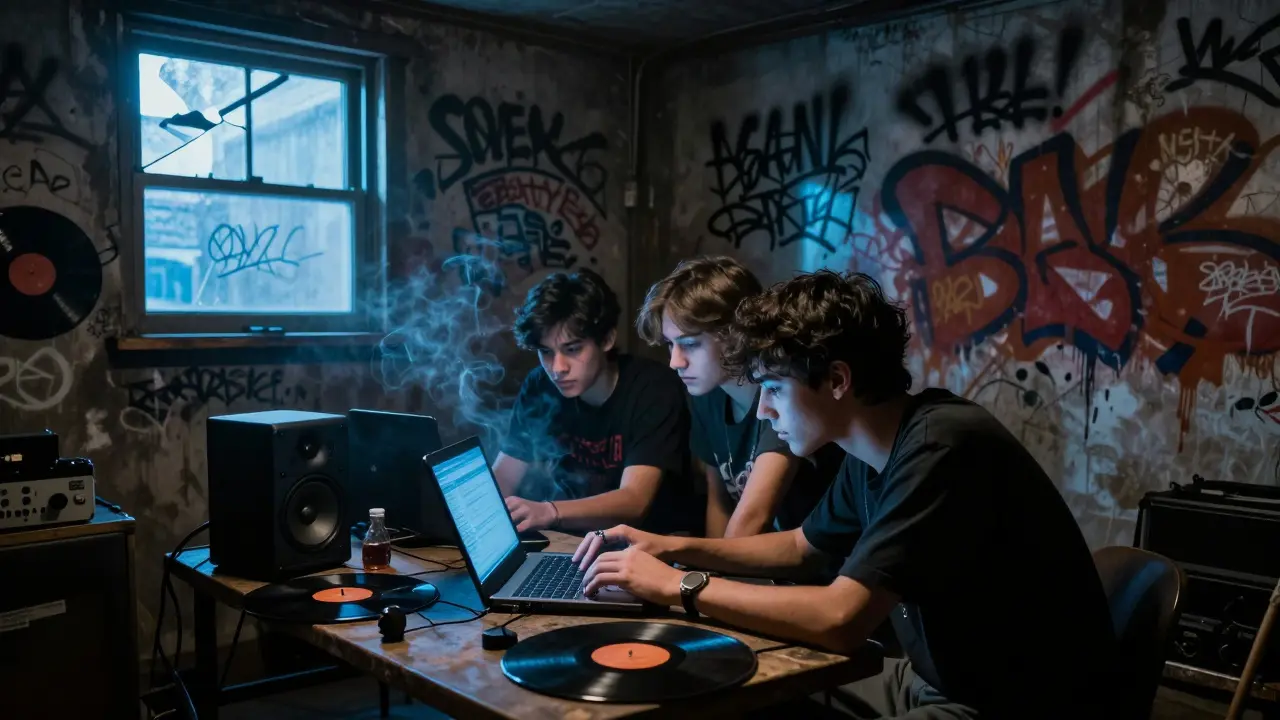
Think all hip hop is the same? Or that electronic music just means loud beats? You’re not alone. Most people hear a song and slap a label on it - pop, rock, jazz - and move on. But beneath those broad labels are entire worlds of sound, shaped by neighborhoods, technology, rebellion, and late-night studio sessions. These are the subgenres - the hidden layers of music that don’t always make the charts, but define what music actually sounds like today.
Why Subgenres Matter More Than You Think
Subgenres aren’t just fancy labels for music nerds. They’re the result of real people making music in basements, garages, and bedrooms, reacting to what came before. A subgenre forms when a group of artists starts doing something different - maybe they slow down the beat, add distorted vocals, or sample old vinyl records in a way no one else has. Over time, those small changes become a movement.
Take drill music. It didn’t come from a record label pitch meeting. It came from South Side Chicago teens in the early 2010s, using cheap software to turn trap beats into cold, grimy soundscapes that matched their reality. By 2020, UK drill had its own sound - darker, more rhythmic, with lyrics in London accents. That’s not just a variation. That’s a new language.
Subgenres help us understand music as a living thing. They show how culture, geography, and tech shape what we hear. Without them, we’d only know the surface of music - the hits, the radio edits, the playlists. But the real story? That’s in the cracks.
Electronic Music: The Subgenre Jungle
When someone says "electronic music," you might think of festival drops or EDM bangers. But that’s like saying "all cars are sedans." Electronic music has over 50 recognized subgenres, and dozens more that exist only in underground scenes.
Techno came out of Detroit in the mid-80s. It was mechanical, repetitive, made for warehouses and factories. Then came house from Chicago - warmer, soulful, built on disco roots. From there, things splintered: trance with its soaring melodies, dubstep with its wobbling bass, drum and bass with breakbeats at 170 BPM.
By 2025, subgenres like hyperpop and future bass are blending glitchy vocals with anime samples and 8-bit synths. These aren’t just trends. They’re cultural statements. Hyperpop, for example, is often made by Gen Z artists who grew up online - it’s music that sounds like a TikTok feed turned into sound.
Each subgenre has its own rules. You can tell a minimal techno track from a psytrance one just by the rhythm, the space between beats, the way the bass breathes. It’s not about volume. It’s about intention.
Rock’s Many Faces
Rock music is often seen as a single thing - guitars, drums, loud vocals. But rock has fractured into dozens of subgenres, each with its own identity.
Post-punk in the late 70s took punk’s energy but added dark synths, poetic lyrics, and a sense of dread. Bands like Joy Division didn’t just make music - they made atmospheres. Then came grunge in the early 90s: flannel shirts, distorted riffs, and raw emotion. Nirvana didn’t invent it, but they made it global.
Today, you’ve got indie rock with jangly guitars and lo-fi production, math rock with odd time signatures that make your head spin, and emo revival - a wave of bands from the 2010s that brought back the vulnerability of 2000s emo, but with better production and more diverse voices.
What’s wild is how some subgenres circle back. Garage rock, once a raw sound from the 60s, came back in the 2000s with bands like The Strokes and The White Stripes. Then again in 2023 with younger acts using analog synths and tape hiss to recreate that gritty feel. It’s not nostalgia. It’s evolution.
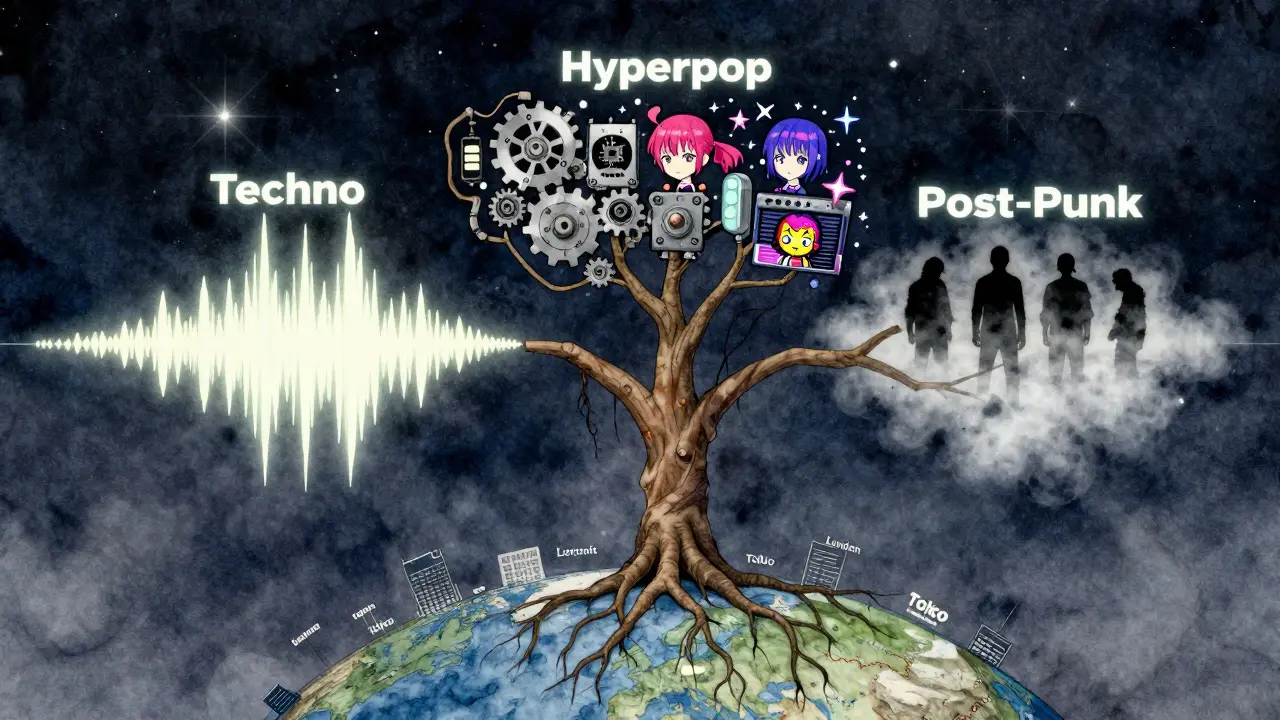
Hip Hop’s Branching Tree
Hip hop didn’t start with beats and rhymes - it started with block parties in the Bronx. But now, its subgenres are as varied as the cities they come from.
Old-school hip hop in the 80s was all about party rhymes and breakbeats. Then came gangsta rap from LA, gritty and confrontational. Alternative hip hop emerged in the 90s - artists like A Tribe Called Quest and De La Soul made jazz-infused, thoughtful music that didn’t need guns or gold chains.
Today, trap dominates charts - 808s, hi-hat rolls, lyrics about street life. But under the surface, you’ve got lo-fi hip hop - beats made for studying, with vinyl crackle and soft piano. Then there’s cloud rap, dreamy and hazy, with Auto-Tune vocals that float like smoke. And soundcloud rap - a DIY wave from the 2010s where artists like Lil Uzi Vert and Playboi Carti blurred lines between rap, punk, and electronic music.
These aren’t just styles. They’re identities. A fan of conscious rap might never listen to drill, and vice versa. The difference isn’t just sound - it’s worldview.
How Subgenres Are Born (And Why They Die)
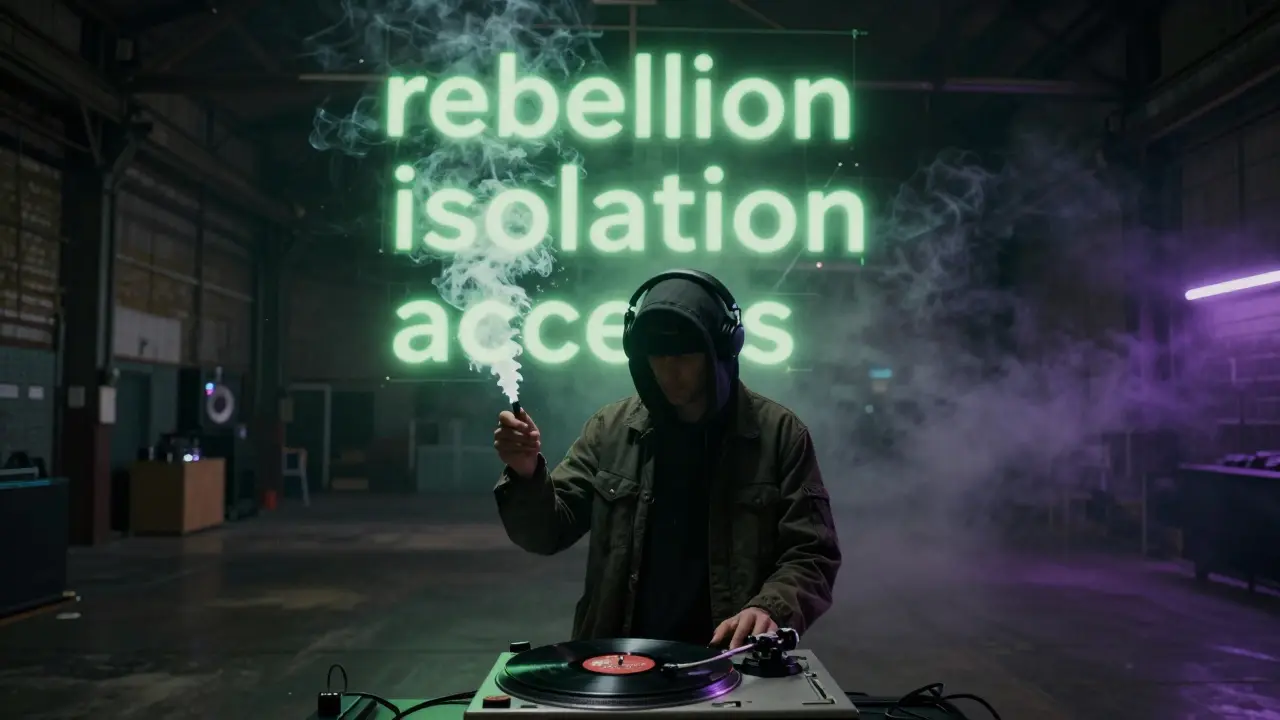
Subgenres don’t appear out of nowhere. They’re born from three things: access, isolation, and rebellion.
Access - when new tools become cheap. The Roland TR-808 drum machine cost $1,200 in 1980. By 2000, anyone with a laptop could download a free version. Suddenly, you had bedroom producers in Lagos, Jakarta, and Melbourne making beats no one had heard before.
Isolation - when a scene develops away from the mainstream. Think of slowcore - a quiet, sad rock subgenre from the 90s Midwest. Bands like Low and Red House Painters didn’t care about radio play. They made music for people who needed silence.
Rebellion - when artists reject what’s popular. Post-hardcore grew from punk fans who hated how metal was becoming flashy and polished. They wanted raw emotion, screamed vocals, and unpredictable song structures. That became a whole scene.
Subgenres die when they get too commercial. Crunk was huge in the mid-2000s - loud, party-heavy, with chants like "YEAH!" But once every pop artist started copying it, the original scene moved on. The true fans kept it alive in underground clubs and SoundCloud uploads.
How to Discover Subgenres (And Why You Should)
How do you find these hidden layers? Start with what you already like.
- If you like Radiohead, dig into art rock, then post-rock, then shoegaze.
- If you love Daft Punk, explore French house, then nu-disco, then chillwave.
- If you’re into Kendrick Lamar, go backward to conscious rap, then forward to abstract hip hop and freestyle rap battles on YouTube.
Use playlists, but not the ones Spotify recommends. Search for "best underground [genre] playlists 2025" on YouTube. Follow small labels - Hyperdub for experimental electronic, Brainfeeder for left-field hip hop. Read blogs like Resident Advisor or Pitchfork’s Deep Cuts.
Go to local shows. In Melbourne, you’ll find basement gigs where a band plays post-metal or noise pop to a crowd of 20 people. That’s where the next subgenre is being born.
The Future of Subgenres
AI is changing music. Algorithms can now generate beats in the style of lo-fi hip hop or mimic a grime flow. But here’s the thing - AI can copy the sound. It can’t copy the struggle.
Subgenres are born from real lives. From kids in Detroit who had nothing but a computer and a dream. From teenagers in Tokyo who mixed J-pop with punk because they felt out of place. From elders in Jamaica who turned reggae into dancehall because they wanted to move differently.
The future of music isn’t in the algorithms. It’s in the basement studios, the late-night Zoom collabs, the SoundCloud uploads with no followers. That’s where the next subgenre is hiding - waiting for someone to hear it, feel it, and make it theirs.
So next time you hear a strange beat, a warped vocal, a silence that lasts too long - don’t skip it. That’s not a mistake. That’s the next layer.
What’s the difference between a music genre and a subgenre?
A genre is a broad category like rock, hip hop, or electronic. A subgenre is a more specific style that evolves from that genre - like punk rock from rock, or trap from hip hop. Think of genres as trees and subgenres as branches. Each branch grows in its own direction but still belongs to the same tree.
Can a subgenre become a main genre?
Yes. Many genres started as subgenres. House music began as a subgenre of disco in Chicago. Hip hop was once considered a subgenre of funk and R&B. Over time, as they grew in popularity and cultural weight, they became their own main genres. It’s not about size - it’s about impact.
Why do some subgenres disappear?
Subgenres fade when they get too mainstream or when the culture that created them moves on. For example, crunk was huge in the mid-2000s, but once it was copied by pop artists, the original scene lost its edge. The real fans moved to newer sounds. But even "dead" subgenres live on - in samples, in remixes, in the work of artists who dig deep into music history.
How do I know if I’m listening to a real subgenre or just a trend?
Trends are loud, short-lived, and made for algorithms. Real subgenres have a community behind them - artists who keep making music in that style, fans who organize events, labels that support it. If you can find three or more artists making similar music over a few years, and it’s not just on TikTok, it’s likely a subgenre.
Do subgenres still matter in the age of streaming?
They matter more than ever. Streaming platforms have made it easier than ever to find niche sounds. You can discover a subgenre like witch house or future garage with one search. But because there’s so much music out there, subgenres help listeners find what truly speaks to them - not just what’s popular. They’re the antidote to algorithm-driven playlists.