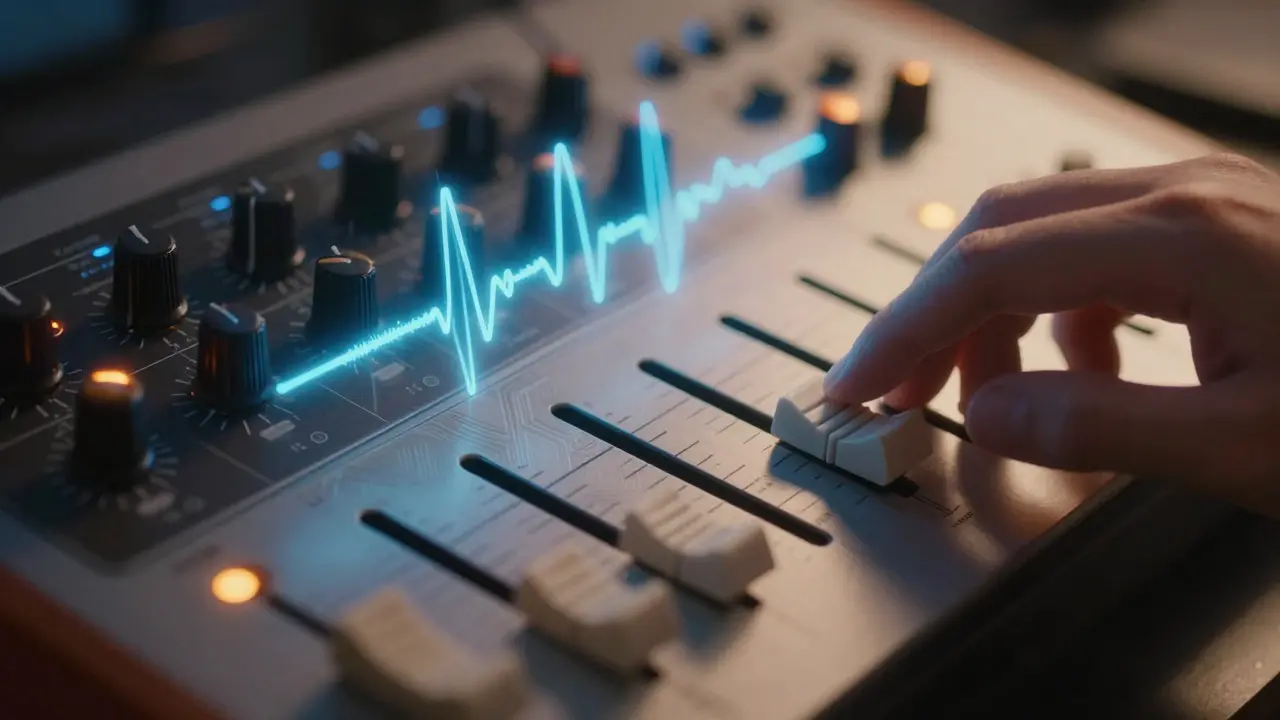
Ever wonder why a bass drop in a club makes your chest vibrate, or how a single knob on a synth can turn a whisper into a roar? Electronic music isn’t just about beats and lights-it’s built on real physics, math, and engineering. Behind every bleep, blip, and boom is a system of signals, circuits, and algorithms working together. This isn’t magic. It’s science.
How Sound Becomes Signal
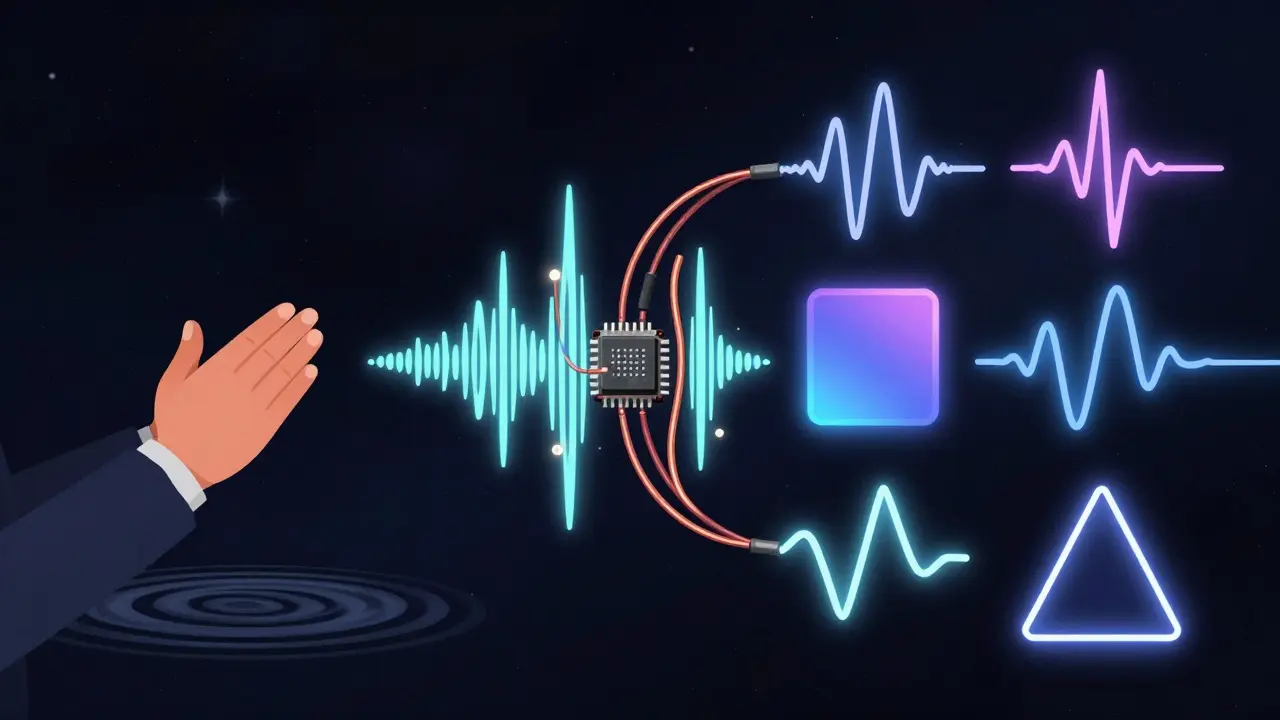
At its core, all music is vibration. When you clap your hands, air molecules bounce around. Those movements are sound waves-pressure changes traveling through the air. Electronic music doesn’t start with a guitar or drum. It starts with an electrical signal. That signal is a digital or analog version of those same pressure waves, but instead of air, it flows through wires and chips.
Microphones convert air vibrations into electrical signals. Speakers do the reverse. But in electronic music, we skip the instrument entirely. We build the signal from scratch using oscillators. These are circuits that generate repeating patterns. Think of them as tiny machines that shake back and forth at a set speed. That speed? That’s frequency. And frequency? That’s pitch.
A 440 Hz oscillator? That’s the A note above middle C. A 880 Hz one? That’s the A an octave higher. But here’s where it gets interesting: most electronic sounds aren’t just one frequency. They’re stacks of them.
The Shape of Sound: Waveforms
Not all tones sound the same, even if they’re the same pitch. Why? Because of their shape. That shape is called a waveform. There are four main ones used in synths: sine, square, sawtooth, and triangle.
- Sine wave: Smooth, pure, and quiet. It has just one frequency-no harmonics. Used for soft pads or sub-basses.
- Square wave: Sharp, hollow, and buzzy. It contains only odd harmonics. Think classic 8-bit video game sounds.
- Sawtooth wave: Bright and brash. It has all harmonics. Used for lead synths and aggressive basses.
- Triangle wave: Softer than square, richer than sine. A middle ground. Often used in arpeggios.
These shapes aren’t just aesthetic. They’re mathematically defined. A sine wave follows a perfect trigonometric curve. A sawtooth is a linear ramp that drops suddenly. Synths let you mix and modulate these shapes to create entirely new tones. That’s how you go from a simple beep to a shimmering, evolving pad.
Filters: Sculpting the Raw Sound
Raw waveforms are loud. They’re harsh. They’re chaotic. That’s where filters come in. Filters don’t add sound-they remove it. Think of them like sieves for frequencies.
The most common is the low-pass filter. It lets low frequencies through and blocks the highs. Turn the cutoff knob up, and the sound gets brighter. Turn it down, and it mutes the sparkle, leaving only a deep rumble. That’s how you go from a piercing lead to a warm, breathing bass.
High-pass filters do the opposite. They cut lows, which helps clean up muddy mixes. Band-pass filters let only a narrow range through. Notch filters remove a single frequency-useful for killing feedback or resonant peaks.
Filters aren’t static. They can be modulated. A LFO (low-frequency oscillator) can wiggle the cutoff knob up and down, making the sound breathe. That’s how you get those wobbly, pulsing basslines in dubstep. It’s not a random effect. It’s a control signal riding on top of another.
Envelope: The Life of a Note
Real instruments don’t just play a note and hold it. They attack, swell, decay, and fade. A piano hits hard, then softens. A cello sings into silence. Synths need to mimic that.
That’s where ADSR envelopes come in. It’s an acronym for Attack, Decay, Sustain, Release.
- Attack: How fast the sound reaches its peak volume after you press a key.
- Decay: How quickly it drops from that peak to the sustain level.
- Sustain: The volume it holds while you keep the key pressed.
- Release: How long it takes to fade after you let go.
Set attack to 0.01 seconds? You get a punchy kick. Set it to 2 seconds? You get a slow, cinematic swell. That’s why a synth can sound like a drum, a string section, or a spaceship engine-all with the same oscillator.
Modulation: The Hidden Layer
Static sounds get boring. Real music moves. That’s why modulation is everything. Modulation means one thing controls another. It’s not just a knob you turn-it’s a signal that moves on its own.
There are three main modulators:
- LFOs (Low-Frequency Oscillators): Oscillators that move slower than hearing. They wiggle pitch, filter cutoff, or volume. Used for vibrato, tremolo, or wobble bass.
- Envelopes: As above, they shape volume and filter over time.
- Sequencers: They play patterns of notes or control values automatically. Think of them as programmable automation.
Imagine an LFO modulating the pitch of a sine wave at 5 Hz. That’s a slow, wobbling vibrato. Now chain it to a filter cutoff, and add an envelope to the LFO’s depth. Suddenly, the sound opens up as the note fades. That’s not luck. That’s layered modulation.
Sampling and Granular Synthesis
Not all electronic music is generated from scratch. Many producers sample real sounds-voices, drums, rain, glass breaking-and manipulate them. But sampling isn’t just playback. It’s transformation.
Granular synthesis takes a sample and chops it into tiny pieces-sometimes as short as 1 to 50 milliseconds. Then it reassembles them in new orders, stretches them, or layers them. You can turn a 2-second vocal into a 30-second ambient drone. Or make a single drum hit sound like a thunderstorm.
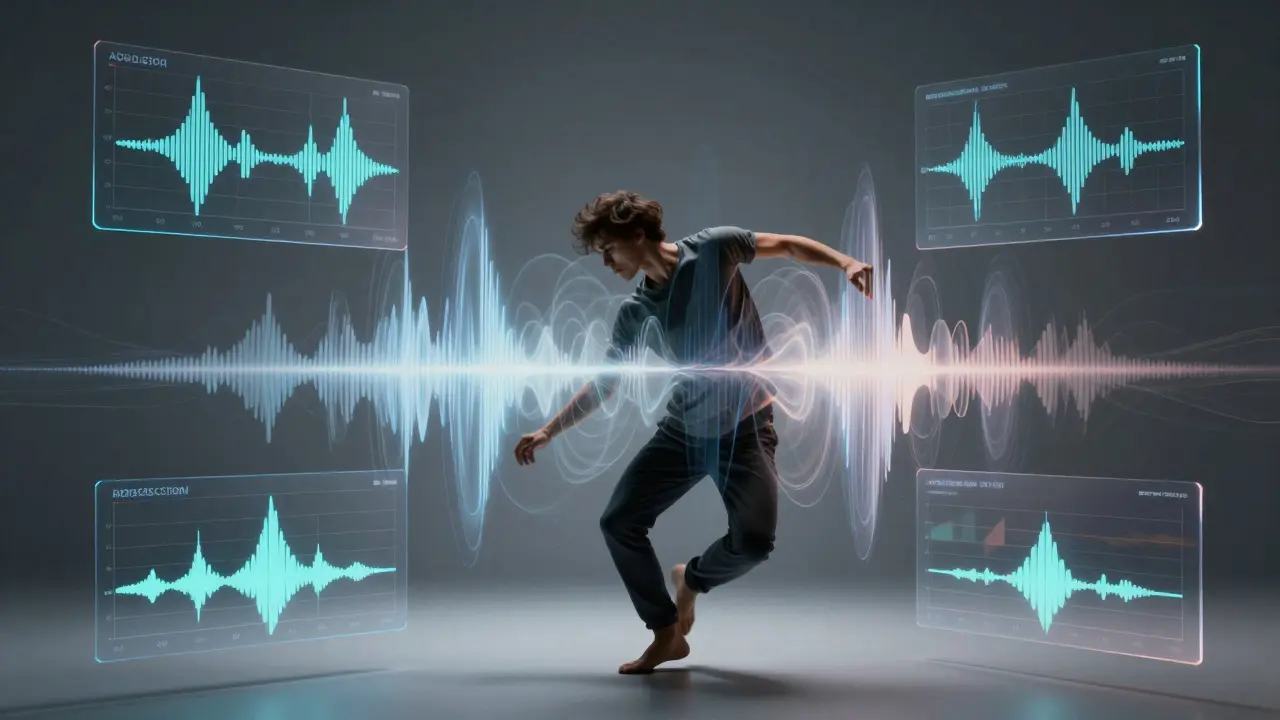
Tools like Ableton’s Sampler, Native Instruments’ Kontakt, or Granulator II in Max/MSP use this. It’s not magic. It’s signal processing. The math behind it? Fast Fourier Transforms (FFTs), which break sound into frequency components and rebuild them.
Digital vs. Analog: The Myth
People talk about analog warmth and digital coldness. But that’s misleading. Analog synths use physical circuits-transistors, capacitors, resistors. Their signals are continuous. Digital synths use math. They sample sound at 44.1 kHz or 96 kHz, turning it into numbers.
But here’s the truth: both can sound perfect. A well-designed digital synth can be more stable than an analog one. Analog gear drifts with temperature. Digital doesn’t. But analog has subtle nonlinearities-tiny distortions, saturation, phase shifts-that ears love. That’s why plugins like UAD’s Analog Tape or Soundtoys’ Decapitator mimic analog behavior. They’re not copying gear. They’re modeling physics.
The real difference? Control. Analog is tactile. Digital is precise. You can automate every parameter in a DAW. You can save a patch with 200 settings. You can undo a mistake. That’s not a flaw-it’s power.
Why This Matters
Understanding the science doesn’t make electronic music less magical. It makes it more meaningful. When you know why a filter sweeps, or how an envelope shapes a drum, you stop guessing. You start designing.
Producers who understand waveforms don’t just use presets. They build sounds from the ground up. They tweak filters to match the mood of a track. They modulate LFOs to match the tempo. They don’t chase trends-they shape them.
And it’s not just for producers. If you’ve ever danced to a track that felt like it was pulling you in, that’s science at work. The bassline isn’t just loud. It’s tuned to resonate with your body. The hi-hats aren’t just sharp-they’re timed to sync with your heartbeat. That’s audio engineering. That’s psychoacoustics. That’s the hidden layer beneath the beat.
Electronic music isn’t about machines replacing humans. It’s about humans using machines to do things no instrument ever could. The science isn’t cold. It’s the foundation of emotion.
What makes electronic music different from other genres?
Electronic music is built from synthesized or digitally manipulated sound, not traditional instruments. While rock uses guitars and drums, and jazz relies on live improvisation, electronic music starts with electrical signals. Its core tools-synthesizers, samplers, sequencers-allow for precise control over pitch, timbre, rhythm, and spatial effects. This means sounds can be designed to be impossible in acoustic settings, like a bass that vibrates at 20 Hz or a hi-hat that morphs over time.
Do you need to know music theory to make electronic music?
No, but it helps. Many hit producers started without formal training. But understanding scales, chords, and rhythm lets you create more intentional, emotionally powerful tracks. A synth can play any note, but knowing which ones sound good together lets you build melodies that stick. Theory isn’t about rules-it’s about options. You can break them, but only if you know why they exist.
Why do some electronic tracks sound "warm" and others sound "cold"?
"Warmth" usually comes from subtle distortion, saturation, or analog-style filtering that adds harmonics. Digital sounds can feel "cold" if they’re too clean-no harmonics, no phase shifts, no noise. But that’s intentional. A cold sound works for techno or minimal house. A warm one suits deep house or ambient. It’s not a flaw-it’s a design choice. Plugins like saturation units or tape emulators simulate the nonlinear behavior of old gear to add character.
Can you make electronic music without a computer?
Yes. Many producers use hardware synths, drum machines, sequencers, and effects units connected via MIDI or audio cables. Artists like Aphex Twin and Brian Eno built entire albums without DAWs. The key isn’t the tool-it’s the process. A standalone synth like the Roland TB-303 or Novation Circuit can create full tracks. Computers just make it easier to edit, save, and share.
How do producers make basslines that feel physical?
They use sub-bass frequencies (below 60 Hz) that you feel more than hear. But pure sine waves can clash with other low-end elements. So producers layer them: a sine wave for sub, a square or sawtooth for mid-bass body, and light distortion to add harmonics. They also sidechain the bass to the kick so they don’t compete. It’s not just volume-it’s timing, phase, and frequency balance. That’s how you get a bass that rumbles in your chest, not just in your speakers.
Next Steps: Where to Go From Here
If you’re curious about how this works in practice, start with a free synth like Vital or Surge XT. Load a sawtooth wave. Add a low-pass filter. Modulate the cutoff with an envelope. Play a note. Listen. Now change the attack. Change the release. Add an LFO to the pitch. What happens? You’re not just playing music-you’re experimenting with physics.
There’s no need to buy gear. No need to learn complex software. Just play. The science is in the sound. And once you hear it, you’ll never listen to electronic music the same way again.