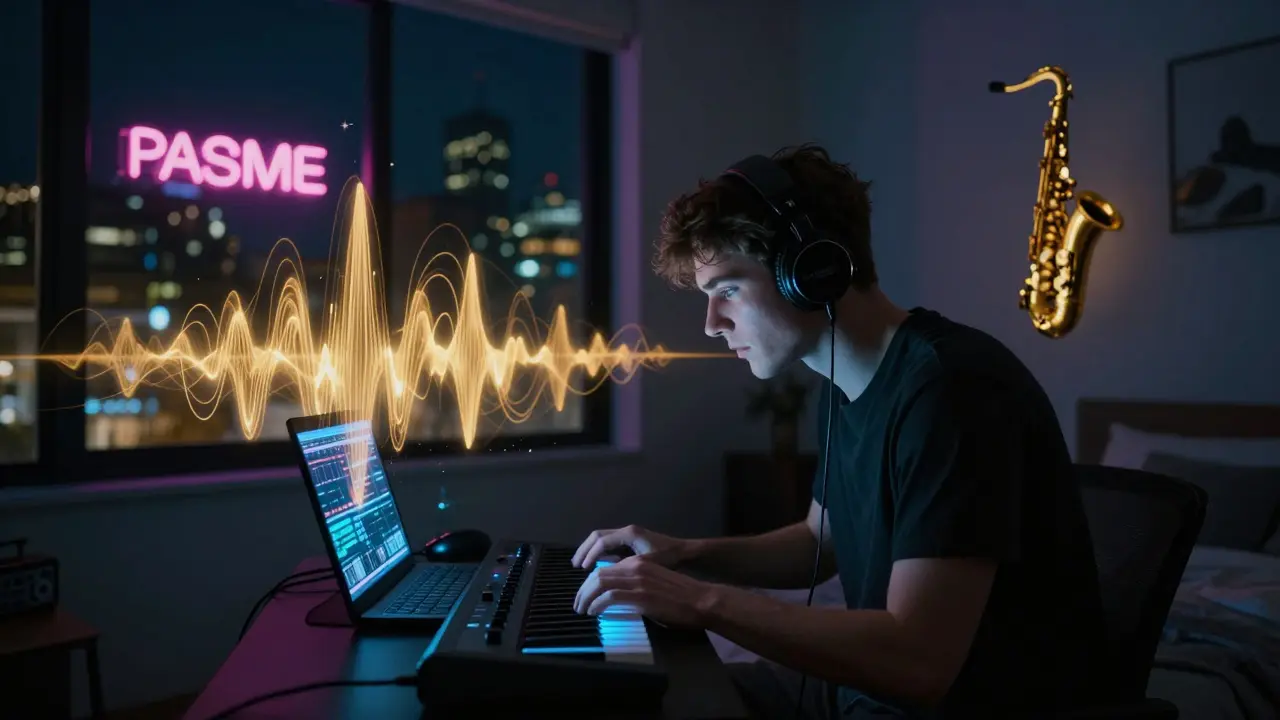
Jazz music isn’t stuck in the past. It’s not a museum piece played only on vinyl or in dimly lit clubs. Right now, in bedrooms in Melbourne, studios in Brooklyn, and live streams from Tokyo, jazz is quietly reshaping the sound of everything from pop to hip hop to electronic music. You hear it in the way a pop singer holds a note just a little too long, in the unexpected chord change in a trap beat, in the glitchy synth lines that sound like a saxophone having a breakdown. Jazz didn’t disappear-it evolved, leaked out, and became the secret sauce in modern music.
Harmony That Doesn’t Play by the Rules
Pop songs used to stick to three chords and a simple progression. Now, look at artists like Billie Eilish or Jacob Collier. Their songs don’t just move from C to G to Am. They slide into minor 9ths, add altered dominants, and resolve in ways that feel surprising, even unsettling. That’s jazz harmony. It’s not about complexity for the sake of it. It’s about emotional texture. Jazz taught modern producers that tension isn’t something to avoid-it’s the hook.
Think of the intro to Bad Guy by Lizzo. That bassline doesn’t just walk-it syncopates, it hesitates, it breathes. That’s straight out of a Miles Davis solo. Jazz musicians spent decades learning how to stretch time, bend notes, and make silence matter. Today’s producers use those same tricks, but with digital tools instead of saxophones. The language changed, but the feeling didn’t.
Rhythm Is the Real Inheritance
Most people think jazz is about solos. It’s not. It’s about rhythm. Swing. Syncopation. Polyrhythms. These aren’t just jazz tricks-they’re the foundation of almost every genre that moves. Hip hop didn’t just sample jazz records; it absorbed its heartbeat. The way a drum break skips a beat? That’s jazz. The way a rapper lays a phrase just behind the grid? That’s swing.
Look at Kendrick Lamar’s To Pimp a Butterfly. It’s built on jazz basslines, live drumming, and horn arrangements that feel like they were pulled from a 1960s Blue Note session. But it’s not retro. It’s urgent. That’s because jazz taught artists how to make rhythm feel human. Machines can hit perfectly on the beat. But only a jazz-trained musician-or someone who studied jazz-knows how to make a beat feel like it’s breathing.
Jazz Is the Original Sampling Culture
Before there was Ableton, there was John Coltrane. Before there was a loop pedal, there was Thelonious Monk. Jazz musicians have always borrowed, twisted, and rebuilt. They took blues riffs and turned them into modal explorations. They took gospel melodies and turned them into free improvisations. They didn’t just cover songs-they deconstructed them.
Today’s producers do the same thing. They take a 1972 Oscar Peterson piano lick, slow it down, pitch it, layer it under a trap hi-hat, and call it a new track. The tools are different, but the mindset? Pure jazz. It’s not theft. It’s conversation. And that’s why jazz samples show up everywhere-from Kanye West’s My Beautiful Dark Twisted Fantasy to the background of a TikTok dance trend. Jazz is the original remix culture.
Improvisation Is the New Songwriting
How do you write a song today? You might start with a chord progression, a lyric, a melody. But in many studios, especially in indie and electronic circles, you start with a vibe. You press record and play until something sticks. That’s improvisation. That’s jazz.
Artists like Floating Points or Nala Sinephro don’t write out every note. They set up a framework-a scale, a groove, a mood-and then let the moment decide the rest. The result? Music that feels alive, unpredictable, real. It’s the opposite of auto-tuned perfection. It’s the sound of someone thinking on their feet, reacting, adapting. That’s what jazz has always been about. And now, it’s becoming the default way to create.
The Instrumental Shift: From Horns to Software
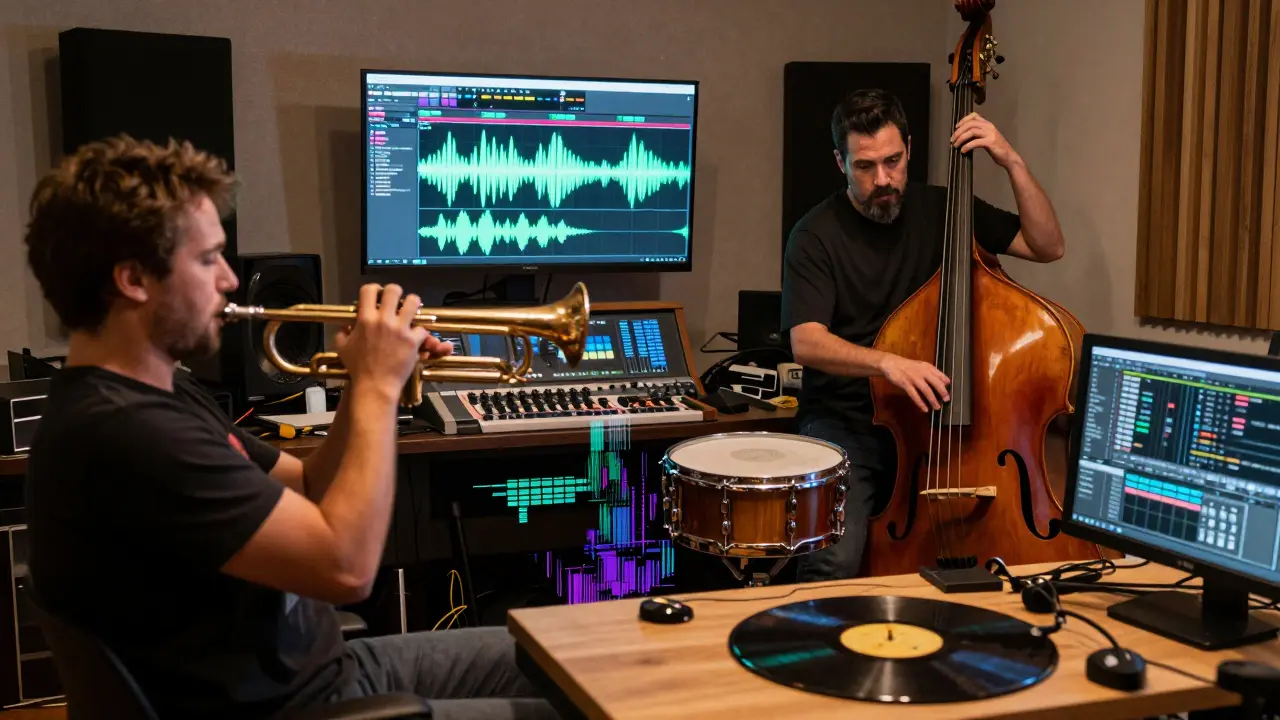
You don’t need a trumpet to sound like jazz anymore. You need a MIDI controller, a synth plugin, and the right mindset. Modern jazz artists like Kamasi Washington or Esperanza Spalding still use horns and bass, but they’re surrounded by digital textures. Meanwhile, producers like Flying Lotus or Tennyson use software to mimic the phrasing of a saxophone, the breathiness of a clarinet, the attack of a brushed snare.
Software like Serum, Native Instruments’ Kontakt, or even AI-driven tools now come with jazz-inspired presets-patches that don’t just play notes, they swing. They add subtle vibrato. They delay the attack. They breathe. These aren’t just sounds-they’re lessons in feel, encoded into algorithms. Jazz didn’t die. It got digitized.
Global Jazz, Local Voices
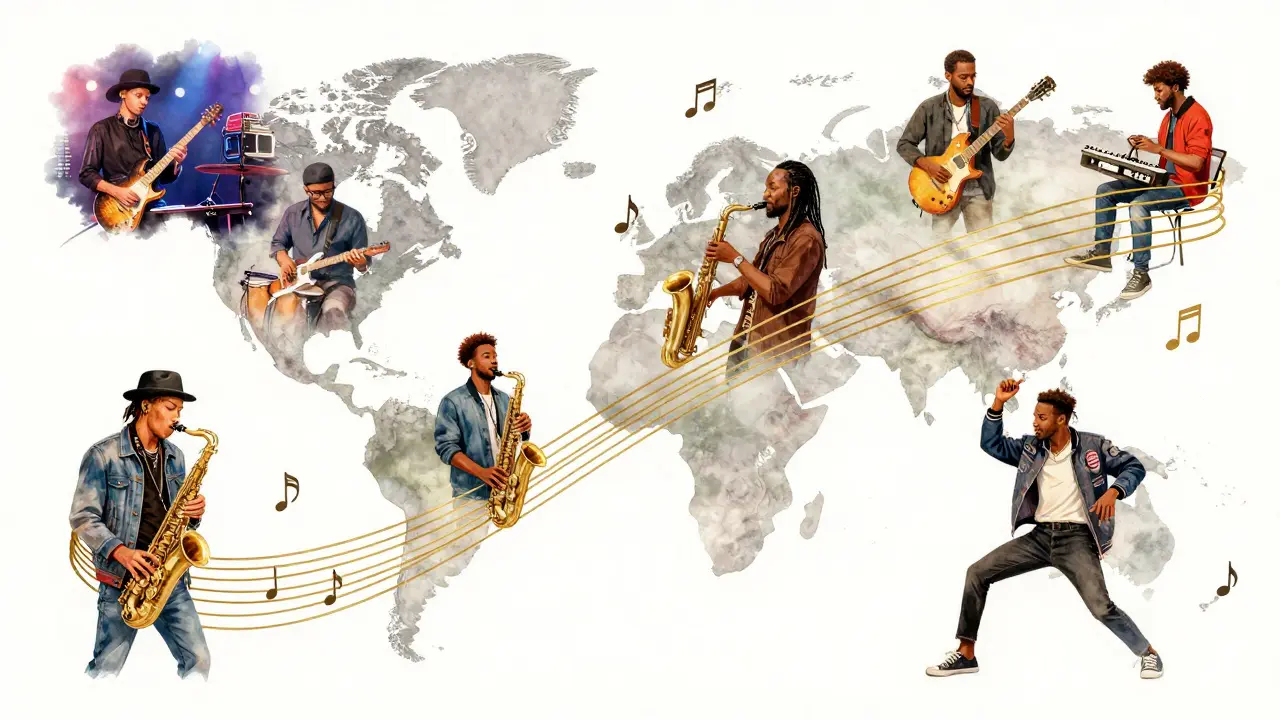
Jazz has always been a melting pot. In the 1920s, it blended African rhythms with European harmonies. Today, it’s absorbing everything: Brazilian bossa nova, Indian ragas, West African highlife, Korean pansori. In Melbourne, you’ll find jazz musicians playing with didgeridoo players. In Lagos, jazz fusion meets Afrobeat. In Seoul, electronic jazz collides with K-pop.
It’s not about preserving tradition. It’s about letting jazz be a language that anyone can speak. A young producer in Jakarta can make a track using a jazz chord progression, a traditional gamelan sample, and a trap beat-and call it jazz. And they’re right. Jazz isn’t a style. It’s a way of listening, of responding, of taking what’s around you and making it new.
Why It Matters Now More Than Ever
In a world of algorithm-driven playlists and formulaic pop, jazz offers something rare: authenticity through imperfection. It’s music that doesn’t chase trends. It follows curiosity. It rewards patience. That’s why Gen Z listeners, raised on TikTok snippets and instant gratification, are suddenly drawn to long, evolving jazz tracks. They’re tired of being told how to feel. They want music that lets them find their own emotion.
Jazz doesn’t tell you what to think. It asks you to listen. And in a noisy, distracted world, that’s revolutionary.