Genre Blender Calculator
Select two genres to see fusion possibilities...
Electronic music doesn’t stay in one box. It never has. From the hum of analog synths in 1970s Berlin to the bass drops shaking warehouses in Tokyo, it’s always been about crossing lines-between genres, cultures, and technologies. You hear a track that feels like techno, but the melody is pure house. A drum pattern screams jungle, but the pads are straight from ambient. That’s not a mistake. That’s the point.
Where Did Electronic Music Start?
It didn’t begin with DJs spinning vinyl at raves. It started in labs. In the 1950s, composers like Karlheinz Stockhausen and Pierre Schaeffer used tape machines and oscillators to create sounds no instrument could make. These weren’t songs-they were experiments. But those experiments became the DNA of everything that followed.
By the 1980s, affordable gear like the Roland TR-808 and TB-303 turned those lab sounds into dancefloor weapons. Chicago house, Detroit techno, and UK acid house weren’t just new styles-they were rebellions. They took machines meant for studio use and turned them into tools for community. People who didn’t know how to play guitar could still make music that moved thousands.
The Rise of Genre Blending
Today, you can’t pin electronic music to one label. Try naming the genre of a track by Four Tet: it’s folk, it’s glitch, it’s jazz, it’s beat-driven electronica. Or take Flume-his beats have trap rhythms, but his textures sound like underwater synth choirs. These aren’t random mashups. They’re intentional collisions.
Artists aren’t just borrowing sounds-they’re rethinking structure. A song might start as a slow ambient piece, then explode into a hardstyle drop, then dissolve into field recordings of rain. Listeners don’t care about genre tags. They care about feeling something. And that feeling doesn’t come from staying inside the lines.
Platforms like SoundCloud and Bandcamp made this possible. You don’t need a record deal to release a track that fuses k-pop vocals with industrial percussion. A teenager in Manila can drop a song blending baile funk with vaporwave, and someone in Oslo will hear it the same day. Borders vanished not because of big labels, but because of access.
Technology Didn’t Just Change Tools-It Changed Thinking
Early electronic musicians worked with limited tools. One synth, one drum machine, one tape deck. Constraints forced creativity. Today, producers have hundreds of plugins, AI-assisted mastering tools, and sample packs with 10,000 sounds. But here’s the twist: the most exciting music today often comes from limiting yourself again.
Artists like Arca use only one synth per track. SOPHIE built entire songs from distorted, pitched-up vocal samples. They’re not using tech to make things bigger-they’re using it to strip things down to their raw essence. The boundary isn’t between genres anymore. It’s between what’s expected and what’s possible.
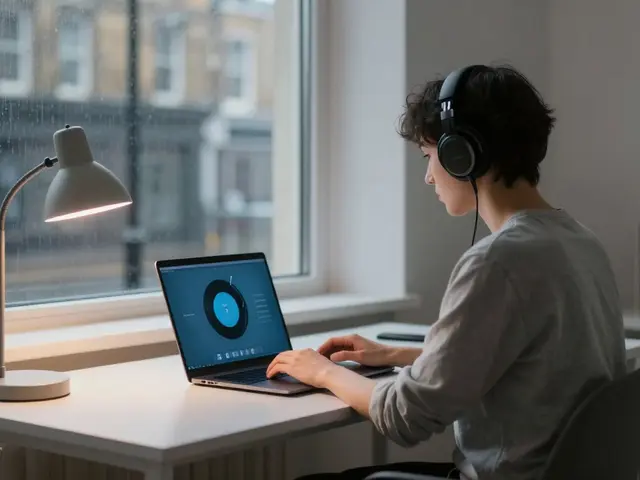
Software like Ableton Live and FL Studio lets you drag a drum loop into a synth patch, reverse it, warp it, and turn it into a melody-all in real time. That’s not production. That’s sound sculpting. And it’s breaking the old rules of composition. Melody doesn’t need to be played on a piano. Rhythm doesn’t need to be counted in 4/4. Harmony doesn’t need to follow chord progressions.
Global Sounds Are Reshaping the Core
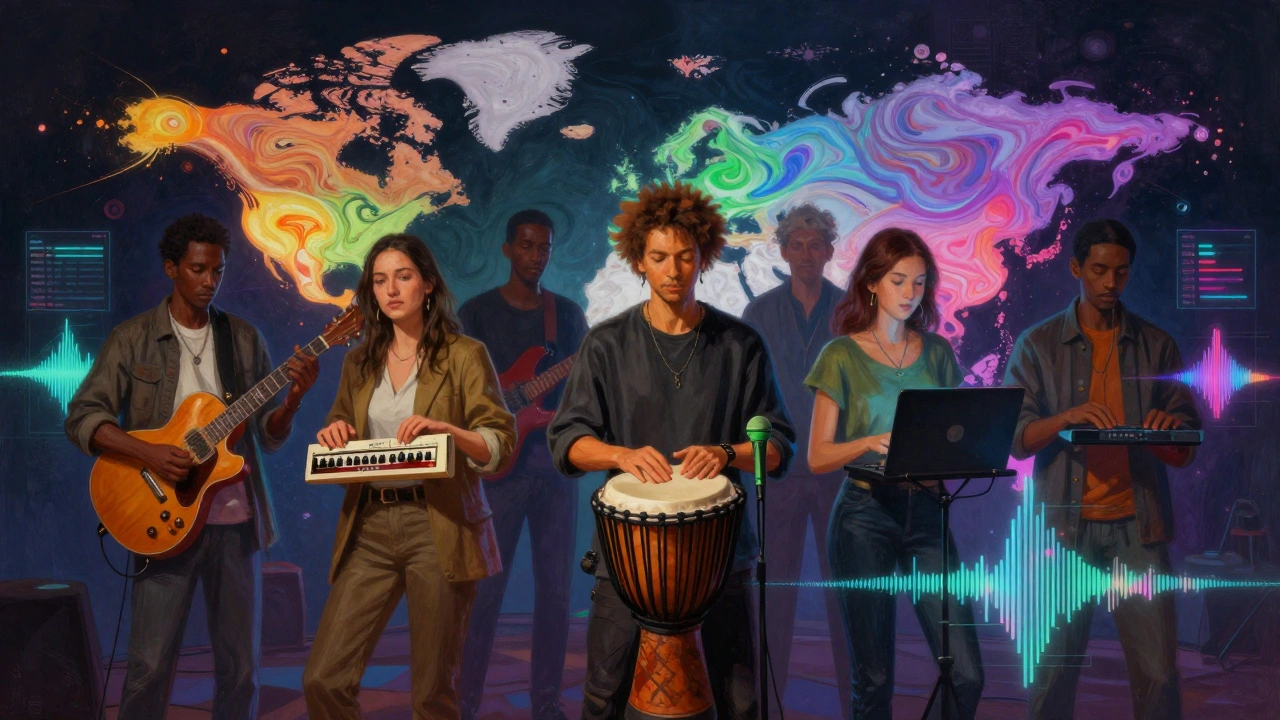
Electronic music used to be dominated by Western production styles. Now, it’s being rewritten by sounds from everywhere.
- Brazilian bass music blends samba rhythms with sub-bass-heavy club beats.
- South African gqom uses sparse, skipping rhythms and distorted kicks that feel like a heartbeat gone wrong.
- Indian producers are layering tabla loops over 140 BPM trap beats.
- Japanese city pop revivalists are using 80s synths to create dreamy, nostalgic tracks that sound like nothing else.
These aren’t “influences.” They’re foundations. Producers aren’t just sampling global rhythms-they’re learning them. They’re studying the cultural context behind the sound. A producer in Berlin might spend months learning how to play the djembe before using its pattern in a techno track. That’s not appropriation. That’s respect.
And it’s changing the way electronic music feels. It’s no longer just about the beat. It’s about the story behind the rhythm. The history in the sample. The emotion in the distortion.
What Happens When Genres Disappear?
Think about how we talk about music now. You don’t say, “I listen to house.” You say, “I listen to artists who make beats that make me feel alive.” That’s a shift. Genres are fading because they’re too narrow to describe what’s happening.
Look at the charts. In 2025, the top electronic tracks on Spotify don’t fit into any single category. A song might be labeled “EDM,” but it has elements of reggaeton, lo-fi, and chiptune. Algorithms can’t categorize it. Radio stations don’t know where to play it. But people stream it anyway.
This isn’t chaos. It’s evolution. Music has always changed. Rock borrowed from blues. Hip-hop borrowed from funk. Electronic music is doing the same-but faster, louder, and with more tools.
The real boundary isn’t between genres. It’s between those who think music needs labels, and those who know it doesn’t.
Why This Matters Beyond the Dancefloor
Electronic music’s collapse of genre lines isn’t just a trend-it’s a mirror. It reflects how we live now: connected, mixed, fluid. Identity isn’t fixed. Culture isn’t isolated. Sound isn’t owned.
When a producer in Lagos layers a Yoruba chant over a Detroit techno beat, they’re not making a fusion track. They’re making a statement: music belongs to everyone. And no one gets to decide where it should go next.
That’s why electronic music is the most alive genre today. It doesn’t look back. It doesn’t cling to tradition. It listens-then transforms.
What’s Next?
What will the next wave sound like? Probably nothing you’ve heard before.
AI-generated soundscapes are already being used by experimental artists to create textures no human could design. Live coding performances-where musicians write code on stage to generate music in real time-are growing in cities from Reykjavik to Rio. VR concerts let you stand inside a song, surrounded by floating visuals that respond to every bass hit.
The tools keep changing. But the heart hasn’t. It’s still about taking something broken, something strange, something unheard-and turning it into something that makes you move.
Electronic music doesn’t have boundaries anymore. It never did. It just took us a while to notice.
Is electronic music still considered a genre?
Not really. Today, electronic music is more of a toolkit than a genre. It’s the use of synthesizers, drum machines, and digital production to create sound-regardless of style. You can make electronic jazz, electronic folk, or electronic metal. The label "electronic" describes the method, not the sound.
Why do people mix genres in electronic music?
Because listeners are no longer satisfied with predictable patterns. Mixing genres lets artists express more emotion, tell richer stories, and connect with wider audiences. A track that blends trap and ambient can feel both intense and calming-something neither style could do alone.
Do I need expensive gear to make genre-blending electronic music?
No. Many of the most influential tracks were made with free software or old, cheap gear. What matters is creativity, not cost. A $20 plugin, a sample pack from SoundCloud, and a laptop can be enough to start. The best ideas come from experimentation, not budgets.
How do I start blending genres in my own music?
Pick two styles you love that seem totally different-say, reggaeton and ambient. Find one element from each: a rhythm from reggaeton, a pad from ambient. Layer them. Then distort one, slow it down, reverse it. Don’t aim for perfection. Aim for surprise. The magic happens in the mess.
Are traditional music rules still relevant in electronic music?
Only if they serve the feeling. Traditional harmony, rhythm, and structure can be useful, but they’re not rules. Many groundbreaking tracks break every rule of music theory-and still work because they feel right. Trust your ears more than your textbook.