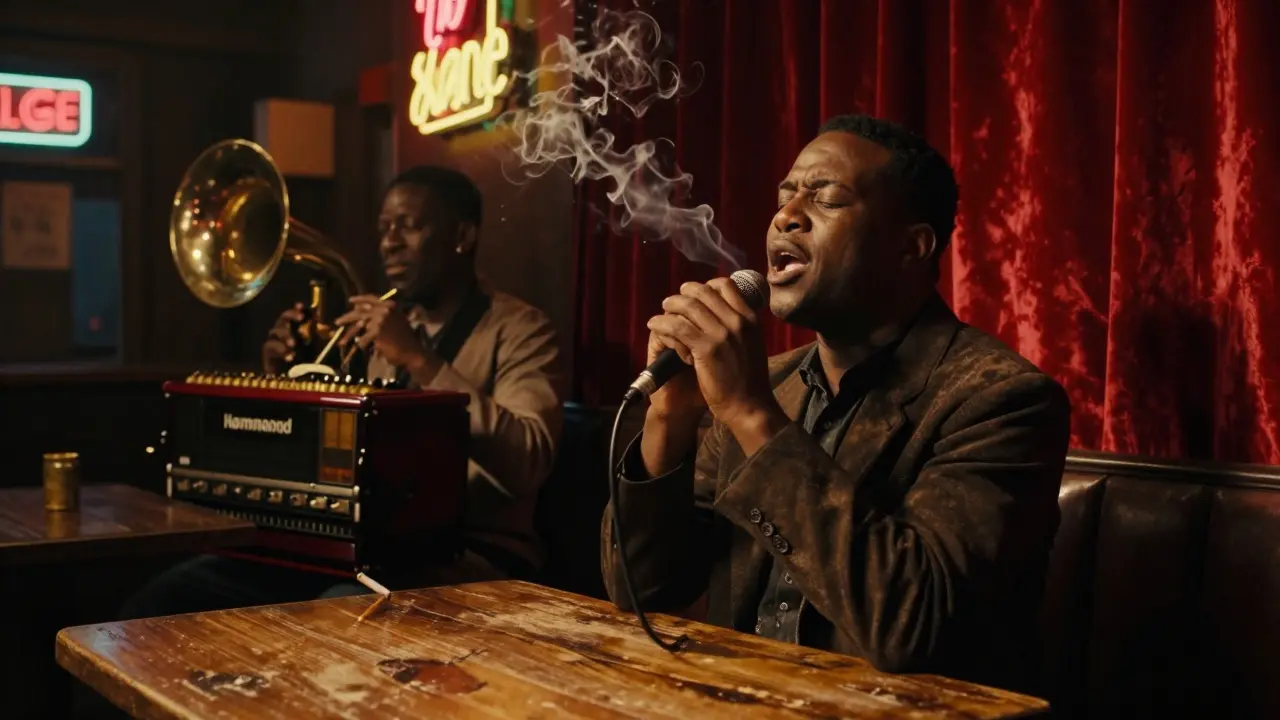
Rhythm and blues isn’t just a genre-it’s a feeling carved into the bones of American music. It’s the hum of a Hammond organ in a smoky club at 2 a.m., the crack in a singer’s voice when they hit a note just shy of perfect, the way your foot taps before your brain even catches up. It didn’t start as a label. It started as a sound that Black musicians made when they refused to be boxed in by blues, jazz, or gospel-but instead fused them into something raw, real, and unmistakably alive.
Where Rhythm and Blues Really Began
In the 1940s, record labels needed a new term to replace the outdated and offensive "race records"-a category that lumped together every type of music made by Black artists. Billboard magazine introduced "rhythm and blues" in 1949 to describe the uptempo, danceable, emotionally charged music coming out of urban centers like Chicago, Detroit, and New Orleans. But the roots ran deeper. It came from the church choirs where call-and-response singing shaped vocal phrasing, from the juke joints where slide guitars cried like a man who’d lost everything, and from the swing bands that kept bodies moving even when the world felt heavy.
Artists like Louis Jordan, Wynonie Harris, and Big Joe Turner didn’t just sing-they commanded. Their songs were about love, loss, work, and survival, wrapped in a groove that made you move even if you didn’t want to. Jordan’s "Caldonia" in 1945 sold over a million copies. It wasn’t just popular-it was a blueprint. The beat was tight, the horns punched hard, and the vocals had grit. That’s the DNA of R&B.
The Sound That Changed Everything
What made R&B different from blues? Blues was slow, mournful, often solo. R&B was collective. It had drums that didn’t just keep time-they drove. Bass lines that walked like a man late for work. Piano chords that rang out like church bells. And vocals? They didn’t just sing notes-they told stories with every breath. Ray Charles took gospel melodies and poured them into secular songs. Sam Cooke turned hymns into love ballads. Their voices didn’t just carry emotion-they carried history.
Listen to "I Got a Woman" by Ray Charles (1954). The horns are punchy. The rhythm is relentless. And when Ray sings, "She gives me money when I’m in need, yeah, she’s a true friend of mine," it’s not just a love song. It’s a reclamation. He took the spiritual fervor of the Black church and put it on the dance floor. That was revolutionary. And it scared some people. Radio stations refused to play it. But kids didn’t care. They played it on turntables in basements and cars with broken radios. That’s how movements start.
How R&B Gave Birth to Rock and Roll
Elvis Presley didn’t invent rock and roll. He popularized it. But the sound he built on? That was R&B. His 1956 cover of "Hound Dog," originally recorded by Big Mama Thornton, didn’t just borrow the melody-it stole the attitude. Thornton’s version was loud, brash, and unapologetically Black. Elvis’s was polished, packaged, and sold to white audiences. That pattern repeated over and over: Black artists created the sound, white artists got the fame and the charts.
But the influence ran both ways. Chuck Berry, who was deeply rooted in R&B, added guitar riffs that became the foundation of rock. Little Richard’s screams and pounding piano turned R&B into a force of nature. When you hear the opening riff of "Johnny B. Goode," you’re hearing R&B in a new skin. Rock didn’t replace R&B-it grew from it. And R&B kept evolving.
From Motown to Modern R&B
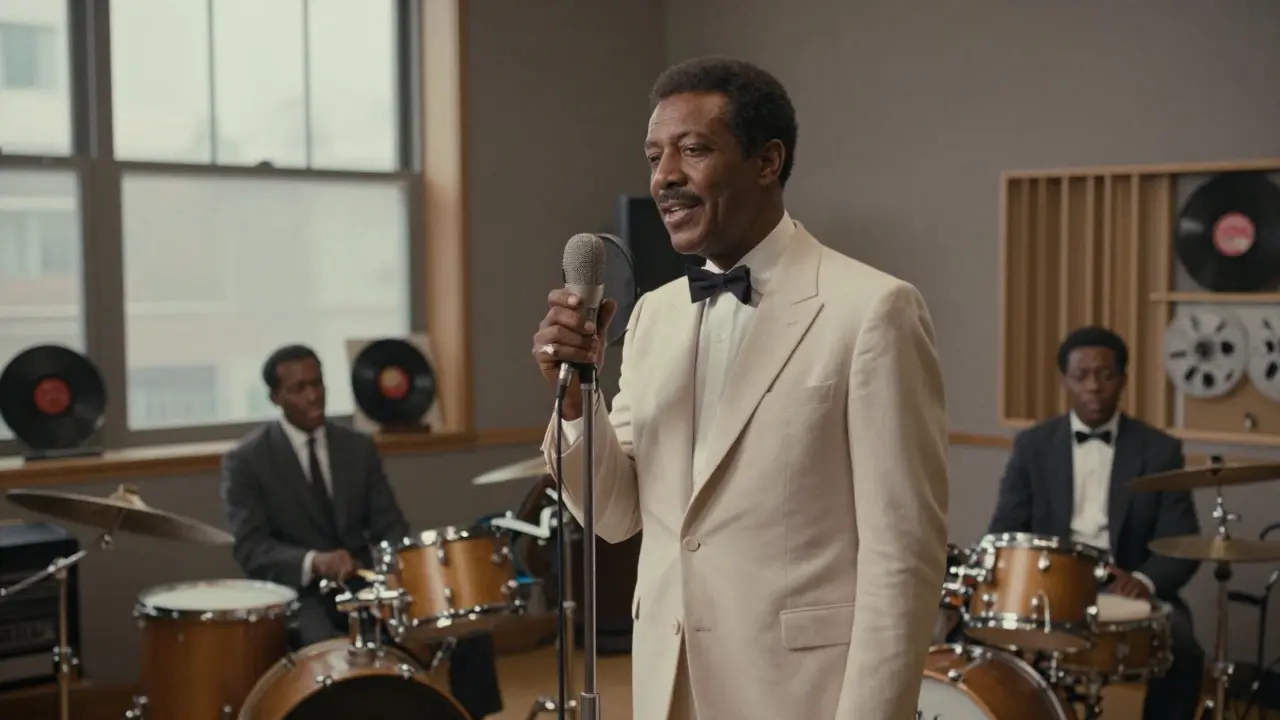
By the 1960s, R&B had split into two paths. One stayed raw, gritty, and Southern-think James Brown’s "Papa’s Got a Brand New Bag," where the beat became the message. The other became slick, polished, and Northern: Motown Records. Berry Gordy built an assembly line of hits in Detroit, turning R&B into pop with velvet-smooth harmonies and strings that swelled like a movie score. Marvin Gaye, Diana Ross, Stevie Wonder-they didn’t just sing songs. They crafted emotional landscapes.
Stevie Wonder’s "Superstition" (1972) is pure R&B DNA: a clavinet groove that snaps like a whip, horns that stab the air, and a vocal that rides the rhythm like it’s on a train. It’s dance music with depth. It’s pop with soul. That’s the magic of R&B-it doesn’t have to choose between being commercial and being real.
By the 1990s, R&B merged with hip-hop. Artists like Mary J. Blige, D’Angelo, and TLC brought street grit and bedroom intimacy into the same song. Babyface wrote ballads that felt like whispered secrets. TLC’s "No Scrubs" wasn’t just a hit-it was a manifesto. R&B had become the soundtrack to Black love, Black pain, and Black joy, all at once.
Why R&B Still Matters Today
Today, you hear R&B in Beyoncé’s vocal runs, in The Weeknd’s moody synths, in SZA’s whispered confessions. Even pop stars like Olivia Rodrigo and Harry Styles borrow its phrasing, its vulnerability, its rhythm. But the core hasn’t changed. R&B still speaks to the parts of life that don’t fit in a headline. It’s the music you play when you’re trying to heal. When you’re trying to feel something real.
It’s not about the instruments. It’s not even about the beat. It’s about the voice. The way a singer holds a note just a second too long. The way a bass line lingers like a memory. The way silence between notes can feel louder than the music itself.
R&B doesn’t need to be trendy to survive. It survives because it’s honest. It doesn’t pretend. It doesn’t polish away the cracks. It leans into them. And that’s why, decades after it was named, it still moves people-not just their feet, but their hearts.
What Makes R&B Different from Soul or Funk?
People mix them up all the time. Soul? That’s R&B with gospel tears. Funk? That’s R&B with a military drumbeat and a bass line that won’t let go. But R&B is the umbrella. It’s the foundation. Soul music takes the emotion of R&B and turns it up to eleven. Funk takes the groove and makes it a weapon. R&B? It’s the quiet space between them-the space where love and pain live side by side.
Ray Charles called it "soul music," but he was singing R&B. Marvin Gaye called his work "soul," but his rhythms were pure R&B. The lines blur on purpose. That’s the point. R&B doesn’t care about labels. It cares about feeling.
How to Listen to R&B Like Someone Who Gets It
Don’t just hear it-listen for the gaps. The spaces between the drums. The breath before the singer hits the high note. The way the backing vocals swell like a wave just before it crashes. Listen to how the piano lingers on a chord like it’s reluctant to let go.
Start with these tracks:
- Ray Charles - "I Got a Woman" (1954)
- James Brown - "Papa’s Got a Brand New Bag" (1965)
- Stevie Wonder - "Superstition" (1972)
- Marvin Gaye - "Let’s Get It On" (1973)
- D’Angelo - "Untitled (How Does It Feel)" (2000)
- SZA - "Good Days" (2020)
Play them loud. Close your eyes. Let the rhythm settle into your chest. That’s when you’ll understand.
Is R&B the same as soul music?
No, but they’re close. Soul music is a subset of R&B that leans heavily on gospel influences-think Aretha Franklin or Otis Redding. R&B is broader. It includes uptempo dance tracks, ballads, and modern pop-infused sounds. Soul is about emotion; R&B is about groove and emotion together.
Who were the first R&B artists?
Artists like Louis Jordan, Wynonie Harris, and Big Joe Turner were among the first to be labeled "rhythm and blues" in the late 1940s. But their sound came from earlier blues and jazz musicians like B.B. King, T-Bone Walker, and Sister Rosetta Tharpe. Jordan’s "Caldonia" (1945) is often cited as one of the first true R&B hits.
Why is R&B so influential in modern pop music?
Because R&B prioritizes vocal expression and emotional rhythm over structure. Pop music borrowed its vocal runs, its syncopated beats, and its focus on feeling over perfection. Artists like Beyoncé, The Weeknd, and Bruno Mars all use R&B’s tools-melisma, ad-libs, syncopation-to make pop songs feel deeper than they are.
Did R&B originate in the South?
Yes, mostly. The roots are in Southern Black churches, juke joints, and urban centers like New Orleans, Memphis, and Atlanta. But R&B as a labeled genre exploded in Northern cities like Chicago and Detroit, where migration brought Southern sounds into new settings. The genre was shaped by both places.
Is R&B still being made today?
Absolutely. Modern R&B artists like SZA, Brent Faiyaz, H.E.R., and Summer Walker keep the tradition alive-blending old-school grooves with electronic textures and confessional lyrics. The sound has changed, but the heart hasn’t. It’s still about telling the truth through rhythm and voice.