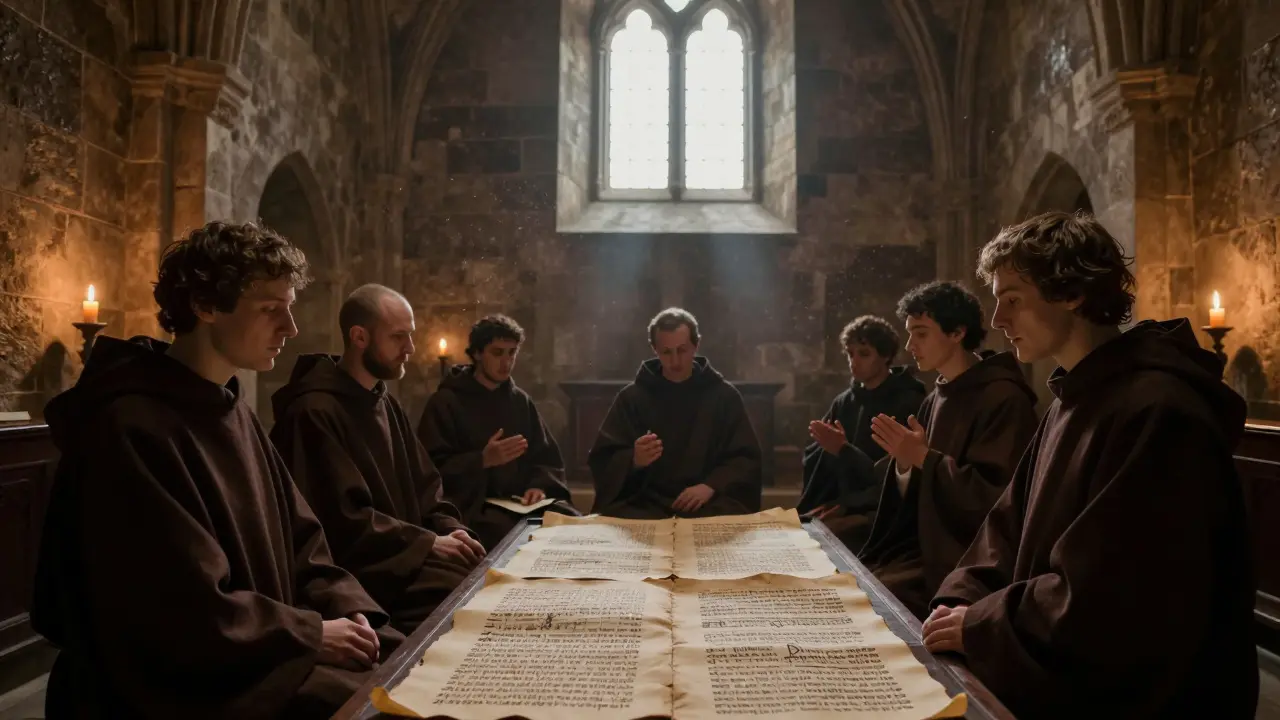
Classical music didn’t start with sheet music and symphonies. It began with chants in dimly lit monasteries, voices rising in unison, trying to reach something beyond the earth. Over 1,000 years, it grew from simple tones into complex orchestras, from handwritten scrolls to digital recordings that still move people today. This isn’t just a story of notes-it’s the story of how humans used sound to express joy, grief, power, and wonder.
The Birth of Notation: Medieval Roots
Before instruments dominated, the voice was king. In the 9th century, monks in Europe began writing down Gregorian chants to keep them consistent across distant monasteries. These weren’t melodies as we know them-they were single lines of music, sung without harmony, meant to lift the soul during prayer. The innovation? Neumes-tiny symbols above Latin text that hinted at pitch direction. No exact notes, just guidance. By the 11th century, Guido d’Arezzo introduced the four-line staff, a system so practical it’s still the foundation of modern sheet music.
What made this revolutionary wasn’t just the notation. It was control. For the first time, music could be preserved, copied, and shared. A chant sung in Paris could be replicated in Vienna. This was the first step toward a shared musical language across borders.
The Renaissance: Music Becomes Human
By the 1400s, the rigid structures of medieval music began to soften. Composers like Josquin des Prez started weaving multiple voices together in rich, flowing textures. Harmony wasn’t an afterthought-it became the point. Music began to reflect human emotion, not just divine order. The madrigal, a secular vocal piece, burst onto the scene. It wasn’t for churches anymore. It was for nobles at dinner parties, singing about love, nature, and longing.
Printing presses changed everything. In 1501, Ottaviano Petrucci published the first collection of polyphonic music using movable type. Suddenly, music wasn’t just for the elite who could afford scribes. It spread. Composers started gaining fame. People began to recognize names like Palestrina and Lassus-not just as church officials, but as artists.
The Baroque Explosion: Ornament and Drama
Enter the 1600s. Music became theatrical. The Baroque era was all about contrast: loud and soft, fast and slow, solo and full ensemble. Think of Vivaldi’s Four Seasons-each concerto painted a season with violins mimicking birdsong, thunder, and winter winds. Or Bach’s fugues, where a single theme weaves through multiple voices like a complex tapestry.
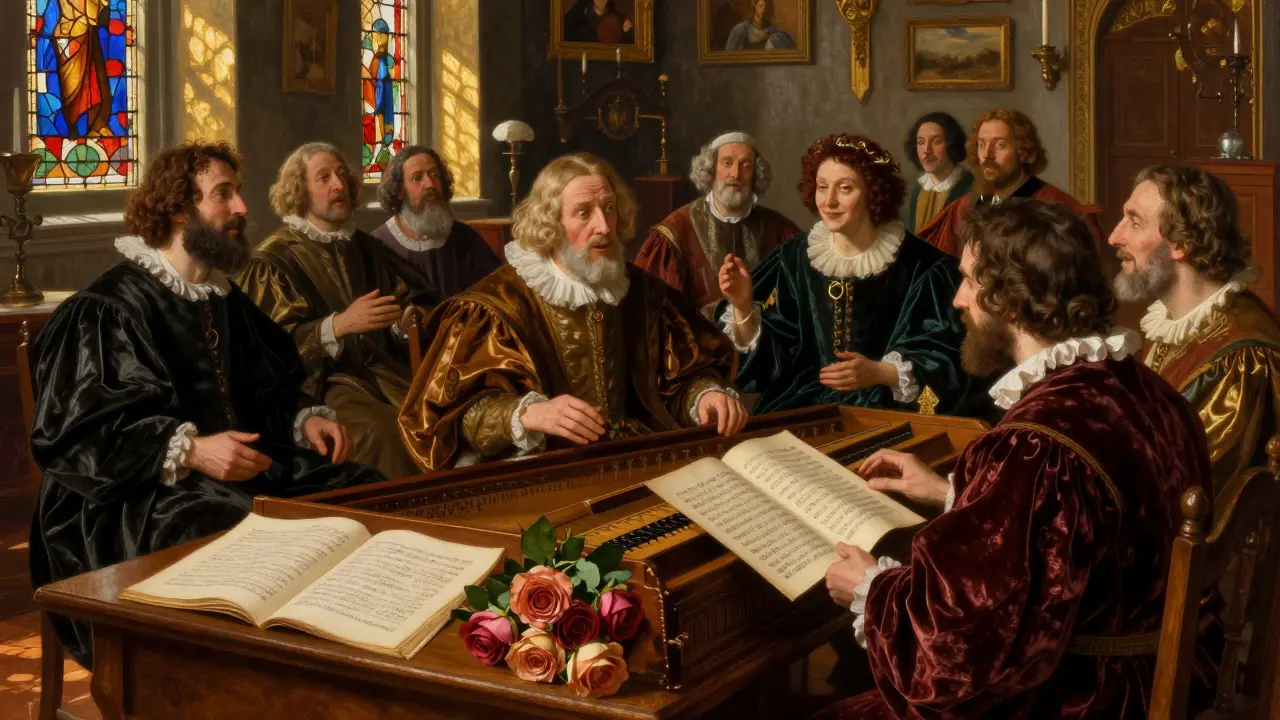
This was the age of the orchestra taking shape. The violin family replaced the lute as the dominant instrument. The harpsichord, with its plucked strings, became the backbone of ensemble playing. Opera was born in Florence, a wild mix of drama, music, and spectacle. Claudio Monteverdi’s L’Orfeo in 1607 wasn’t just a performance-it was a new art form.
Baroque composers didn’t just write music. They built worlds. A single piece could shift moods in seconds. It was emotional, flashy, and deeply human.
The Classical Period: Clarity and Structure
By the mid-1700s, people were tired of complexity. The Enlightenment brought a hunger for order, reason, and balance. Music followed. The Classical period-roughly 1750 to 1820-was all about clean lines, clear forms, and elegant phrasing.
Haydn, the father of the symphony, gave structure to chaos. He standardized the four-movement symphony: fast, slow, dance-like, fast again. Mozart took that structure and made it sing. His piano concertos didn’t just show off technique-they told stories. A single melody could feel like a conversation between two people.
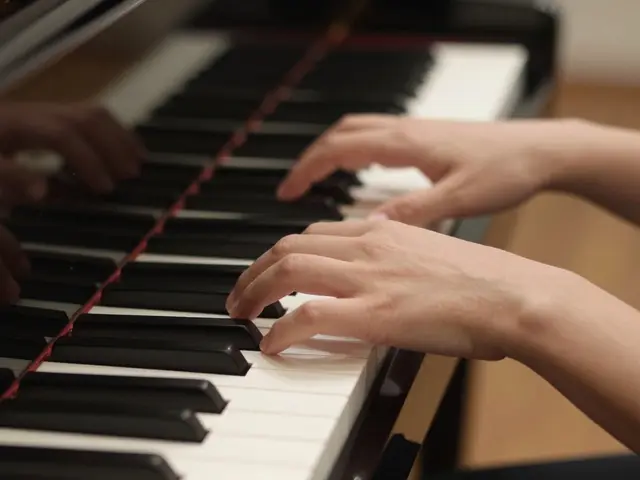
The piano replaced the harpsichord. Its ability to play soft and loud gave composers new tools. Sonata form became the blueprint: exposition, development, recapitulation. It wasn’t just a structure-it was a narrative arc. You could hear tension build, resolve, and end with satisfaction.
This was music for the rising middle class. Public concerts replaced church and court performances. People paid to hear music. Composers became independent artists, not servants of the church or nobility.
The Romantic Era: Emotion Unleashed
Then came Beethoven. He didn’t just write music-he shattered it. His Third Symphony, the Eroica, doubled the length of a typical symphony. It wasn’t about elegance anymore. It was about struggle, heroism, and triumph. Beethoven, going deaf, wrote music that felt like the soul screaming into the void.
The Romantic era (1820-1900) turned music into a personal confession. Composers like Schumann, Chopin, and Wagner poured their inner lives into their work. Chopin’s nocturnes weren’t just piano pieces-they were midnight thoughts. Wagner’s operas stretched for hours, filled with leitmotifs-musical themes tied to characters and ideas-creating entire mythologies in sound.
Orchestras grew. Trombones, tubas, and timpani became standard. The size of the orchestra doubled. Composers demanded more color, more power. Tchaikovsky’s 1812 Overture used real cannons. Liszt turned the piano into a symphony orchestra with just his hands.
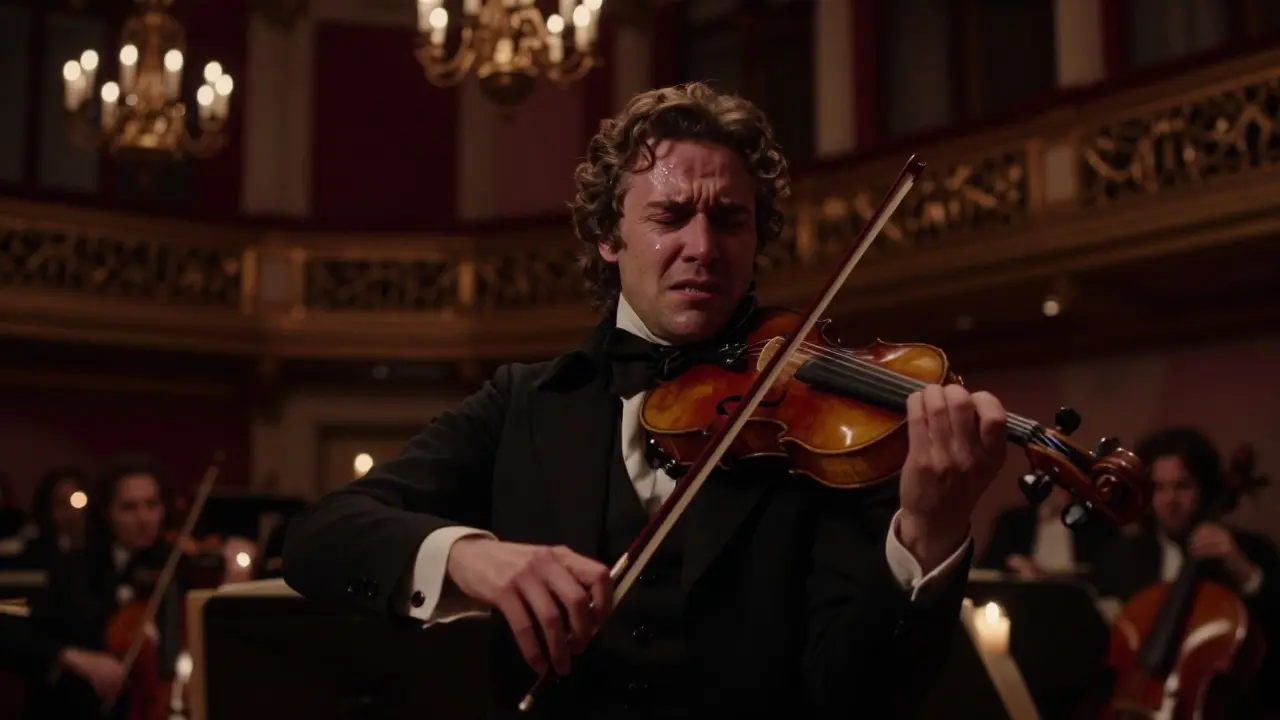
Music wasn’t just heard anymore. It was felt. People cried in concert halls. Romantic composers didn’t just write notes-they wrote emotions you could hold in your chest.
20th Century and Beyond: Breaking the Rules
The 20th century didn’t just evolve classical music-it exploded it. Stravinsky’s The Rite of Spring in 1913 caused riots. Its pounding rhythms and dissonant harmonies felt like a primal scream. Schoenberg abandoned tonality entirely, creating the twelve-tone system-a method where all 12 notes of the scale were treated equally, no key center. It was mathematical, cold, and revolutionary.
But not everyone went dark. Copland brought folk melodies into symphonies, creating a distinctly American sound. Shostakovich wrote symphonies under Stalin’s watch, hiding protest in music. Debussy used whole-tone scales to create dreamlike textures. Ravel painted with orchestral color like a master impressionist.
Technology changed everything. Microphones, recordings, radio. Music could now live beyond the concert hall. Composers began blending classical with jazz, rock, and electronic sounds. John Cage’s 4’33”-four minutes and thirty-three seconds of silence-forced people to question what music even was.
Today, classical music isn’t frozen in time. Composers like John Adams, Anna Thorvaldsdottir, and Thomas Adès use digital tools, non-Western scales, and ambient textures. Film scores by Hans Zimmer and Ludwig Göransson are now part of the classical tradition. Orchestras play video game soundtracks. Young musicians learn Bach on YouTube and then improvise over hip-hop beats.
Why It Still Matters
Classical music isn’t a relic. It’s a living language. Every time someone plays a Mozart sonata, they’re not just reproducing notes-they’re stepping into a conversation that’s lasted a millennium. The same emotional truths-grief, hope, awe-still live in those scores.
Modern listeners often think classical music is stiff or distant. But listen closely to a late Beethoven quartet or a quiet moment in Debussy’s Clair de Lune. You’ll hear loneliness, tenderness, wonder. These aren’t museum pieces. They’re mirrors.
What makes classical music enduring isn’t its complexity. It’s its honesty. It doesn’t need lyrics to tell you how someone felt. The notes alone carry the weight of centuries.
What to Listen to Next
- Medieval: Hildegard von Bingen’s Ordo Virtutum-the earliest known morality play with music
- Renaissance: Palestrina’s Pope Marcellus Mass-pure polyphony, balanced and serene
- Baroque: Bach’s Brandenburg Concertos-brilliant, intricate, alive
- Classical: Mozart’s Symphony No. 40-graceful, urgent, deeply human
- Romantic: Tchaikovsky’s Symphony No. 6 (Pathétique)-a farewell in sound
- Modern: Steve Reich’s Music for 18 Musicians-minimalist, hypnotic, timeless
Is classical music still relevant today?
Yes, and it’s more alive than ever. Classical music influences film scores, video games, pop songs, and even advertising. Orchestras now perform with lighting and visuals. Young composers blend it with electronic beats and global rhythms. It’s not stuck in the past-it’s evolving. You hear it in the emotional weight of a Hans Zimmer score or the layered textures of a Bon Iver track. The language of classical music is still being spoken, just in new dialects.
Why do people say classical music is hard to understand?
It’s not hard to feel. The confusion comes from trying to analyze it like a math problem. You don’t need to know sonata form to be moved by a Chopin nocturne. Start by listening for emotion, not structure. Ask yourself: Does this sound joyful? Angry? Peaceful? Let the music speak first. The theory comes later. Many people who think they don’t like classical music just haven’t found the piece that speaks to them yet.
Did classical music only come from Europe?
The term "classical music" usually refers to the Western art music tradition, which developed in Europe. But the idea of structured, composed music exists everywhere. Indian ragas, Chinese guqin pieces, and Japanese gagaku are equally sophisticated systems with centuries of history. Today, composers around the world are blending these traditions with Western classical forms. The boundaries are fading. What matters isn’t origin-it’s expression.
Can I enjoy classical music without learning an instrument?
Absolutely. You don’t need to read sheet music or play the piano to feel the power of a symphony. Think of it like watching a great film. You don’t need to be a director to be moved by the story. Listen to recordings, attend live concerts, watch documentaries. Start with short pieces-five minutes at a time. Let your emotions guide you. Many people discover their favorite classical works by accident, while studying, walking, or lying awake at night.
What’s the difference between Baroque, Classical, and Romantic music?
Baroque music (1600-1750) is ornate, layered, and dramatic-think Bach’s fugues or Vivaldi’s concertos. Classical music (1750-1820) is clear, balanced, and structured-Mozart and Haydn focused on melody and form. Romantic music (1820-1900) is emotional, intense, and expansive-think of Tchaikovsky’s sweeping melodies or Wagner’s epic operas. Each era reacted to the one before: Baroque’s complexity gave way to Classical clarity, which then exploded into Romantic emotion.
Where to Go From Here
If you’ve never listened to a full symphony, start with Beethoven’s Fifth. It’s only 30 minutes long. The opening four notes are famous for a reason-they’re unforgettable. Then try a slow movement, like the second movement of Dvořák’s New World Symphony. It’s hauntingly beautiful. Play it while walking, cooking, or just staring out the window.
Classical music doesn’t demand your attention. It waits for you. And when you’re ready, it gives back more than you ever expected.