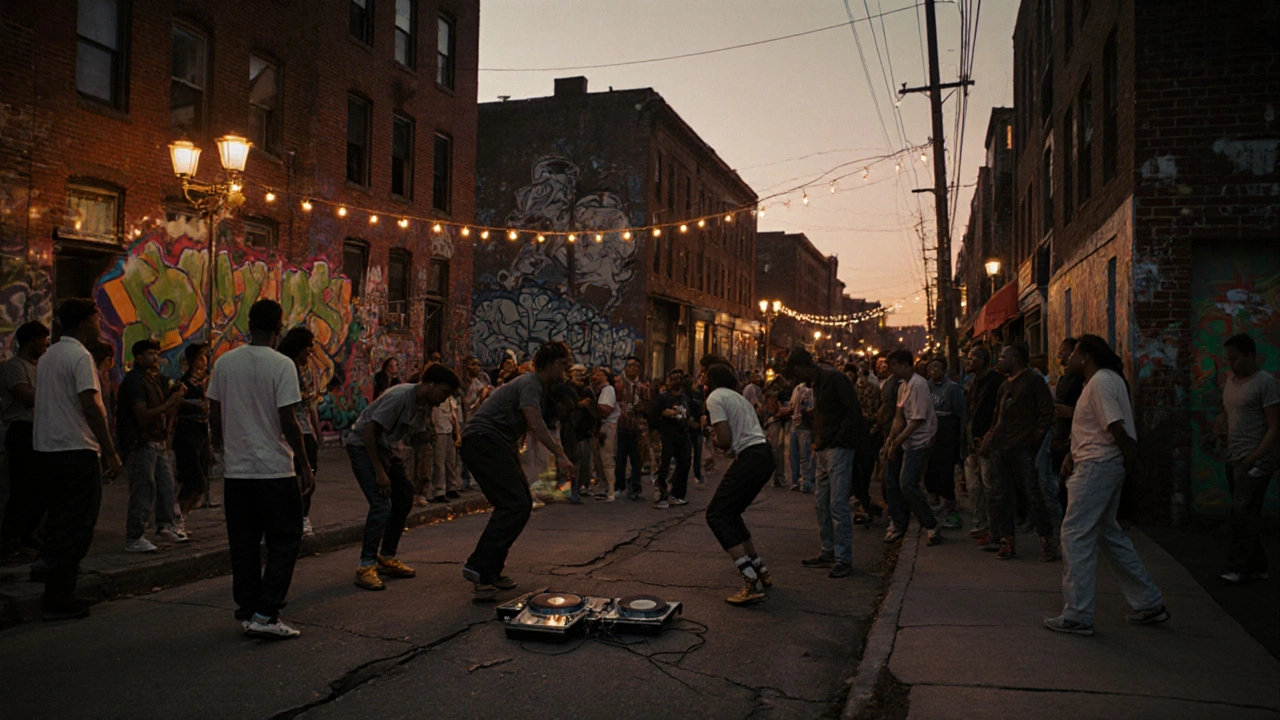
When you think of rap history, the cultural movement that turned spoken word into a global phenomenon, rooted in African American and Caribbean oral traditions. Also known as hip-hop music, it began not in studios, but on street corners, in parks, and at block parties where DJs looped breaks and MCs kept the crowd moving. This wasn’t just music—it was storytelling with rhythm, a way to speak truth when no one else would listen.
Rap history is tied to hip-hop culture, a four-part movement including DJing, breakdancing, graffiti, and MCing. You can’t understand rap without knowing how these pieces fit together. The same Bronx neighborhoods that birthed DJ Kool Herc’s turntable innovations also gave us early MCs like Coke La Rock, who turned party calls into rhythmic verses. This wasn’t imitation—it was invention. And it spread fast. By the ’80s, rap was no longer just a local sound; it was a new language for youth across the country, then the world.
Then came the rap pioneers, artists who turned raw energy into groundbreaking records and defined the genre’s first waves. Grandmaster Flash, Run-D.M.C., Public Enemy—they didn’t just make songs. They made statements. Their lyrics carried the weight of systemic neglect, police brutality, and urban survival. Meanwhile, producers like Marley Marl and DJ Premier turned drum machines and vinyl scratches into art. These weren’t just tracks—they were blueprints.
As rap history unfolded, it didn’t stay still. It absorbed influences from funk, soul, jazz, and even rock. The rise of West Coast gangsta rap in the ’90s, the East Coast boom-bap era, the Southern trap explosion—all of it built on the same foundation: rhythm, truth, and rebellion. Even today, when you hear a beat with a heavy 808 and a clever punchline, you’re hearing echoes of those early parties in the Bronx.
What you’ll find in this collection isn’t just a list of songs or names. It’s the full picture—how hip-hop evolution, the ongoing transformation of rap from underground expression to mainstream force shaped not just music, but fashion, language, and identity. You’ll see how jazz samples became hip-hop’s secret weapon, how technology changed beat-making forever, and why artists today still fight for the same authenticity that started it all. This is the story of a sound that refused to be ignored—and still isn’t.