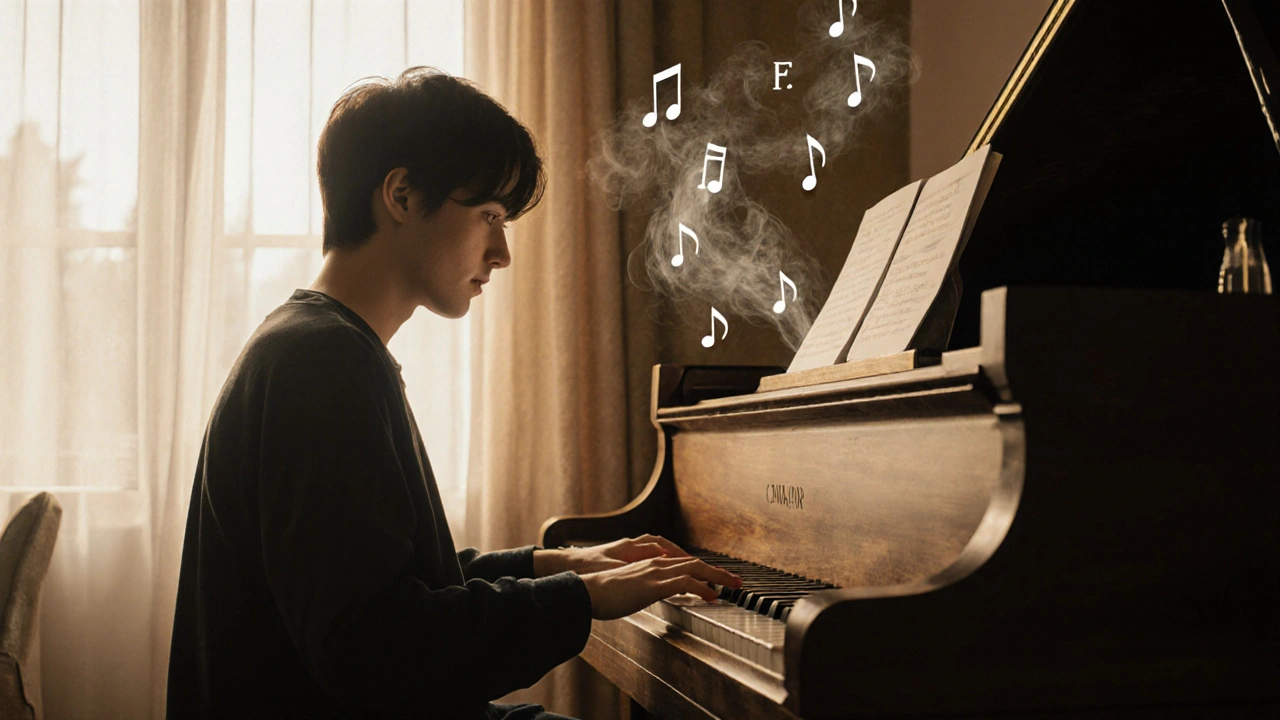
When you sit at the piano and let your fingers find the notes without thinking, you’re doing piano improvisation, the act of creating music spontaneously, using feeling instead of written scores. Also known as keyboard improvisation, it’s not about being perfect—it’s about being present. This is how jazz legends like Bill Evans and Thelonious Monk stayed fresh, how blues players kept audiences hooked, and how anyone with a piano can turn emotion into sound.
Piano improvisation doesn’t need fancy theory, but it does need a few anchors. Start with the blues scale, a five-note pattern that works over almost any chord progression in minor keys. It’s the secret sauce behind hundreds of songs. Then layer in jazz piano, a style built on chord extensions, voice leading, and rhythmic surprise. You don’t need to know all 12 modes—just learn how to walk your left hand through a 12-bar blues, then let your right hand explore. That’s where the magic happens: between the structure and the freedom.
People think improvisation is for pros, but it’s really for anyone who’s ever hummed a tune while washing dishes. It’s the reason you play the same song differently every time. You’re not copying—you’re responding. That’s why piano improvisation shows up in so many posts here: it’s the thread tying jazz to blues, classical to modern pop. You’ll find guides on how to turn simple chords into stories, how to listen to your hands instead of your brain, and how to make mistakes sound intentional.
There’s no single way to improvise. Some players use scales, others use rhythm, and some just follow the mood. But they all share one thing: they trust their ears more than their fingers. The posts below aren’t about memorizing licks. They’re about learning to hear what’s next before you play it. Whether you’re playing alone at midnight or jamming with a band, piano improvisation gives you a voice that’s yours alone.