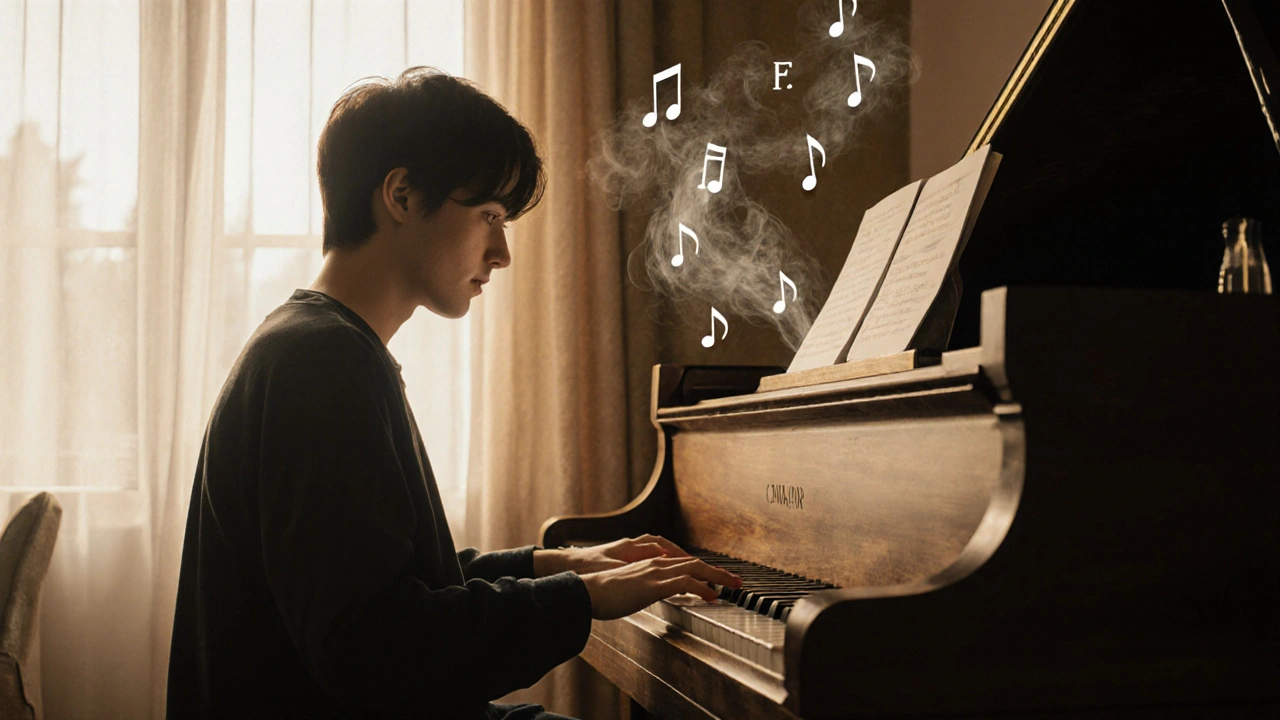
When you learn piano improv, the art of creating music on the spot without sheet music. Also known as piano improvisation, it’s not about being perfect—it’s about being present. You’re not just playing notes; you’re telling a story with your hands, reacting to the feel of the room, the mood, the breath between beats. This isn’t something only classical prodigies or jazz legends do. It’s a skill anyone can build, one chord, one riff, one wrong note turned right at a time.
Most people think blues piano, a raw, emotional style built on 12-bar progressions and soulful bends. Also known as Delta piano, it’s the foundation of so much modern music is too hard to start with. But that’s not true. The 12-bar blues structure is simple: I-IV-V chords, repeat, swing it. That’s it. Once you know those three chords in C, G, or E, you’ve got a whole language. And when you add in the minor pentatonic scale—just five notes—you can start making melodies that sound like they’ve been played for decades. That’s the magic of jazz piano, a style that blends harmony, rhythm, and freedom, often built on extended chords and walking bass lines. Also known as cool jazz piano, it’s what happens when structure meets spontaneity. You don’t need to know every chord voicing. Start with triads. Then add the 7th. Then try dropping the root. That’s how legends like Bill Evans and Ray Charles built their sound—layer by layer, note by note.
You don’t need years of lessons to start. You need curiosity and a willingness to mess up. Try playing along with a blues track. Don’t worry if you hit a wrong note—sometimes that’s the note that opens the door. Listen to how the bass moves. Feel where the space is. That’s where your voice comes in. piano chords, the building blocks of harmony that turn single notes into emotion. Also known as chord progressions, they’re the skeleton your improvisation hangs on. Learn the most common ones: I-vi-ii-V, the turnaround that shows up in everything from jazz standards to pop songs. Practice them in three keys. Then play them slow. Then fast. Then with your left hand only. Then with your right humming a melody you just made up.
What you’ll find in the posts below isn’t theory overload. It’s real talk from people who’ve been there. You’ll see how blues structure shapes modern rock, how jazz samples turned into hip-hop beats, and how the same chord progression that made Ray Charles cry can make a 2025 indie artist sound timeless. You’ll learn what to listen for in a live performance, how to turn a mistake into a signature lick, and why the best piano improv doesn’t sound like practice—it sounds like conversation. No fluff. No jargon. Just the tools, the examples, and the freedom to play what’s inside you.