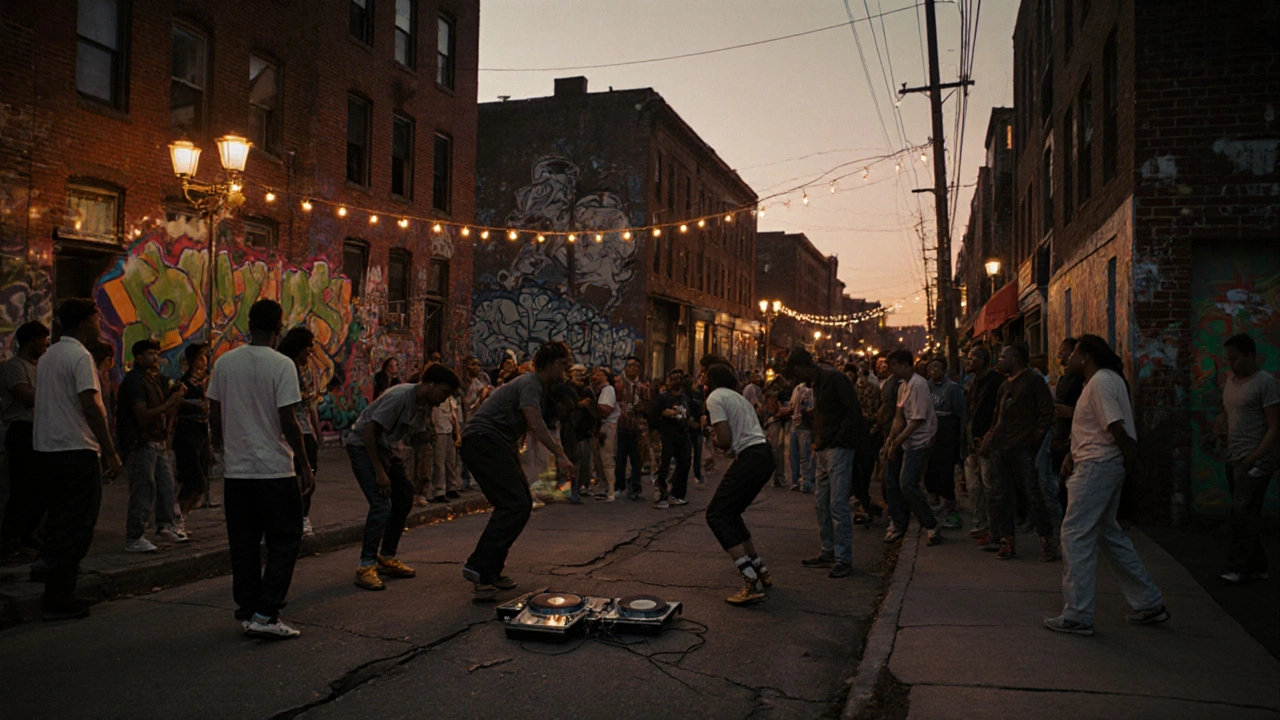
When you think of hip hop origins, the cultural movement that started in the South Bronx in the 1970s, blending DJing, MCing, breakdancing, and graffiti. Also known as rap culture, it wasn’t born in a studio—it was forged on block parties, abandoned buildings, and subway trains. This wasn’t just music. It was survival. A voice for kids who had no platform, no money, but had rhythm in their bones and words they needed to say.
At the heart of it all was the DJ, the original architect who looped breakbeats from funk and soul records to keep crowds moving. Kool Herc didn’t just play records—he stretched the good parts, the drum breaks, the parts that made people jump. That’s where the breakbeat, the isolated, punchy drum section that became the backbone of hip hop beats was born. Meanwhile, MCs stepped up to hype the crowd, turning simple chants into complex rhymes. Soon, graffiti artists tagged walls with bold letters, and breakdancers spun on cardboard in the street—each element feeding the other. This wasn’t separate scenes. It was one living thing.
What made hip hop stick wasn’t just the sound. It was the truth. The lyrics didn’t sugarcoat poverty, police, or loss. They told stories you couldn’t hear on the radio. And that raw honesty spread fast—from New York to Los Angeles, from London to Tokyo. The hip hop culture, a complete lifestyle built on creativity, self-expression, and community became a global language. Even now, when you hear a beat drop in a pop song or see a dancer freeze mid-move, you’re feeling the echo of those early Bronx block parties.
You’ll find traces of this in the posts below—how jazz samples became rap hooks, how DJing tools turned into digital plugins, how breakdancing moved from streets to stages. Some posts dig into the music’s structure. Others show how it shaped modern beats, fashion, and even how we talk. No fluff. Just the real threads that connect the past to what you’re listening to today.