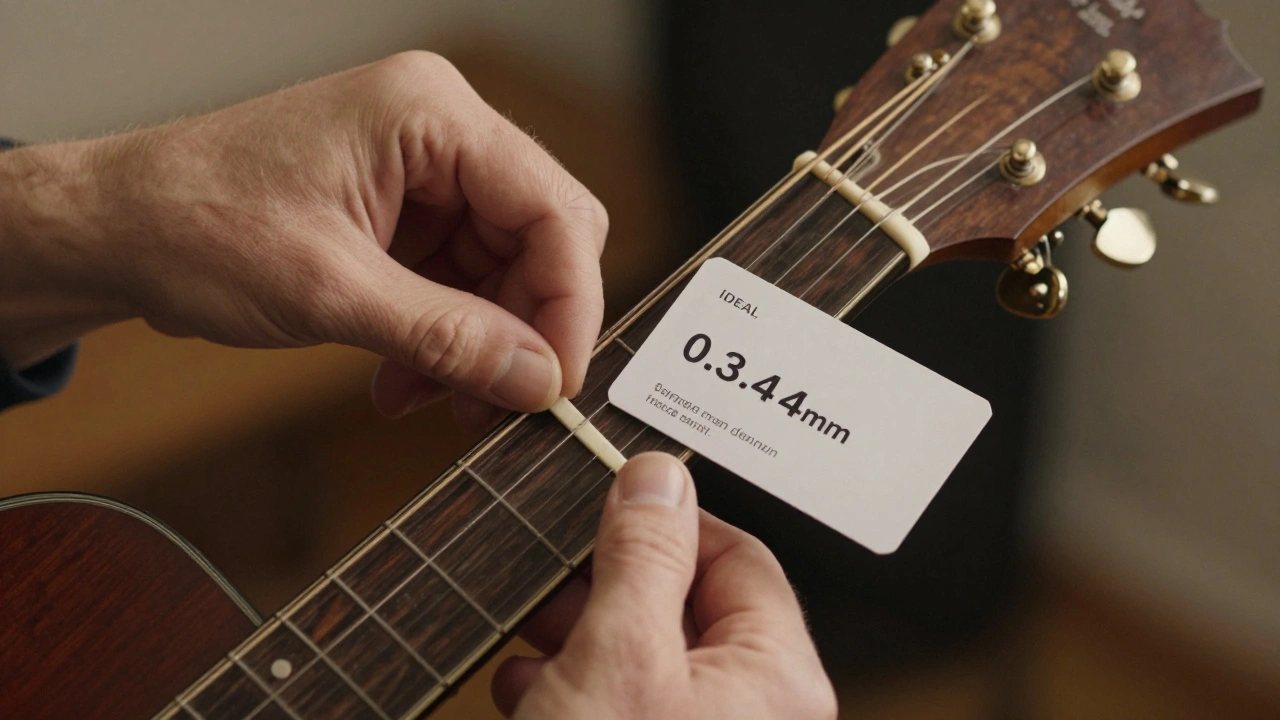
When you pluck a guitar string, a vibrating metal or nylon filament that translates finger movement into sound. Also known as strings, it's the most direct link between your hands and the music you make. Without them, a guitar is just wood and metal. But the right set? It can turn a simple chord into something alive.
Not all guitar strings are built the same. Acoustic guitar strings usually mean bronze or phosphor bronze wound over steel, giving that bright, ringing tone you hear in folk and country. Electric guitar strings? They’re often nickel-plated steel—smoother, warmer, and built to work with magnetic pickups. The thickness, or gauge, changes everything: lighter strings bend easier for solos, heavier ones punch harder for rhythm. And if you’ve ever played a set that felt dead or sounded dull? That’s not your fingers—it’s old strings. They lose their brightness after just a few weeks of regular play.
It’s not just about brand or price. The core material, winding pattern, and even how they’re coated affect how long they last and how they respond to your touch. Some players swear by coated strings for sweat resistance. Others avoid them because they feel less responsive. And the way your strings interact with the tonewood of your guitar? That’s where magic happens. A mahogany body with bright strings sounds totally different than maple with warm, vintage-wound sets.
There’s no universal "best" string. Your style, your guitar, even your hands matter. A blues player might pick heavy-gauge nickel for sustain and grit. A fingerstyle folk musician? Lighter gauges for softer attack and clarity. A metal guitarist? Thin high E but thick low E for drop tunings and tight palm muting. The posts below dive into how strings shape tone, how modern manufacturing changes what’s possible, and how your choice reflects not just your gear—but your sound.