Guitar Action Calculator
Optimal Action Height Calculator
Your ideal action height depends on your playing style and hand size. Enter your preferences below to get personalized recommendations.
Your Recommended Action Height
For best results, check your action at the 12th fret on the high E string. Adjust your truss rod in 1/8 turns and let the neck settle for 24 hours before rechecking.
Check Your Neck Relief
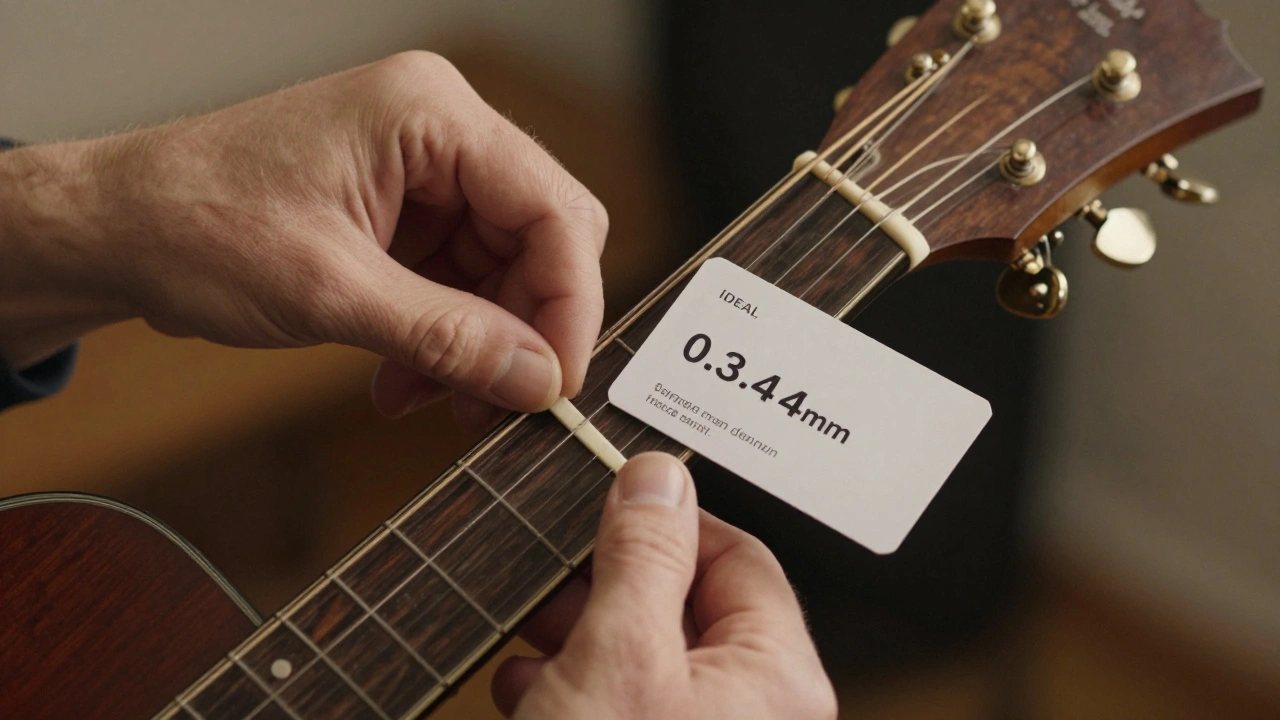
Hold down the 1st and last frets on the low E string. The gap at the 7th fret should be about the thickness of a business card (0.3-0.4mm).
Adjusting Your Truss Rod
Turn the truss rod 1/8 turn at a time. Too much curve = high action. Too little = buzzing. Let the neck settle for 24 hours before checking again.
Saddle Height Check
Test your action by measuring at the 12th fret. Lower it in 0.2mm increments until you find the sweet spot between buzz-free play and low effort.
Most people think an acoustic guitar is ready to play right out of the box. But if your guitar feels stiff, sounds dull, or won’t stay in tune, it’s not broken-it’s just not set up for you. Customizing your acoustic guitar isn’t about fancy mods or expensive upgrades. It’s about tuning the instrument to match how you play, what you play, and even how your hands move. A well-customized guitar doesn’t just sound better-it feels like an extension of your body.
Start with the Action: How High Is Too High?
Action refers to the distance between the strings and the fretboard. Too high, and your fingers tire out fast. Too low, and the strings buzz against the frets. Factory settings are designed for average hands and broad playing styles. If you’re a fingerpicker with light touch, you might need action as low as 2.0 mm at the 12th fret on the high E string. If you strum hard or use a heavy pick, 2.8 mm might be more comfortable.The neck relief-the slight curve in the neck-is the first thing to check. Hold down the first and last frets on the low E string. Look at the gap between the string and the 7th fret. You want about the thickness of a business card (0.3-0.4 mm). Too much curve and the action feels high. Too little and you get buzz. Adjust the truss rod in small increments-1/8 turn at a time-and let the neck settle for 24 hours before checking again.
Replace the Nut and Saddle for Better Tone and Tuning Stability
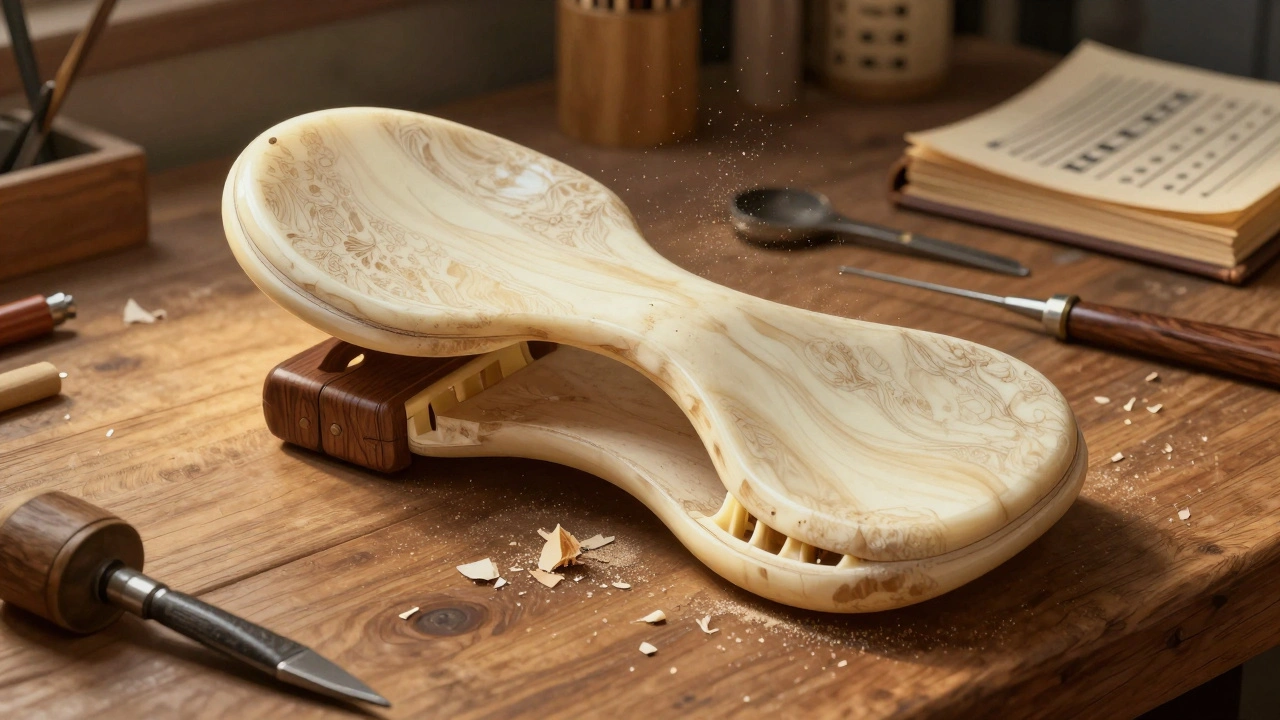
The nut and saddle are small pieces of bone, plastic, or synthetic material that guide the strings from the tuning pegs to the body. Factory guitars often use low-grade plastic that dampens vibration and causes tuning drift. Swapping them out makes a huge difference.For the nut, try unbleached cow bone. It’s dense, transfers string energy efficiently, and lasts years. If you’re not comfortable cutting one yourself, order a pre-slotted bone nut for your guitar model. For the saddle, use high-quality bone or fossilized ivory (legal and ethical alternatives exist). Avoid synthetic materials like TUSQ unless you’re on a tight budget-they’re consistent but lack the warmth of natural bone.
Pro tip: When installing a new saddle, sand it down slowly. Test the height by measuring the action at the 12th fret. Lower it in 0.2 mm steps until you get the sweet spot between buzz-free play and low effort.
Choose Strings That Match Your Style
Strings are the most obvious customization point, but most players stick with whatever came on the guitar. That’s a mistake. Different gauges, materials, and coatings change everything.Light gauge (.010-.047) is great for fingerstyle, blues, and folk. They’re easier to bend and require less finger strength. Medium gauge (.012-.053) gives you more volume and sustain-perfect for flatpickers and country players. If you play in drop D or open tunings often, consider a set with a heavier low E (.056 or .058).
Material matters too. Bronze strings (80/20) are bright and punchy-ideal for strumming. Phosphor bronze (92/8) are warmer and last longer because the phosphor slows oxidation. If you sweat a lot or play in humid climates, coated strings like Elixir Nanoweb or D’Addario EXP can double your string life without killing tone.
Fix Intonation: Play in Tune Across the Whole Neck
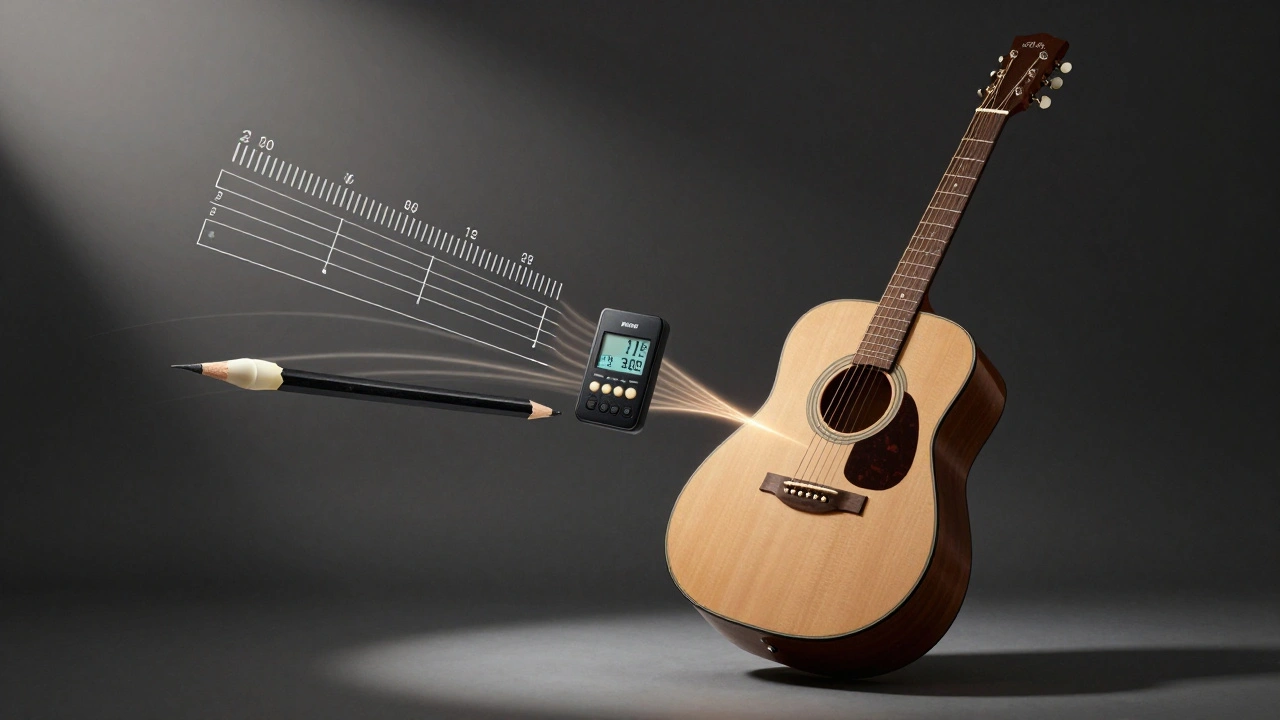
Your guitar might sound fine open but out of tune when you play higher up the neck. That’s intonation. It’s caused by the saddle being in the wrong position. To check it, play the 12th fret harmonic on each string. Then fret the same string at the 12th fret. The two notes should be identical. If the fretted note is sharp, the saddle needs to move away from the neck. If it’s flat, move it closer.On most acoustics, the saddle is slotted and can be moved by loosening the strings, sliding it, and retuning. Use a digital tuner for precision. You’ll need to do this for each string. Don’t rush it-intonation is one of the most overlooked upgrades that turns a decent guitar into a professional one.
Reduce String Friction at the Tuning Pegs
If your guitar goes out of tune after bending a note or using the capo, the problem might be friction at the tuning pegs or the nut slots. Lubricate the nut slots with graphite from a pencil. Rub the lead gently into each slot. It’s cheap, effective, and won’t damage the wood.For tuning pegs, apply a tiny drop of lightweight machine oil (like 3-in-1) to the gears inside the tuning machines. Don’t overdo it-just enough to make the pegs turn smoothly. This helps with fine-tuning and keeps the strings from slipping during vigorous playing.
Consider the Pickguard and Body Protection
If you’re a heavy strummer, your guitar’s top will eventually show wear. A pickguard isn’t just cosmetic-it protects the wood from pick scratches and helps preserve resale value. Most factory pickguards are thin plastic that can yellow or peel. Upgrade to a high-quality celluloid or acrylic guard that matches your guitar’s finish. Some players even install a custom-shaped guard that covers only the strumming zone, keeping the top’s natural resonance unobstructed.For added protection, use a soft cotton cloth to wipe down your guitar after every session. Moisture, skin oils, and dust build up over time and dull the finish. A quick wipe takes 30 seconds but keeps your guitar looking new for years.
Upgrade the Bridge Pins for Better Tone Transfer
Bridge pins hold the strings in place at the bridge. Stock pins are often made of plastic or low-grade wood. Replacing them with bone, ebony, or rosewood pins can improve sustain and clarity. Bone pins are the most popular-they’re hard, dense, and transmit string vibrations efficiently. Ebony offers a slightly warmer tone, while rosewood adds a bit of midrange richness.Make sure the new pins fit snugly. If they’re too loose, they rattle. If they’re too tight, you risk cracking the bridge. Sand them down with fine grit sandpaper until they slide in with gentle pressure. Test the fit by plucking a string-listen for a clear, ringing tone. If it sounds muffled, the pin might be too thick.
Don’t Forget the Electronics (If You Have Them)
If your guitar has a pickup system, customization matters just as much. Many factory pickups are cheap and feedback-prone. Upgrading to a piezo system like the LR Baggs Element or Fishman Prefix Plus gives you clearer, more natural amplified sound. Check the battery compartment for corrosion and replace the battery every 6 months, even if it still works.Adjust the pickup height so it’s close enough to capture string vibration but not so close that it dampens the strings. A good starting point is 3 mm under the bass E and 2.5 mm under the treble E. Use a small screwdriver to tweak the screws on the pickup housing. Test with a tuner and a clean amp setting-listen for even volume across all strings.
Final Check: Play Like You Mean It
After all these adjustments, don’t just strum a chord. Play the songs you actually perform. Use your real technique-fingerpicks, thumb brushes, percussive taps. Does the guitar respond? Does it stay in tune after a long session? Does the tone feel alive?If you’re still not happy, go back to the action. Sometimes the saddle or nut needs another tweak. If you’re unsure, take it to a qualified luthier. A good setup takes 1-2 hours and costs $60-$120 AUD. It’s cheaper than buying a new guitar and lasts for years.
Customizing your acoustic guitar isn’t about making it perfect. It’s about making it yours. The goal isn’t to sound like someone else-it’s to sound like the best version of yourself when you play. And that’s worth the time.
Can I customize my acoustic guitar myself, or should I take it to a pro?
You can handle most basic customizations yourself-changing strings, adjusting truss rod, lubricating the nut, and swapping bridge pins. These tasks need only basic tools and patience. But if you’re unsure about filing the saddle, cutting a new nut, or adjusting intonation precisely, it’s safer to see a luthier. A professional setup ensures no damage and gives you a reference point for future tweaks.
How often should I re-setup my acoustic guitar?
Change your strings every 3-6 weeks if you play regularly. Check the action and intonation every 3-4 months, especially if you live in a place with changing seasons. Humidity swings in winter or summer can warp the neck or shrink the wood. If you notice buzzing, tuning issues, or discomfort while playing, don’t wait-do a quick check. A seasonal setup is a smart habit for any serious player.
Will customizing my guitar affect its resale value?
Replacing parts like strings, bridge pins, or a pickguard won’t hurt resale value-they’re normal wear items. Upgrading the nut and saddle with bone is actually a positive, especially on mid- to high-end guitars. Avoid drilling holes, painting the body, or installing non-standard pickups unless you plan to keep the guitar. Original factory parts can be saved and reinstalled if you ever sell it.
What’s the most overlooked customization on acoustic guitars?
Many players ignore the bridge pin fit. A loose or poorly shaped pin muffles tone and reduces sustain. It’s a tiny part, but it’s the last connection point between the string and the body. Replacing stock plastic pins with bone or ebony can make the guitar sound louder, clearer, and more responsive-even without changing anything else.
Do coated strings really last longer without losing tone?
Yes, but with a trade-off. Coated strings like Elixir or D’Addario EXP last 3-5 times longer than uncoated ones because the coating blocks sweat and oil. They do lose a little brightness over time compared to new uncoated strings, but they stay consistent. If you play daily and hate changing strings often, coated strings are worth it. For recording or live shows where tone matters most, use fresh uncoated strings.