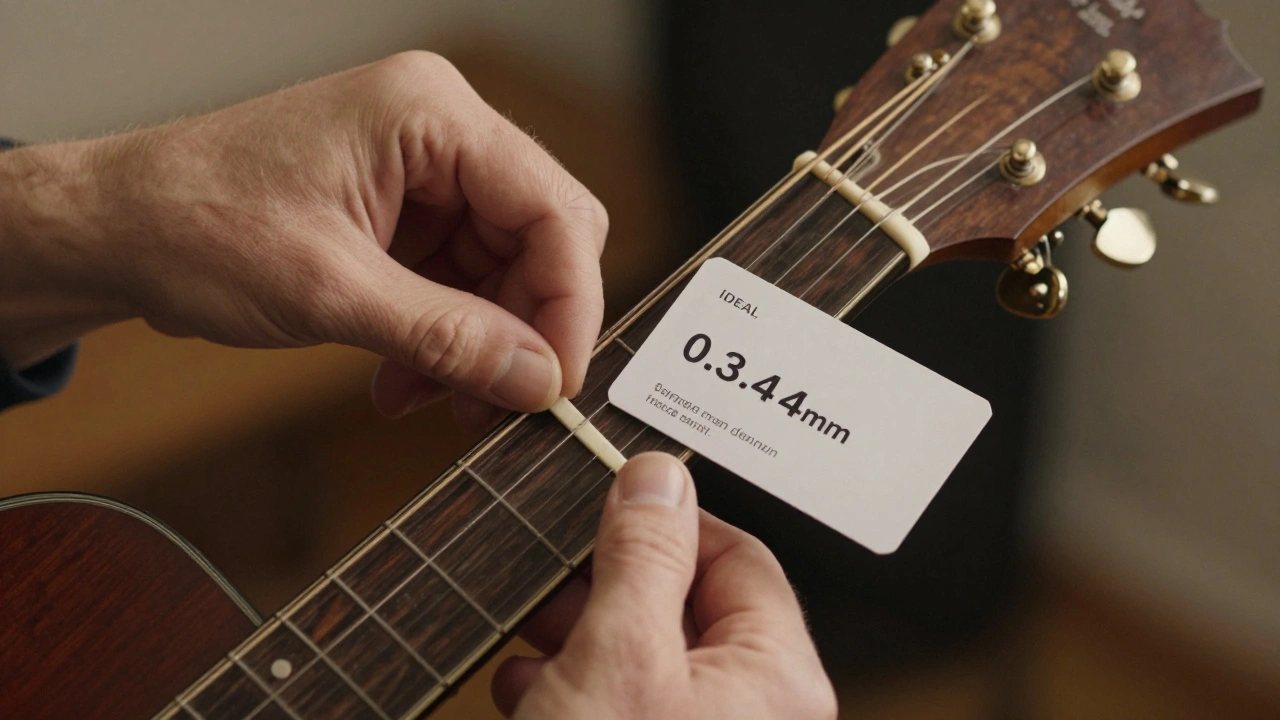
When you pick up a guitar and it feels right—the strings hum cleanly, the notes ring out without buzzing, and your fingers glide across the fretboard—that’s not luck. That’s a guitar setup, a precise adjustment of a guitar’s physical components to optimize playability and tone. Also known as guitar action adjustment, it’s the difference between a guitar that feels like a chore and one that feels like an extension of your hands. Most players think tuning is enough. But tuning only fixes pitch. A true guitar setup fixes how the instrument behaves under your fingers.
A good setup touches three key areas: guitar action, the height of the strings above the fretboard, fretwork, the condition and level of the frets that affect how cleanly notes sound, and string gauge, the thickness of the strings that changes tension, tone, and feel. Too high, and your fingers tire out. Too low, and the strings rattle against the frets. Worn or uneven frets turn chords into muffled noise. Light strings are easier to bend but lack punch. Heavy strings give you body but demand more strength. All of this matters—and all of it can be fixed.
Think of your guitar like a car. You can drive it as-is, but if the tires are out of alignment, the brakes are squeaking, and the engine runs rough, you’ll notice it every time you hit the road. A guitar setup is your tune-up. It’s not just for pros. If you play blues, rock, country, or even folk, the way your guitar responds changes how you play. A low action lets you slide faster. Proper intonation keeps chords from sounding off when you capo up the neck. Fresh strings with the right gauge make your playing feel more expressive. You don’t need to be a technician to understand this. You just need to know what to look for—and what to ask for when you take it in.
Below, you’ll find real stories from players who discovered how a simple setup changed everything—from a bedroom guitarist finally nailing their solo, to a touring musician who stopped replacing guitars and started fixing them. These aren’t theory pieces. They’re practical, hands-on experiences that show you what a good setup can actually do.