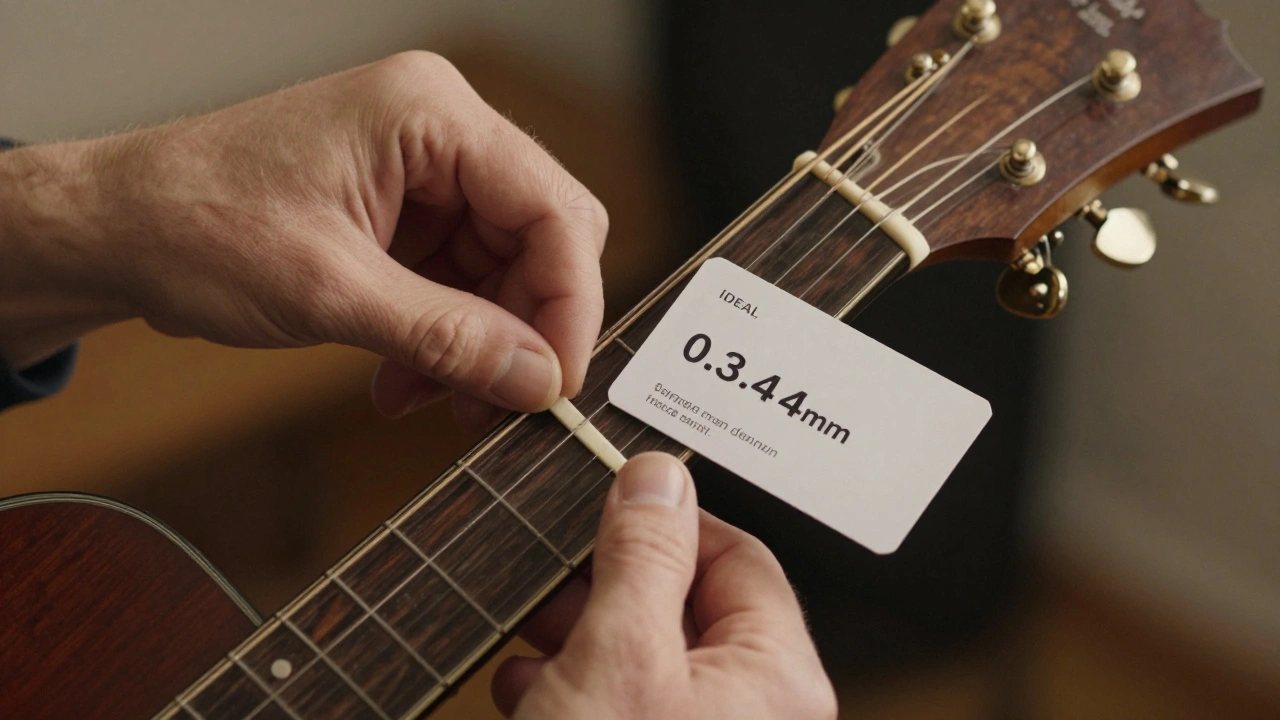
When your guitar sounds in tune on the open strings but goes sharp or flat as you move up the neck, you’re dealing with guitar intonation, the adjustment that ensures each fret produces the correct pitch relative to the open string. Also known as fretboard tuning accuracy, it’s not just for pros—anyone who plays beyond the first three frets needs it right. Bad intonation makes chords sound muddy, solos feel off, and recording sessions frustrating. It’s not your ears. It’s not your playing. It’s the setup.
Guitar tuning, the process of setting the pitch of each string is only the first step. Intonation, the system that adjusts string length at the bridge to match harmonic overtones is what keeps those notes true across the whole neck. If your 12th fret harmonic doesn’t match the fretted note, your guitar is out of alignment. This isn’t rare—it happens on new guitars, old ones, and even high-end models if they’ve been strung with different gauges or dropped in temperature. The fix? Adjusting the saddle position. On electric guitars, it’s a screwdriver and a tuner. On acoustics, it might mean a new bridge or professional setup.
Many players ignore intonation until their guitar sounds "off" in recordings or when playing with others. But it’s not just about sounding better—it’s about playing with confidence. If your high E string is sharp at the 15th fret, you’ll second-guess every solo. If your low E drags flat past the 7th fret, your power chords lose punch. This isn’t theoretical. It’s the difference between a performance that locks in and one that feels like it’s fighting you.
Looking at the posts here, you’ll find deep dives into guitar manufacturing, instrument choice, and how gear affects sound. You’ll see how modern materials like carbon fiber and engineered tonewoods change how guitars respond. But none of that matters if the intonation’s wrong. A $3,000 guitar with bad intonation still sounds cheap. A $300 guitar with perfect intonation sounds professional. It’s the most overlooked, easiest-to-fix detail in guitar care.
Below, you’ll find articles that touch on everything from acoustic innovations to the hidden roles behind the music. But if you’re here, you care about getting your guitar to speak clearly. These posts will help you understand why your instrument behaves the way it does—and how to make sure every note you play is exactly where it should be.