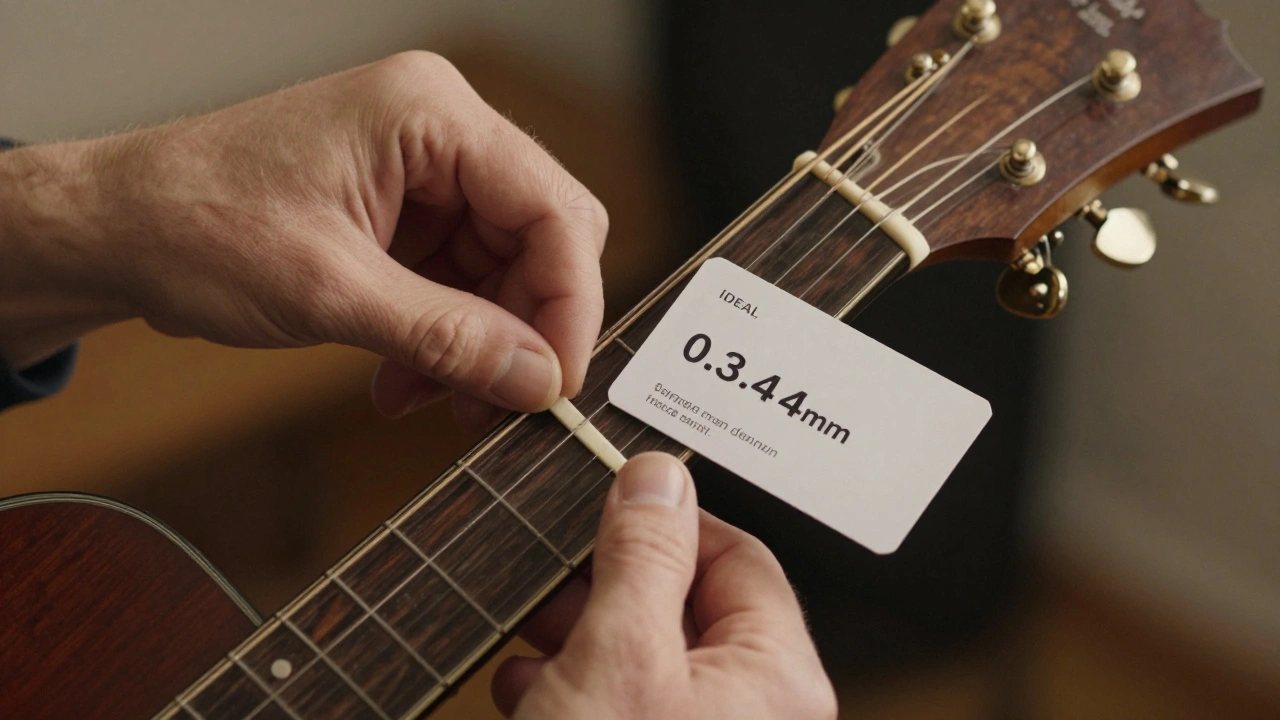
When you hear someone talk about guitar action, the distance between the strings and the fretboard that determines how hard or easy it is to press down on the strings. It’s not just a number—it’s the difference between a guitar that feels alive and one that feels like it’s fighting you. High action means your fingers have to push harder, which can make chords ache and fast runs feel sluggish. Low action lets you glide across the neck, but too low and the strings buzz against the frets, killing clarity. Finding the sweet spot isn’t about following a rule—it’s about matching your playing style, finger strength, and the kind of music you love.
String height, the physical measurement of how far the strings sit above the frets, is just one part of the story. Guitar setup, the full process of adjusting neck relief, bridge height, and intonation to optimize playability ties it all together. A guitar with perfect action but bad intonation will sound out of tune as you move up the neck. A guitar with great intonation but too much neck bow will make high notes choke out. These aren’t separate fixes—they’re parts of one system. Think of it like tuning a car: you don’t just adjust the tires, you check the alignment, the suspension, the engine. Same with your guitar.
Why does this matter to you? If you’re learning, high action can make you quit before you even get started. If you’re shredding, low action gives you speed and precision. If you’re playing blues or fingerstyle, you might want a little more give in the strings to bend them without fret buzz. The posts below show real examples: how modern guitar manufacturing is using carbon fiber and 3D-printed bracing to make action more stable, how your instrument choice reflects your personality (maybe you picked guitar because it felt easier to play), and how even legendary session musicians tweak their action for specific recordings. You’ll find guides on adjusting your own guitar, stories from players who changed their setup and suddenly found their voice, and why some of the most iconic tones in rock and blues came from a guitar that was just a little too high—or just a little too low.
There’s no single ‘right’ action. But once you understand what it is and how it works, you stop guessing. You start tuning your instrument to fit you—not the other way around.