Think about the last song that blew up on TikTok. Maybe it was a glitchy, high-pitched pop track with distorted 808s. Or maybe it was a slow, moody rap song with eerie piano loops. You didn’t just hear a pop song or a hip hop track-you heard something more specific. That’s the power of subgenres. They don’t just describe music-they create movements, define identities, and push entire scenes forward.
Subgenres aren’t just labels-they’re cultural signals
When someone says ‘lo-fi hip hop,’ they’re not just talking about slow beats and vinyl crackle. They’re referencing late-night study sessions, ASMR-like comfort, and a whole community of producers who upload tracks to YouTube with no vocals and no ads. When you hear ‘hyperpop,’ you think of neon aesthetics, pitch-shifted vocals, and artists like Charli XCX and A.G. Cook blowing up the boundaries of what pop can sound like.
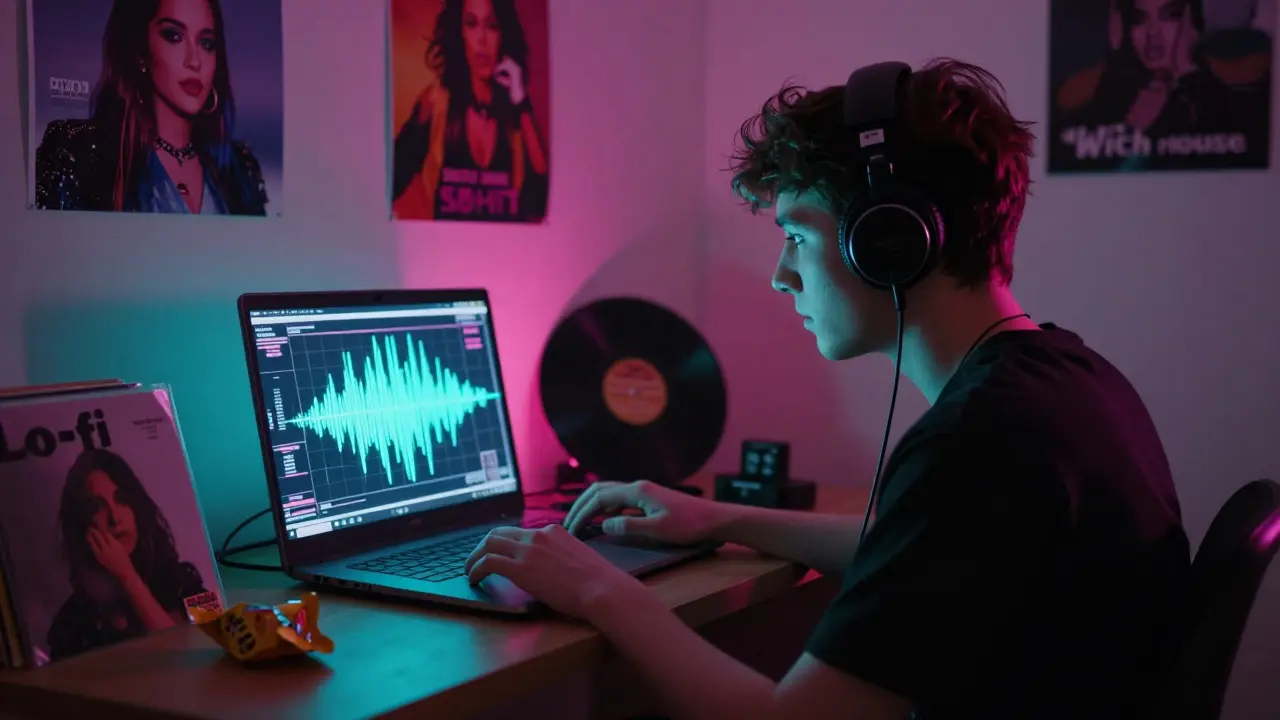
These aren’t accidental styles. They’re built by fans, producers, and platforms working together. A subgenre emerges when enough people start using the same sonic tools, sharing the same references, and creating inside a shared space. It’s not about record labels deciding what’s next-it’s about teenagers in bedrooms, Discord servers, and SoundCloud uploads.
How subgenres form: from niche to mainstream
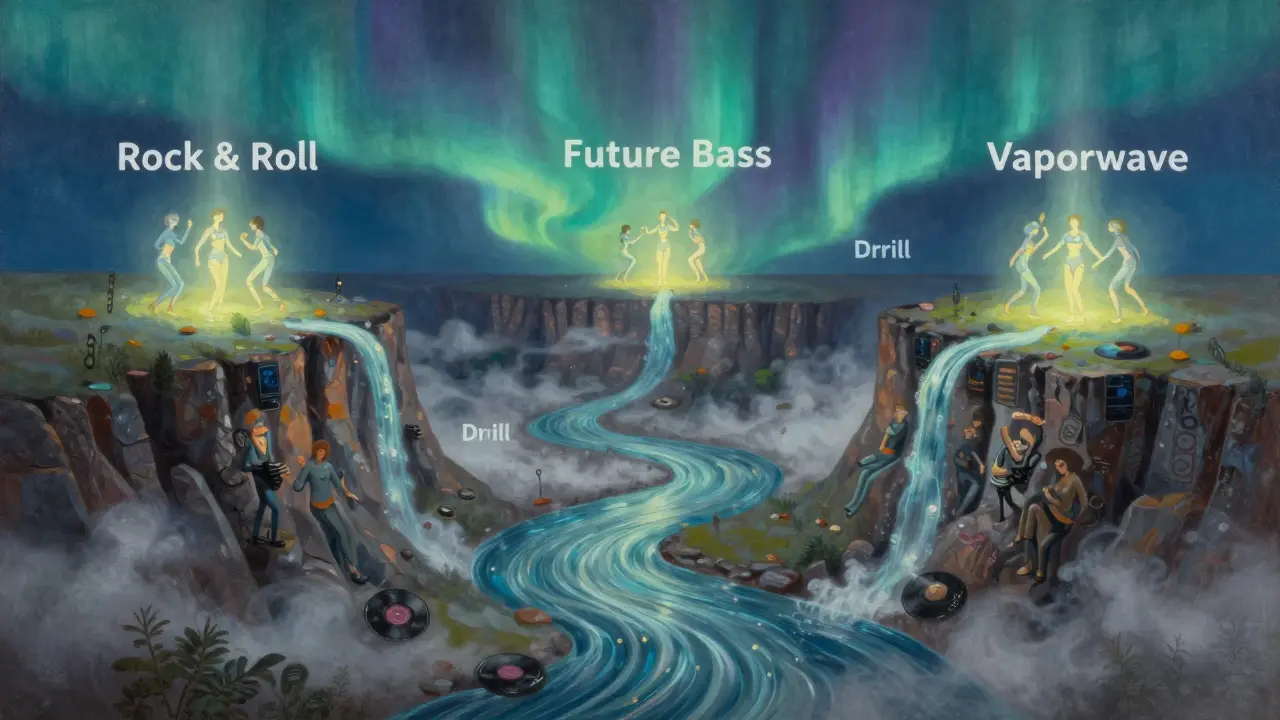
Every major genre started as a subgenre. Rock and roll was once just rhythm and blues with electric guitars. House music began as a stripped-down version of disco played in Chicago clubs. Trap music came from Southern hip hop producers layering hi-hats and 808s in ways no one had heard before.
Today, the cycle is faster. Look at trap metal. It didn’t exist five years ago. Now it’s a Spotify playlist with over 2 million followers. Bands like Code Orange and artists like Trippie Redd started blending heavy guitar riffs with trap drum patterns. Fans didn’t wait for a critic to name it-they called it trap metal, made memes, and tagged it on Instagram. Within months, labels started signing artists under that banner.
Subgenres form because technology lets people find their tribe. If you like dark, ambient techno with field recordings of rain and distant thunder, you used to be alone. Now you’re part of a scene called ‘dark ambient techno,’ with hundreds of artists on Bandcamp and a dedicated subreddit. The internet doesn’t just spread music-it creates new categories for it.
The role of streaming and algorithms
Spotify, Apple Music, and YouTube don’t just recommend songs-they define genres. Their playlists don’t care about decades-old music theory. They care about what sounds similar to what you’ve already liked.
That’s how indie electronic became a thing. It’s not a genre you’d find in a 1990s record store. But if you liked Tame Impala, then MGMT, then Poolside, then Sylvan Esso, Spotify started putting you in a playlist called ‘Indie Electronic.’ Suddenly, artists making dreamy synth-pop with lo-fi drums started calling themselves indie electronic. They didn’t invent the sound-they just gave it a name that got them discovered.
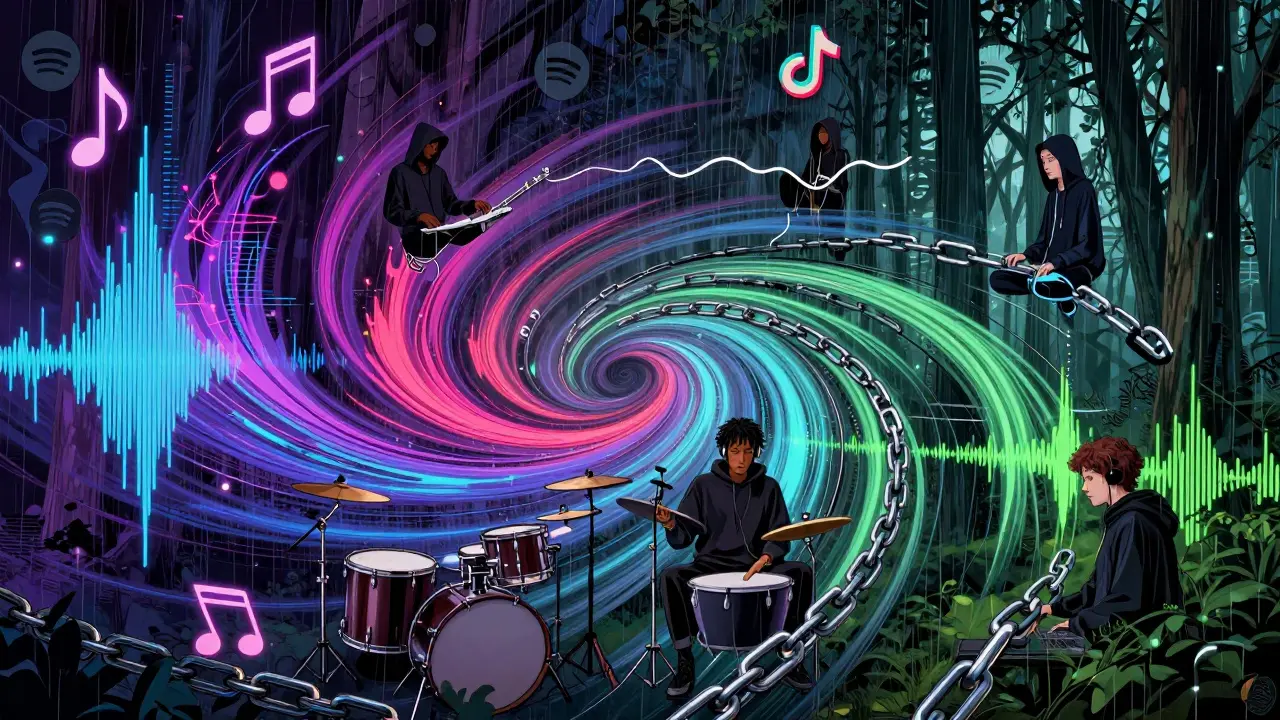
Algorithms don’t create subgenres, but they give them legs. A song with the right BPM, vocal tone, and production style can go viral in one country and spark a wave of copycats in another. In 2024, a track called ‘Bitter Sweet’ by a bedroom producer in Seoul hit 50 million streams on YouTube. Within six months, over 300 similar tracks appeared on SoundCloud-all labeled ‘Korean dream pop.’ That’s not coincidence. That’s algorithmic influence.
Why subgenres matter more than ever
Big genres are tired. ‘Pop’ means nothing anymore. ‘Rock’ is a relic. But ‘vaporwave’? ‘Chillwave’? ‘Goblincore’? Those mean something. They carry emotion, fashion, nostalgia, and attitude.
When a 16-year-old in Auckland says they listen to ‘witch house,’ they’re not just naming a sound. They’re saying: I like occult imagery, slowed-down soul samples, and distorted vocals that sound like they’re coming from a haunted VHS tape. That’s a whole world. And that world has its own artists, merch, and slang.
Subgenres are how young people claim identity in a world where everything feels mass-produced. They don’t want to be part of a crowd-they want to be part of a cult. And music is the easiest way to build one.
Real examples: subgenres that changed the game
- Hyperpop - Took pop music and turned it into a digital rave. Think 100 gecs, SOPHIE, and Dorian Electra. It’s loud, messy, and proud of it. Launched in 2017, it hit mainstream in 2021 and now has its own Grammy category.
- Drill - Started in Chicago, exploded in London, then mutated into Brooklyn drill, UK drill, and even Nigerian drill. Each version has different slang, flows, and production styles-but all share the same cold, rhythmic menace.
- Emo rap - Blended punk emotion with trap beats. Artists like Lil Peep and Juice WRLD turned pain into playlists. This subgenre didn’t just make music-it created a mental health movement.
- Future bass - Smooth synths, pitched vocal chops, and swelling drops. It’s the sound of late-night drives and emotional Instagram captions. Artists like Flume and ODESZA made it global without ever calling it that.
Each of these didn’t just add a new flavor to music. They created new ways to feel. And that’s why they stick.
The rise of micro-subgenres
Now we’re seeing subgenres within subgenres. ‘Sad girl indie’? That’s a thing. ‘Cyberpunk R&B’? It exists. ‘Vaporwave with k-pop vocals’? Someone made it last month.
These aren’t just marketing tricks. They’re how artists carve out space in a crowded field. If you’re a producer and you make lo-fi beats with field recordings of New Zealand rain, you’re not just making ‘lo-fi.’ You’re making ‘Aotearoa lo-fi.’ That specificity gets you noticed.
Platforms reward uniqueness. TikTok’s algorithm pushes niche sounds because they’re unexpected. A song with a 15-second bass drop that sounds like a fax machine malfunctioning? That’s the kind of thing that trends. And when it trends, it spawns 10,000 remixes-and a new subgenre is born.
What this means for artists and listeners
If you’re making music, stop trying to fit into ‘pop’ or ‘rock.’ Find the smallest, most specific sound you can make. The more niche your sound, the more loyal your audience. A thousand fans who love your exact style are worth more than a million who just like ‘whatever’s trending.’
If you’re listening, stop scrolling past songs labeled ‘dark trap’ or ‘witch house.’ Those labels are invitations. They’re telling you: this music speaks to people who think like you. You don’t have to understand it to feel it. Sometimes, the weirder the label, the more it means.
Music isn’t just about melody anymore. It’s about belonging. And subgenres are the new dialects of that belonging.
Where subgenres are headed in 2026
Look at what’s bubbling now. ‘Glitch pop’ is gaining steam-songs that sound like they’re breaking mid-playback. ‘Neo-gothic folk’ is emerging in Eastern Europe, blending medieval instruments with distorted synths. Even ‘emo country’ is starting to appear, with artists like Orville Peck and Margo Price leaning into raw, emotional storytelling over twangy guitars.
What’s next? Probably something we haven’t named yet. Maybe a fusion of Māori chanting and ambient techno. Maybe a genre built entirely from AI-generated vocal samples. The point isn’t what it’ll be-it’s that it will be. And it’ll start with one person in a bedroom, hitting ‘upload’ on a track no one asked for.
That’s how music moves now. Not through radio stations. Not through critics. But through subgenres-tiny, loud, weird, beautiful movements that turn noise into culture.
What’s the difference between a music genre and a subgenre?
A genre is a broad category like rock, hip hop, or electronic. A subgenre is a more specific style within that genre-like punk rock, trap, or deep house. Subgenres have distinct sounds, cultural contexts, and fanbases. Think of genres as neighborhoods and subgenres as individual houses.
Can a subgenre become a main genre?
Yes, absolutely. House music started as a subgenre of disco in Chicago. Trap was once just a regional style of Southern hip hop. Now both are considered major genres. When a subgenre gains enough global recognition, industry support, and cultural weight, it graduates. That’s how music evolves.
Why do subgenres die out?
They don’t always die-they get absorbed. Many subgenres fade because they become too mainstream and lose their edge. Others get replaced by newer, more exciting sounds. But the music doesn’t disappear. It lives on in samples, remixes, or as inspiration for future artists. Vaporwave may not be trending now, but its influence is all over today’s lo-fi and synthwave scenes.
Do I need to know subgenres to enjoy music?
No. You can love a song without knowing its label. But knowing subgenres helps you find more music you’ll love. It’s like knowing the difference between ‘Italian’ and ‘Neapolitan’-you can enjoy pasta either way, but knowing the difference helps you choose better.
How do I find new subgenres?
Start with playlists labeled ‘deep cuts’ or ‘underground.’ Follow niche blogs like Pitchfork’s ‘The Pitch’ or Bandcamp Daily. Explore SoundCloud tags like ‘witch house’ or ‘dark ambient.’ Listen to what’s trending in cities you’ve never visited-like Osaka, Lagos, or Santiago. The best subgenres are often born outside the spotlight.
Music doesn’t move in waves anymore-it moves in sparks. And those sparks? They’re called subgenres.