You hear the kick drum hit. You feel the bassline rattle your chest. But do you know where that sound actually came from? It didn’t start in a recording studio with expensive microphones and polished producers. It started on a hot summer afternoon in the Bronx, New York, with a teenager named Cedric Bridges isn't telling this story-history is. The story begins with two turntables, an extension cord, and a party that refused to end.
Hip hop is often mistaken for just rap music. That’s a common error. Rap is just one element. Hip hop is a culture built on four pillars: DJing, MCing (rapping), breaking (dance), and graffiti art. To understand the giants who stand today, we have to look at the dirt beneath their feet. We need to talk about the pioneers who turned broken records into a global movement.
The Birthplace: The Bronx in the 1970s
Before you can understand the music, you have to understand the place. In the early 1970s, the South Bronx was struggling. Urban renewal projects had left neighborhoods fractured. Crime was high, and resources were low. But amidst the decay, a new energy was forming. Young people needed a way to express themselves, to claim space, and to find community.
This wasn’t a planned industry move. There were no executives in suits signing checks. It was grassroots. It was survival. The technology available was limited-mostly used vinyl records and basic mixers-but the creativity was infinite. This context is crucial because it explains why the music sounds the way it does. It’s raw, repetitive, and energetic because it was designed for parties, not radio play.
Kool Herc: The Father of Hip Hop
If there is one name you need to remember, it is Kool Herc (Clive Campbell). Born in Jamaica, Herc moved to the Bronx as a child. He brought something specific with him from his homeland: the "toasting" tradition, where DJs would talk over instrumental tracks, and the concept of focusing on the "break" section of a song.
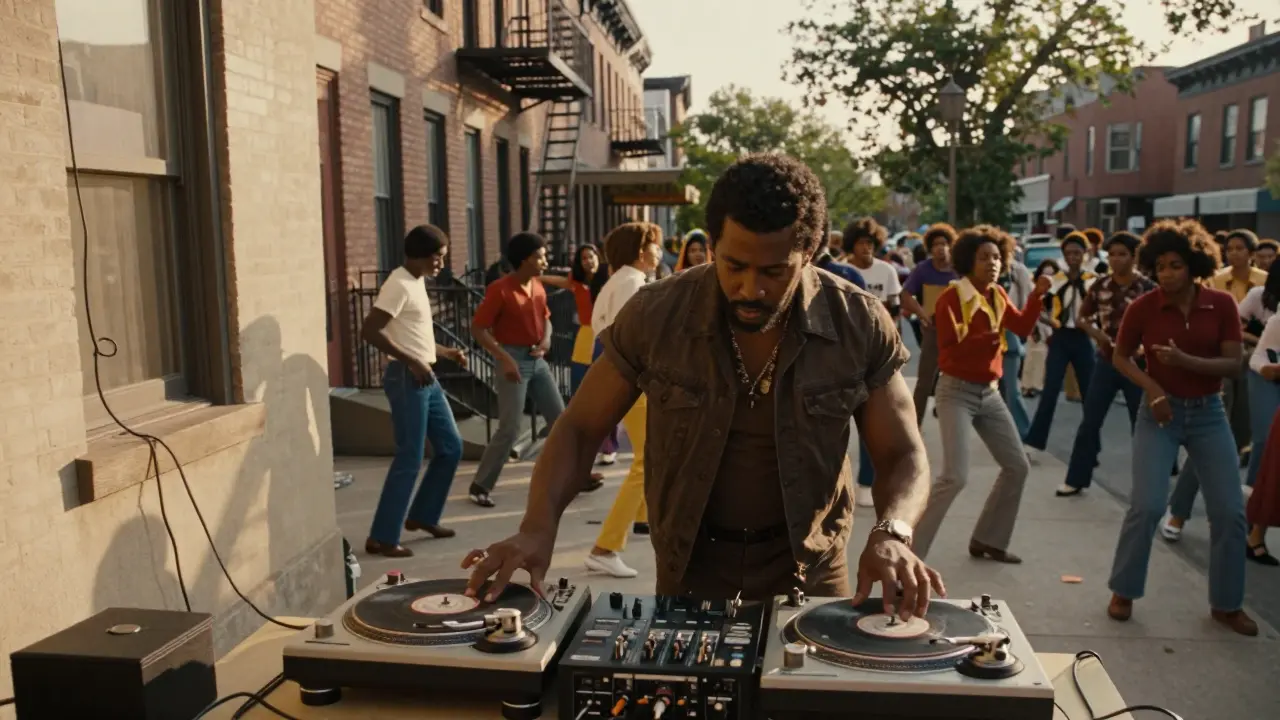
In 1973, Herc threw a back-to-school party at 1520 Sedgwick Avenue. This date is widely considered the birth of hip hop. What did he do differently? He noticed that dancers went wild during the "break"-the part of the record where the vocals dropped out and only the drums and bass remained. These sections were usually short, lasting maybe ten seconds.
Herc solved this problem with ingenuity. He used two copies of the same record on two separate turntables. When the break started on Record A, he would switch to Record B. As the break ended on B, he switched back to A. By looping these breaks seamlessly, he created an extended instrumental groove. This technique became known as the "Merry-Go-Round." It gave breakdancers hours of continuous rhythm instead of seconds. This innovation is the technical foundation of all modern DJing.
Grandmaster Flash: The Technical Wizard
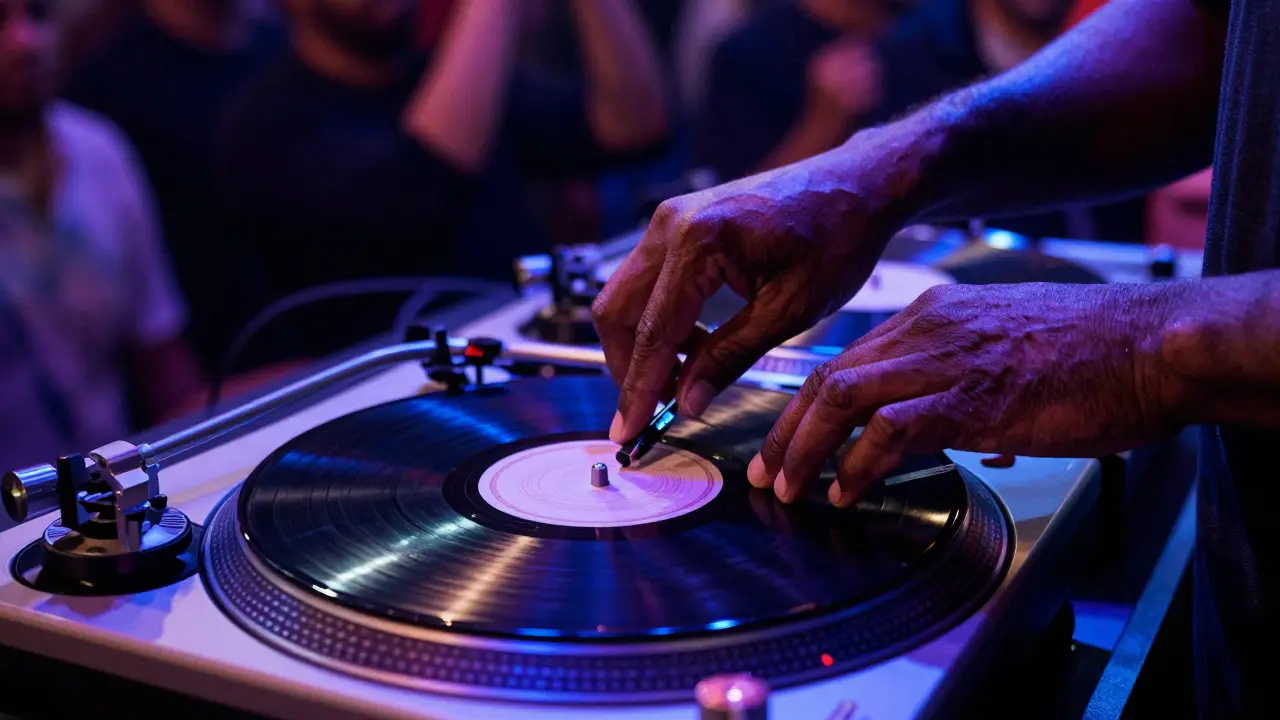
While Kool Herc invented the loop, Grandmaster Flash (Joseph Saddler) refined the science. Flash approached DJing like an engineer. He believed that every millisecond counted. If a beat was off by even a fraction of a second, the dance floor would lose its energy.
Flash introduced several critical techniques that changed how records were played:
- Pitch Control: He modified his turntables to allow precise speed adjustments. This allowed him to match the tempo of two different records perfectly before mixing them.
- The Quick Mix Theory: Instead of just looping one break, Flash could jump between different records instantly, creating a medley of beats that kept the crowd energized.
- Backspinning: He could physically spin the record backward under the needle to return to the exact start of a break, allowing for tighter loops than Herc’s method.
His group, Grandmaster Flash and the Furious Five, also pushed the narrative side of hip hop. Their 1982 track "The Message" shifted the genre from party anthems to social commentary. Lines like "Don't push me 'cause I'm close to the edge" resonated with listeners who felt ignored by mainstream society. This proved that hip hop could be both entertaining and politically powerful.
Afrika Bambaataa: The Diplomat of Culture
If Herc provided the beat and Flash provided the technique, Afrika Bambaataa (Kevin Donovan) provided the vision. Before becoming a DJ, Bambaataa was involved in street gangs. He saw the violence tearing apart his community and decided to use music as a tool for peace.
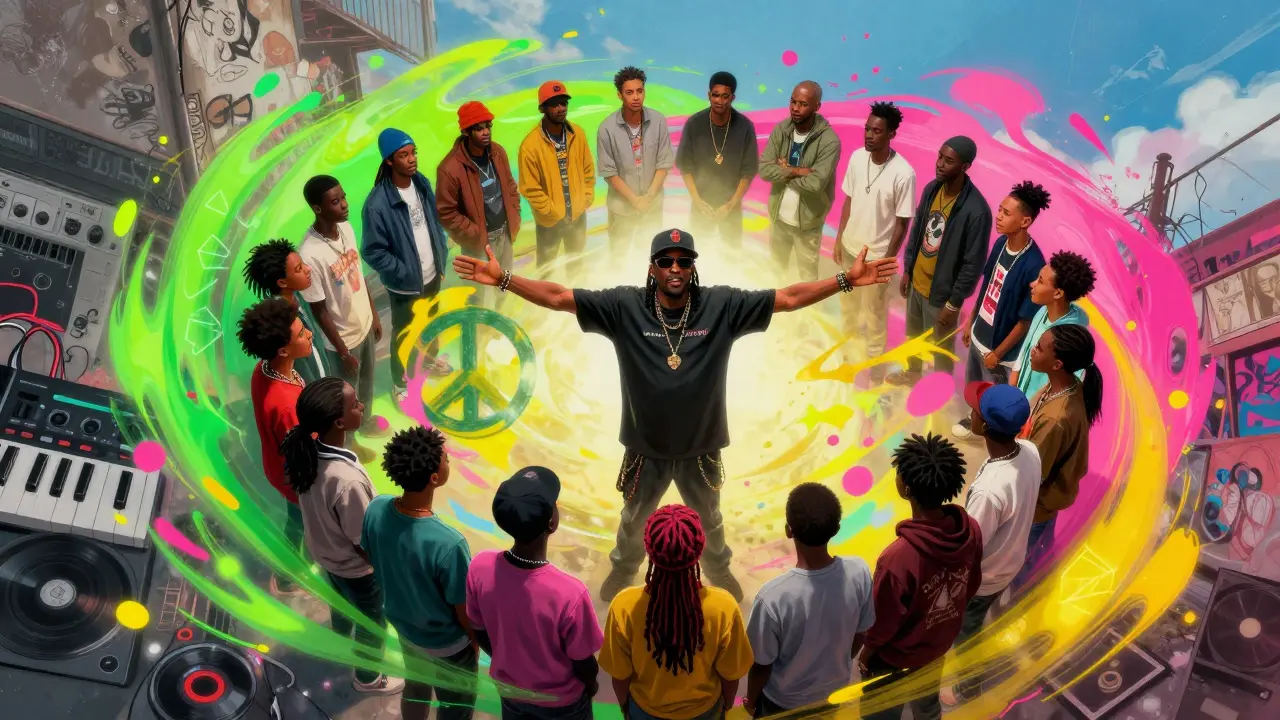
He founded the Universal Zulu Nation in 1973. This organization united rival gangs under the banner of hip hop culture. The goal was simple: channel competitive energy into dancing, graffiti, and DJ battles rather than physical fights. Bambaataa expanded the definition of hip hop beyond just the Bronx. He connected it to global movements, African heritage, and universal human rights.
Bambaataa was also a musical explorer. While others stuck to funk and soul records, Bambaataa experimented with electronic music. His 1982 track "Planet Rock," produced with Arthur Baker, used the Roland TR-808 drum machine and the Kraftwerk-inspired synthesizer lines. This track bridged the gap between hip hop and electronic dance music, influencing genres like techno and house for decades to come. Without Bambaataa’s openness to new sounds, hip hop might have remained confined to sampled funk breaks.
The Role of MCing: From Hype Man to Storyteller
In the beginning, the MC (Master of Ceremonies) was secondary to the DJ. Their job was to introduce the DJ, hype up the crowd, and keep the energy high between songs. Early MCs like Coke La Rock, who worked with Kool Herc, are credited with being among the first rappers. They shouted phrases like "If you don't know, now you know!" to engage the audience.
Over time, the role evolved. MCs began rhyming over the beats. They developed complex rhyme schemes, flow patterns, and storytelling abilities. Groups like The Sugarhill Gang released "Rapper's Delight" in 1979, which became the first hip hop single to crack the Top 40. While purists criticized it for lacking authentic street credibility, it introduced hip hop to a global audience. It proved that rap could be a commercial product, paving the way for the industry that exists today.
DJ Jazzy Jay and The Cold Crush Brothers: Elevating the Art
As the culture grew, so did the competition. DJ Jazzy Jay (James Murray) is often called the "Godfather of Turntablism." He focused on the artistic expression of the DJ. He popularized the use of the crossfader, allowing for rapid switching between channels. This enabled faster, more intricate scratching techniques. Scratching became a signature sound of hip hop, turning the turntable itself into a musical instrument.
Simultaneously, groups like The Cold Crush Brothers raised the bar for lyricism. Led by Melle Mel, they emphasized complex wordplay, internal rhymes, and poetic structure. Melle Mel later joined Grandmaster Flash, bringing this lyrical sophistication to a wider audience. This era established the standard for what it meant to be a skilled rapper. It wasn’t enough to just rhyme; you had to craft poetry.
Impact on Modern Music and Culture
The influence of these pioneers extends far beyond the 1970s and 80s. Every modern producer uses sampling, a direct descendant of Herc’s breakbeats. Every DJ uses pitch control and crossfaders, tools perfected by Flash and Jazzy Jay. The global reach of hip hop, seen in countries from France to Japan, traces back to Bambaataa’s universalist approach.
Today, hip hop is the most consumed music genre in the United States. It drives fashion, language, and political discourse. Yet, the core elements remain unchanged. The beat still drops. The MC still flows. The dancer still breaks. The artist still paints. The pioneers didn’t just create a genre; they created a framework for self-expression that continues to evolve.
| Pioneer | Primary Contribution | Key Innovation | Legacy Impact |
|---|---|---|---|
| Kool Herc | Founded the culture | Merry-Go-Round (Breakbeat Looping) | Created the rhythmic foundation of hip hop |
| Grandmaster Flash | Technical precision | Pitch Control & Backspinning | Turned DJing into a precise science |
| Afrika Bambaataa | Cultural expansion | Universal Zulu Nation & Electronic Fusion | Globalized hip hop and linked it to peace |
| DJ Jazzy Jay | Turntablism | Crossfader Technique | Made the turntable a solo instrument |
Why Their Stories Matter Today
In an age of digital streaming and AI-generated beats, it’s easy to forget the manual labor behind hip hop. These pioneers didn’t have software to auto-tune or quantize beats. They had hands, ears, and intuition. Their stories remind us that innovation often comes from limitation. When you only have two turntables and a mixer, you find ways to make them sing.
Understanding these legends isn’t just about nostalgia. It’s about recognizing the roots of a tree. If you want to understand why Kendrick Lamar samples jazz, or why Travis Scott uses heavy bass, you have to trace those lines back to the Bronx. You have to see how a Jamaican toast became a New York rhyme, and how a gang truce became a global movement.
Who is considered the father of hip hop?
Kool Herc (Clive Campbell) is widely recognized as the father of hip hop. He hosted the first hip hop party in 1973 at 1520 Sedgwick Avenue in the Bronx and invented the "Merry-Go-Round" technique, which isolated and looped drum breaks to create continuous dance music.
What are the four elements of hip hop culture?
The four foundational elements are DJing (music production and selection), MCing (rapping and vocal performance), Breaking (street dance style), and Graffiti (visual art). Some historians also add a fifth element: Knowledge of Self, emphasizing cultural awareness and history.
How did Grandmaster Flash change DJing?
Grandmaster Flash introduced technical precision to DJing. He modified turntables to include pitch control, allowing for perfect beatmatching. He also pioneered backspinning and the quick mix theory, enabling seamless transitions between different records and tighter breakbeat loops.
What was the significance of Afrika Bambaataa's Universal Zulu Nation?
The Universal Zulu Nation, founded by Afrika Bambaataa in 1973, aimed to unite rival street gangs through hip hop culture. It promoted peace, unity, and positive social change, transforming hip hop from a local party scene into a global movement with a moral and political mission.
When and where did hip hop originate?
Hip hop originated in the Bronx, New York City, in the early 1970s. The specific starting point is often cited as August 11, 1973, when Kool Herc threw a back-to-school party at 1520 Sedgwick Avenue, introducing the breakbeat looping technique.