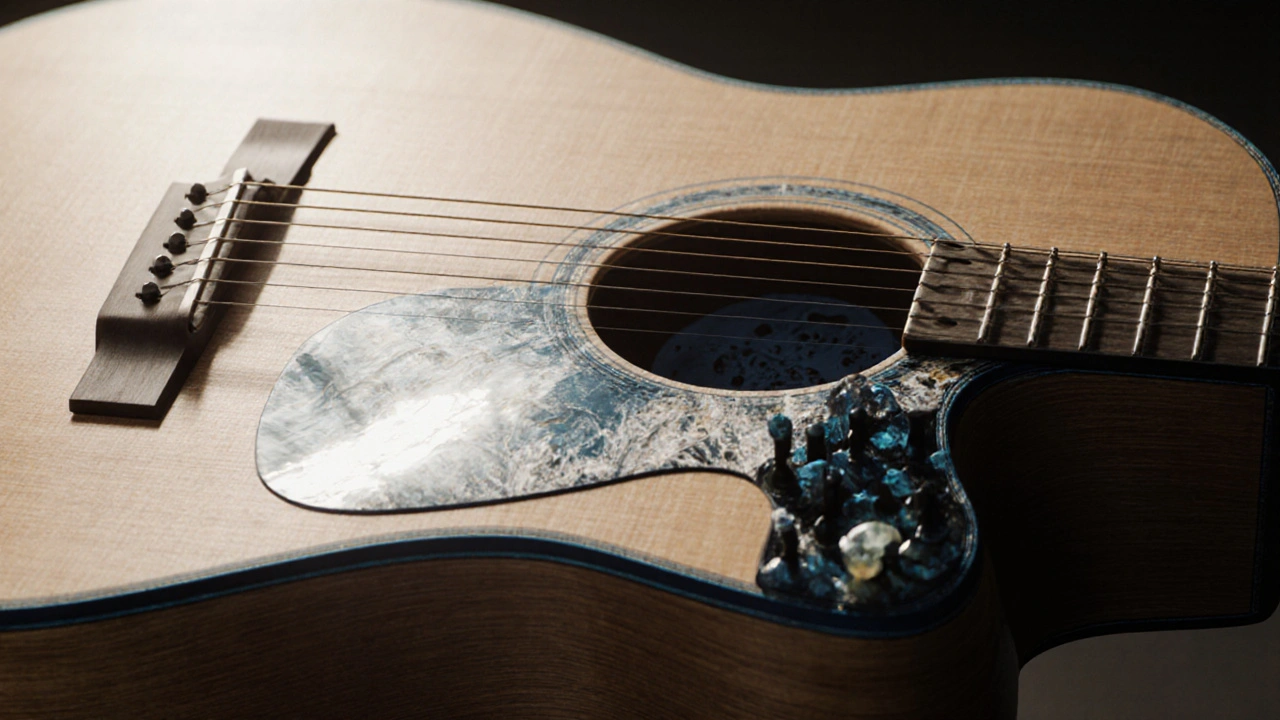
When you pick up a modern guitar design, the way a guitar is built today to balance sound, comfort, and technology. Also known as contemporary guitar engineering, it’s not just about looks—it’s about how the wood, shape, and electronics work together to make music feel alive. You don’t need to be a luthier to notice the difference between a 1950s Strat and a 2024 model. The neck is thinner, the weight’s lighter, the pickups hum less, and the body contours fit your ribs like they were carved for you. That’s not magic—it’s decades of feedback, materials science, and player needs shaping every curve and wire.
Behind every modern guitar is a chain of related innovations. electric guitar, a stringed instrument amplified electronically, foundational to rock, pop, and beyond didn’t stop evolving when the first solid body hit the stage. Today’s models use lightweight alder, roasted maple necks, and even carbon fiber reinforcements to fight warping. Then there’s guitar electronics, the pickups, switches, and wiring that turn string vibrations into sound. Single-coils still sing, but humbuckers now come in active and passive versions, with coil-splitting and push-pull pots that give you five guitars in one. And let’s not forget guitar ergonomics, how the instrument’s shape and weight affect playability and comfort during long sessions. The cutaways got deeper, the weight distribution shifted, and the neck joints got smarter—so you can reach the 22nd fret without straining your wrist.
It’s not just about what’s new—it’s about what works. Some players still swear by vintage specs. Others chase AI-assisted modeling or 3D-printed parts. But the best modern designs don’t chase trends—they solve real problems. A guitarist who plays six nights a week doesn’t care if the finish is ‘artisanal.’ They care if the guitar stays in tune after a dive bomb, if the strap buttons won’t snap, if the volume knob doesn’t scratch when you’re mid-solo. That’s the quiet revolution in modern guitar design: it’s built for people who actually play, not just collect.
What you’ll find in the collection below isn’t a catalog of gear—it’s a look at how sound gets shaped. From the hidden engineers tweaking pickup windings to the bands rewriting rock with custom-built axes, these stories show that the guitar isn’t just an instrument anymore. It’s a living tool, constantly reshaped by the hands that hold it and the music it’s asked to make.