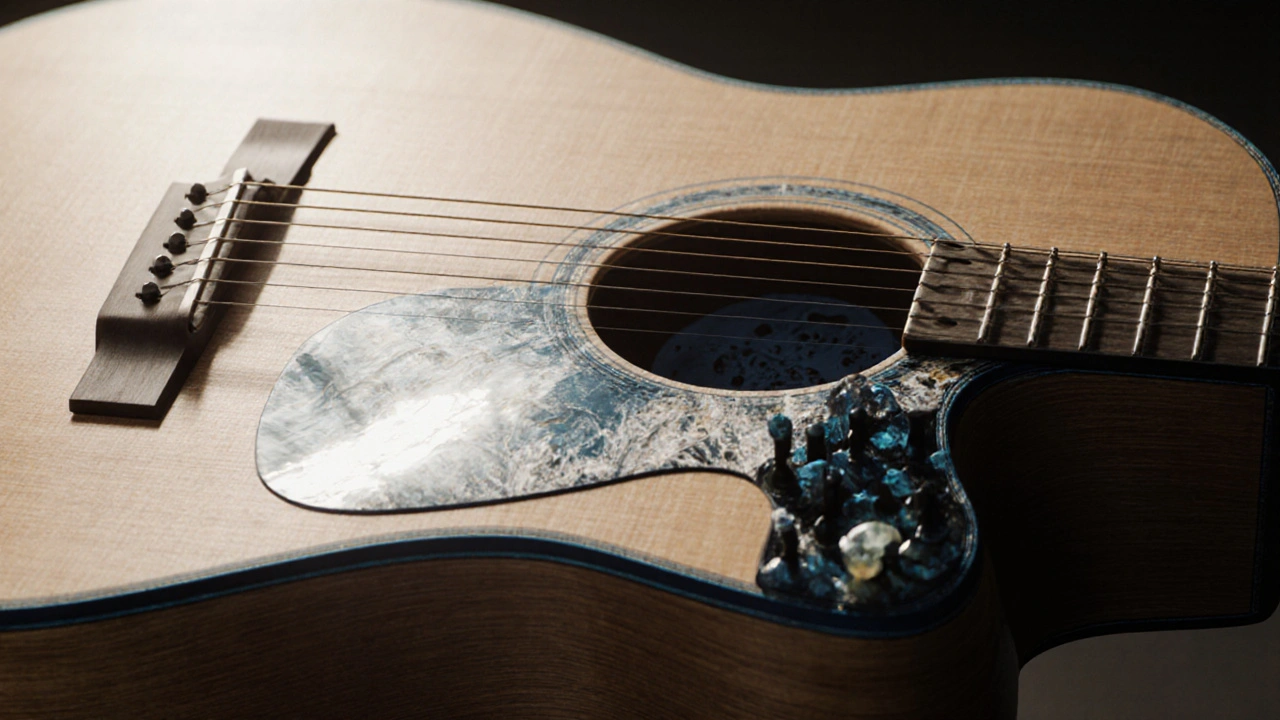
When you pick up a carbon fiber guitar, a modern instrument built from high-strength synthetic fibers bonded with resin. Also known as composite guitars, it doesn’t warp in humidity, survive extreme temperatures, or crack if dropped—unlike traditional wood guitars. This isn’t just a gimmick; it’s a practical upgrade for touring musicians, outdoor performers, and anyone who’s ever watched their beloved acoustic go out of tune after a rainy gig.
What makes these guitars special isn’t just their toughness—it’s how they sound. Unlike wood, which absorbs and mutes certain frequencies, carbon fiber transmits vibrations with surprising clarity and sustain. You get a bright, focused tone that cuts through a mix, even without amplification. Some players say it sounds like a hybrid between a steel-string acoustic and a synth—clean, immediate, and oddly futuristic. Brands like Rainsong, Carbon Fiber Guitars by North Coast, and Larrivée have been perfecting this for over two decades, and now even indie builders are jumping in. The material doesn’t need aging to open up like wood; it sounds full from day one. And because it’s engineered, every instrument is consistent—no two pieces of wood are alike, but two carbon fiber guitars? They’ll match in tone and response.
It’s not just about the body. Many carbon fiber guitars now include carbon fiber necks, a rigid, stable structure that resists bowing under string tension. This means less truss rod adjustment, no seasonal shifts in playability, and a feel that stays true whether you’re playing in a humid basement or a desert festival. The bridge? Often carbon fiber too, helping transfer string energy directly to the body. Even the fingerboards are sometimes made from carbon composite, giving you a smooth, frictionless surface that lasts longer than ebony or rosewood. And if you’re worried about aesthetics—think again. These guitars come in sleek matte finishes, glossy weaves, and even translucent layers that show off the fiber pattern like art. They’re not trying to look like vintage instruments. They’re building a new kind of identity.
Don’t think this is just for electric players. Acoustic players are the biggest fans. Touring folk musicians, buskers, and outdoor wedding performers swear by them. One guitarist in Portland told me he plays six shows a week in all weather, and his carbon fiber guitar has never needed a setup. No cracks, no buzz, no tuning drama. He says it’s the only reason he still plays live.
There’s a myth that carbon fiber guitars sound cold or lifeless. That’s not true if you’ve heard the right ones. The best models have a dynamic range that surprises you—soft fingerpicking rings out with warmth, and aggressive strumming delivers punch without harshness. It’s not about replacing wood. It’s about giving you another tool, one that doesn’t quit when the environment does.
Below, you’ll find real stories, deep dives, and player reviews about how carbon fiber guitars are changing the way people make music—whether they’re playing in a studio, on a mountain trail, or under a stage light that’s seen better days.