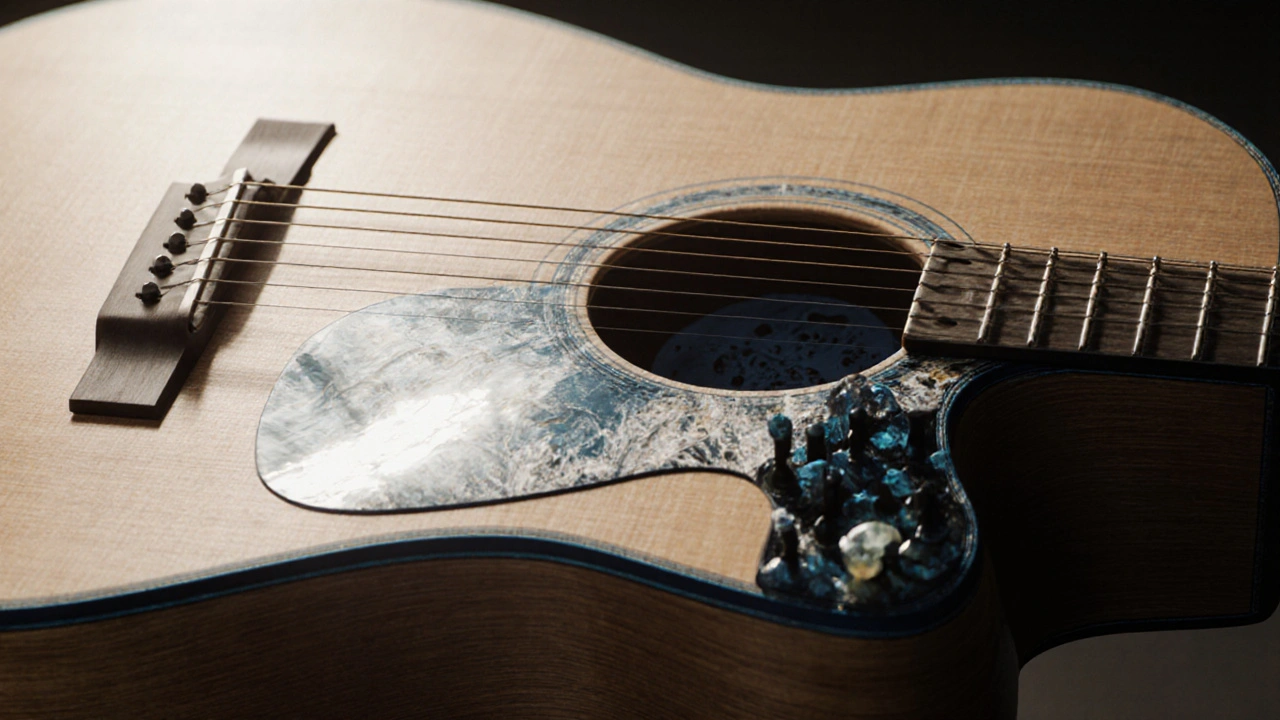
When you pick up an acoustic guitar, a stringed instrument that produces sound through a hollow body and soundhole. Also known as a steel-string guitar, it’s not just a tool—it’s a carefully engineered piece of wood, glue, and tension that turns fingers into music. Unlike electric guitars, which rely on pickups and amps, an acoustic guitar’s voice comes entirely from how it’s built. The shape of the body, the thickness of the top, even the type of wood used—all of it adds up to the sound you hear. That’s why guitar luthiers, skilled craftspeople who build and repair stringed instruments spend years learning how to balance weight, resonance, and durability.
It starts with the wood. Spruce, cedar, mahogany, rosewood—each has a different voice. A spruce top gives you brightness and projection; cedar is warmer and more responsive to light playing. The back and sides? They’re not just decoration. Rosewood adds depth and sustain, while maple keeps things tight and focused. The bracing inside? That’s where the magic happens. X-bracing, scalloped braces, fan bracing—each pattern changes how the top vibrates, and that changes how the guitar sings. A poorly braced guitar might sound flat, even if the wood is perfect. And then there’s the neck, the fretboard, the nut, the saddle. Each piece has to fit just right. One millimeter off, and the intonation goes sideways. That’s why handmade guitars from small shops often cost more than factory models—they’re tuned by ear, not just by machine.
There’s a reason why players spend hours comparing two guitars that look identical. One might feel alive, the other lifeless. It’s not just the strings or the player’s touch. It’s the manufacturing. Even big brands like Martin, Taylor, or Gibson have different lines—some made in the U.S., others overseas. The difference isn’t always in the logo. It’s in the drying time of the wood, the humidity control in the workshop, the experience of the person gluing the bridge. A guitar made in a high-volume factory might be perfectly playable, but it won’t have the same soul as one shaped by someone who’s built 300 of them. And that’s why people still seek out luthiers, even in the age of automation.
What you’ll find below isn’t a list of brands or buying tips. It’s a collection of stories about the people, sounds, and traditions behind the instrument. From how blues players rely on a well-worn dreadnought to how modern makers are experimenting with alternative woods to save forests, these posts show you what happens when craft meets music. You’ll see how the way a guitar is built affects the music it makes—and why that matters more than you think.