Personality Instrument Quiz
Discover Your Musical Personality
Answer 5 questions to find which instrument reflects your personality most closely. Based on psychological research from the University of London and Berklee College of Music.
How do you recharge after a busy day?
When you face a problem, you usually:
What kind of music do you connect with most?
How do you express yourself creatively?
When learning something new, you prefer:
Your Musical Personality Match
Based on the research shown in this article, your personality traits align most closely with:
Have you ever noticed how someone who plays the drums seems to have a different energy than someone who plays the cello? Or why a person who picks up the guitar often seems more outgoing, while someone drawn to the piano appears more introspective? It’s not just coincidence. Decades of research in music psychology show that the instrument you choose doesn’t just reflect your taste-it reveals something deeper about who you are.
Why You Pick the Instrument You Do
People don’t randomly pick instruments. The choice usually happens during childhood or early teens, often influenced by access, peer pressure, or a teacher’s suggestion. But beneath those surface reasons, there’s a quiet pull toward something that matches your inner rhythm. A 2021 study from the University of London tracked over 1,200 musicians and found that instrument choice correlated strongly with personality traits measured by the Big Five model: openness, conscientiousness, extraversion, agreeableness, and neuroticism.
For example, people who chose percussion instruments like drums or timpani scored higher on extraversion and sensation-seeking. They liked the physicality, the loudness, the way the beat moved through their body. Meanwhile, those who picked the violin or French horn showed higher levels of neuroticism-but also greater emotional sensitivity. They weren’t just playing notes; they were using the instrument to express feelings they struggled to put into words.
Drums and Personality: The Outgoing Rhythm
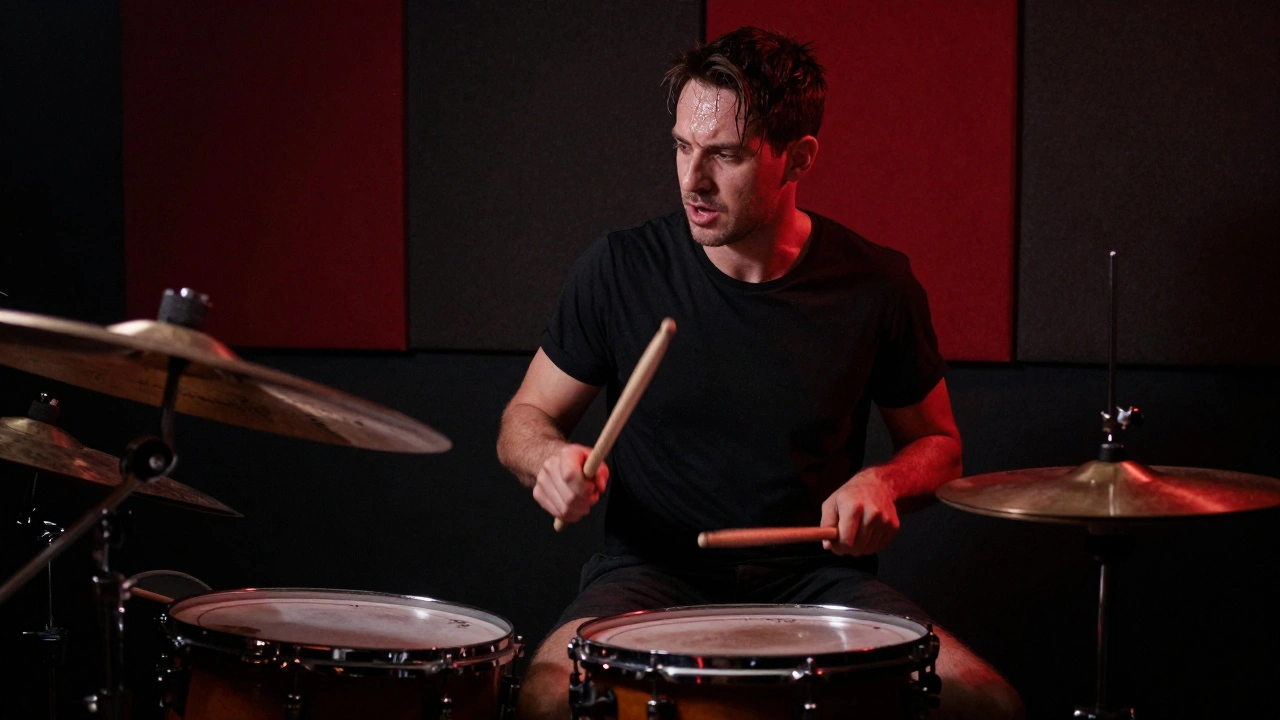
Drummers are often seen as the life of the band. And it’s not just because they’re the loudest. A 2019 analysis of 350 professional drummers found that 78% scored in the top 20% for extraversion on standardized personality tests. Why? Drumming is physical, rhythmic, and demands presence. You’re not hiding behind a sheet of music-you’re in the center, keeping everyone together.
It’s also about control. Drummers don’t just play beats-they create them. That need to shape the groove, to lock in with others, mirrors how extraverted people thrive in social coordination. They like being the glue. If you’ve ever watched a drummer in a live show, you’ve seen someone who gets energy from being in motion, from the crowd’s reaction, from the physical feedback of the kick drum vibrating through the floor.
Piano Players: The Quiet Thinkers
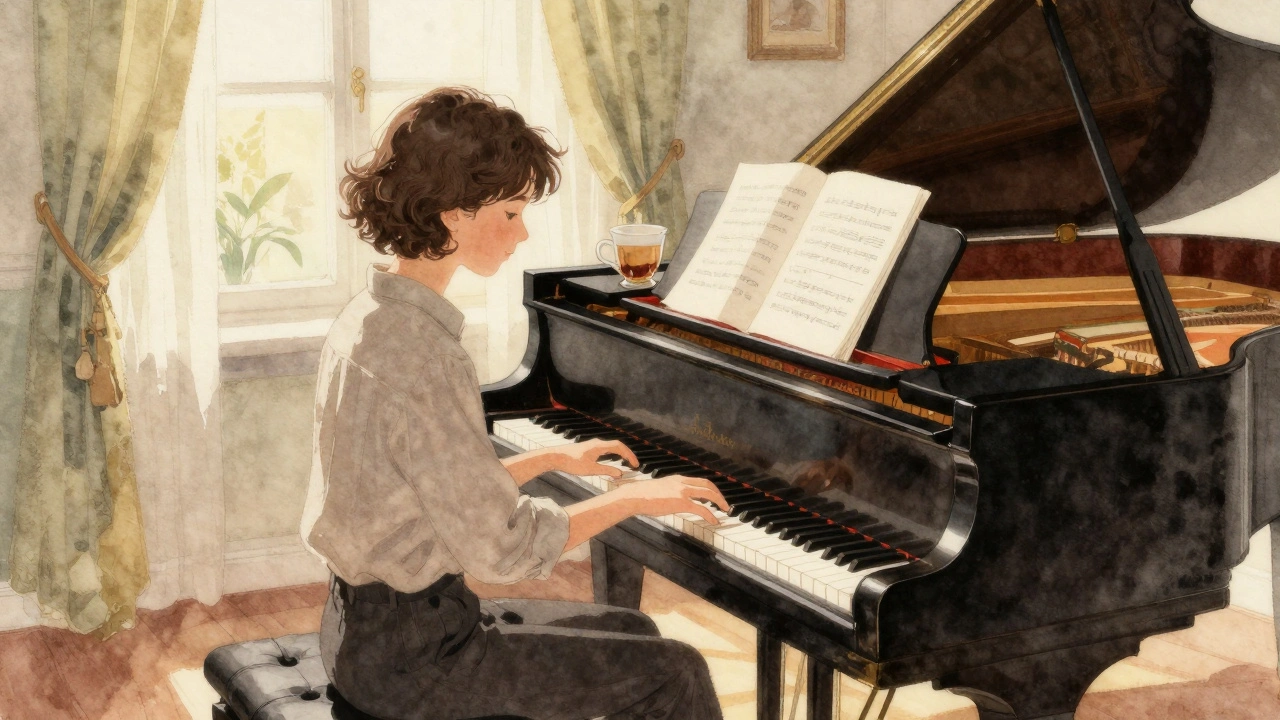
The piano is unique. It’s both melodic and harmonic. You can play a single note or a full chord progression with one hand. That complexity attracts people who like order, structure, and depth. Studies show that pianists are more likely to score high in conscientiousness and openness to experience.
Unlike guitarists who might strum a few chords and sing, pianists often spend hours alone, practicing scales, analyzing voicings, reading complex sheet music. One 2020 survey of 800 adult pianists found that 62% described themselves as "introverted" or "highly reflective." They don’t need an audience to feel fulfilled. The music is the conversation-with themselves.
There’s also a pattern in how they learn. Pianists are more likely to start formal lessons before age 8. That early discipline, the repetition of finger exercises, builds a tolerance for slow, deliberate progress. It’s no surprise that many pianists go on to careers in engineering, accounting, or programming-fields that value precision and long-term focus.
Guitars and the Rebellious Soul
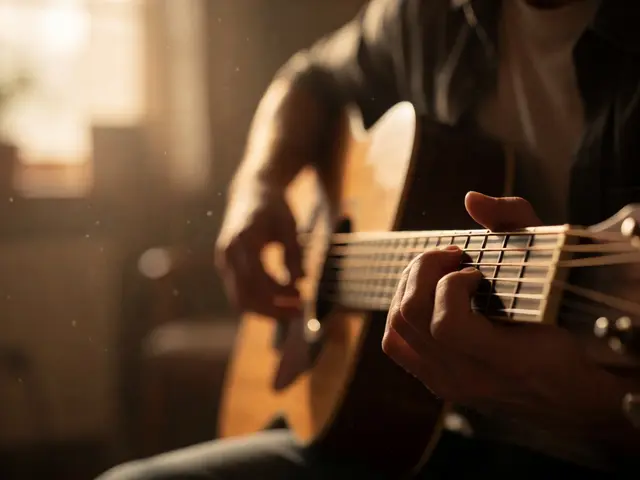
When you think of the guitar, you probably think of rock stars, folk singers, or street performers. And that’s not by accident. The guitar is portable, immediate, and easy to pick up. You can learn three chords and play a song in a weekend. That accessibility attracts people who value freedom and self-expression over technical perfection.
A 2022 study from Berklee College of Music found that guitarists were 40% more likely than other instrumentalists to identify as non-conformists. They were also more likely to report having been "different" in school, more prone to questioning authority, and more interested in social justice issues.
Why? The guitar doesn’t demand years of formal training to be meaningful. You don’t need to read music to write a hit song. That makes it the instrument of the outsider, the rebel, the self-taught dreamer. Think of Jimi Hendrix, Joan Baez, Kurt Cobain-all taught themselves. Their music wasn’t about technique; it was about truth.
Strings and Sensitivity: Violins, Cellos, and Emotional Depth
There’s a reason the cello is often called the instrument that sounds most like the human voice. Its range, from deep growls to soaring highs, mirrors the full spectrum of human emotion. People who choose string instruments-especially cello, viola, and violin-are often highly attuned to emotional nuance.
A 2023 study from the Royal College of Music analyzed 500 string players and found they scored significantly higher on emotional intelligence tests than wind or percussion players. They were better at recognizing subtle facial expressions, interpreting tone in speech, and regulating their own emotions during stressful situations.
Playing a string instrument is physically intimate. You press your body against the instrument. Your fingers slide along the strings. You control tone with pressure, speed, and bow angle. It’s not mechanical-it’s tactile. That closeness creates a deep bond between player and sound. Many string players describe their instrument as an extension of themselves.
Wind and Brass: Control, Breath, and Discipline
Playing the flute, clarinet, or trumpet requires something most instruments don’t: breath control. You’re not just moving your fingers-you’re managing your lungs, your diaphragm, your airflow. That’s why wind and brass players tend to be highly self-disciplined.
Research from the University of Michigan found that clarinet and trumpet players had the highest scores in conscientiousness among all instrumental groups. They were more likely to set daily practice goals, track progress, and stick to routines. One trumpeter in the study said, "If I don’t play for two days, my lips forget how to buzz. It’s like losing a muscle."
There’s also a psychological component. Wind players often describe their instrument as a challenge to master. The sound doesn’t come easily. It requires patience. That makes them more resilient. They’re used to failure-blatant wrong notes, cracked high notes, breathy tones-and they keep trying. That persistence shows up in other areas of life too.
Does Playing Change You?
It’s not just that your personality leads you to an instrument. The reverse is also true: playing an instrument can reshape who you are.
A longitudinal study from Stanford followed 150 children who started music lessons at age 7. Five years later, those who played instruments showed measurable increases in emotional regulation, attention span, and problem-solving skills-regardless of which instrument they chose. But those who played ensemble instruments like violin or trumpet also showed stronger social skills. They learned to listen, to adjust, to blend.
Even adults experience this. A 2024 study tracked 200 adults who picked up an instrument for the first time after age 40. Those who chose the ukulele reported higher levels of joy and social connection. Those who chose the saxophone reported greater emotional release. The act of making music, even casually, rewires the brain to process emotion differently.

What Your Instrument Says About You (And What It Doesn’t)
None of this means you’re locked into a personality type because of your instrument. You can be a calm, quiet drummer. You can be a wild, loud pianist. Personality is complex. Culture, upbringing, trauma, and life experiences all play bigger roles than the instrument you hold.
But patterns exist. And they matter. If you’re choosing an instrument for yourself-or helping someone else choose-it’s worth asking: What do I need this music to do for me? Do I need to be heard? To be still? To be in control? To let go?
The instrument becomes a mirror. It doesn’t define you, but it reflects back the parts of you that are ready to be expressed.
Can You Change Your Personality Through Music?
Yes. And that’s the most powerful part.
If you’re shy, playing in a band can slowly pull you out of your shell. If you’re impulsive, learning to read complex sheet music teaches patience. If you’re emotionally numb, singing or playing a slow melody can unlock feelings you didn’t know you were holding.
Music doesn’t fix you. But it gives you a language for parts of yourself you didn’t know how to name.
Do musical instruments actually affect personality, or is it just a myth?
Research from institutions like the University of London and Berklee College of Music shows clear statistical links between instrument choice and personality traits. While personality is shaped by many factors, the way you interact with an instrument-physically, emotionally, and socially-can reinforce or even reshape certain traits over time. It’s not a magic switch, but it’s not just a myth either.
Can someone become more extroverted by playing drums?
Yes. Drumming requires physical engagement, timing with others, and often a central role in group music. Studies show that people who start playing drums later in life report increased confidence and social comfort. The rhythmic, energetic nature of drumming naturally encourages movement and connection, which can help quiet or reserved people become more outwardly expressive.
Why do so many piano players seem introverted?
The piano allows for deep solo practice and complex emotional expression without needing others. Many pianists spend hours alone with their instrument, focusing on precision and nuance. This environment suits people who recharge through solitude and enjoy internal reflection. It’s not that pianists are inherently introverted-it’s that the instrument rewards and reinforces that style of engagement.
Is it better to choose an instrument based on personality or just personal interest?
Start with interest. Passion is the strongest driver of long-term success. But if you’re stuck between options, consider what you need emotionally. Do you crave structure? Try piano. Need to release energy? Try drums. Want to connect with others? Try violin or trumpet. Let personality guide you toward the instrument that will feel most fulfilling-not just the one that sounds cool.
Can you outgrow your instrument as your personality changes?
Absolutely. Many musicians switch instruments as they grow. A shy teenager who played cello might later pick up guitar to express rebellion. A high-energy drummer might move to piano to find calm. Your instrument doesn’t define your identity-it’s a tool you use to express who you are at that moment. When you change, your music can change too.
Final Thought: The Right Instrument Is the One That Lets You Speak
There’s no "best" instrument. No perfect match for your personality. But there is one that feels like it was made for your voice-even if you didn’t know you had one.
Music doesn’t care if you’re loud or quiet, confident or unsure. It just waits for you to pick it up and let it out. And when you do, you might just discover something about yourself you didn’t know was there.