Think about the last time you heard a violin played live. Now imagine that same violin adjusting its tone automatically based on the room’s acoustics, or recording every bow movement so you can replay it later to perfect your technique. That’s not science fiction. It’s happening right now. Technology isn’t just helping musical instruments-it’s rewriting what they can do.
From Wood and Wire to Sensors and Software
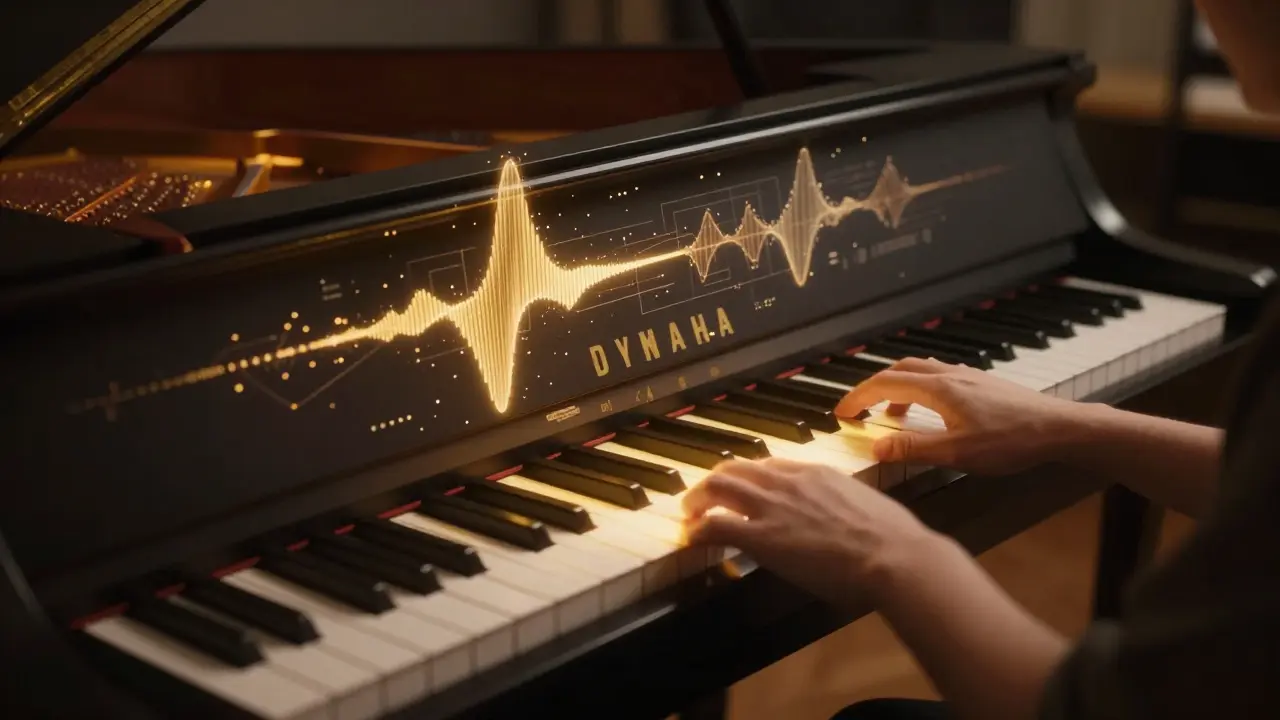
Traditional instruments like the piano, cello, or trumpet have stayed mostly unchanged for centuries. Their design? Built on physics: vibrating strings, air columns, resonant chambers. But today’s instruments are adding layers of digital intelligence. Take the Yamaha Disklavier is a self-playing piano that uses solenoids and sensors to reproduce performances with pinpoint accuracy. It doesn’t just play notes-it captures the nuance of a pianist’s touch, pressure, and timing, then reproduces it flawlessly. Musicians use it to archive performances, teach remotely, or even duet with recordings of legendary artists.
Then there’s the Moog Theremini is a modern take on the theremin, an instrument played without touch, using hand movements near antennas to control pitch and volume. Unlike the original, the Theremini includes pitch correction, preset scales, and MIDI output. It turns an instrument once considered erratic and hard to master into something accessible even to beginners.
Smart Instruments That Learn With You
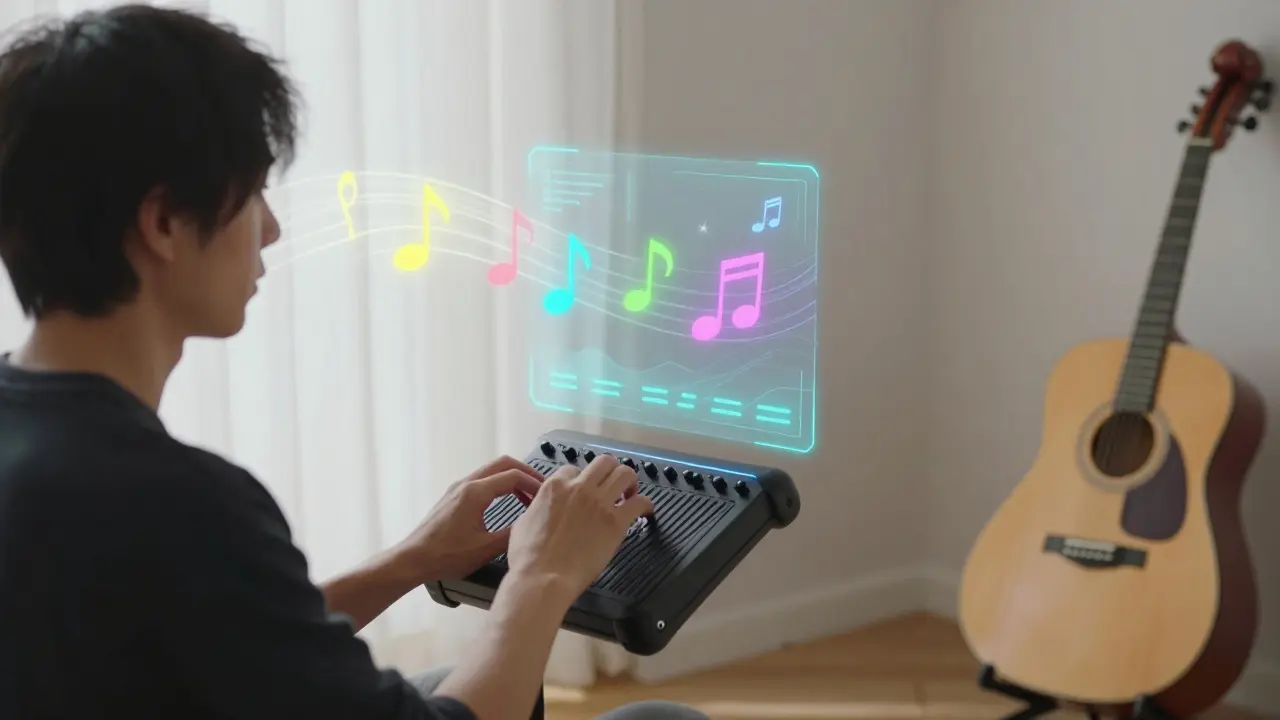
Learning an instrument used to mean hours of repetition, guesswork, and frustrated practice. Now, instruments like the Yamaha Smart Pianist is a connected digital piano that analyzes your playing and gives real-time feedback on timing, dynamics, and finger placement are changing that. These devices use built-in microphones, accelerometers, and AI to track your progress. They don’t just tell you if you missed a note-they show you how to fix the motion in your wrist that caused it.
For guitarists, the Fender Play is a system that pairs with a connected guitar to detect which strings you’re pressing and how hard, then guides you through lessons via an app. It knows when you’re struggling with a chord transition and slows down the tempo automatically. It’s not replacing a teacher-it’s making one available 24/7, with no waiting list.
How Digital Tools Are Expanding What Instruments Can Do
Technology doesn’t just make instruments smarter-it makes them more versatile. A single electric guitar can now mimic a sitar, a synth pad, or a full orchestra through effects processors and modeling software. The Line 6 Helix is a guitar effects processor that simulates over 100 amps, 150 pedals, and 50 microphones, all in a single unit. A musician can switch from a 1960s Fender Twin to a modern metal distortion in one stomp, without touching another piece of gear.
Even acoustic instruments are getting upgrades. The Stradivarius-3D is a research project that uses laser scanning and AI to recreate the sound of a 1715 Stradivarius violin using a modern instrument with embedded piezoelectric pickups. It doesn’t copy the wood-it copies the resonance. That means a student in Melbourne can play a violin that sounds like one of the most expensive instruments in history, without spending $15 million.
Collaboration Across Borders, in Real Time
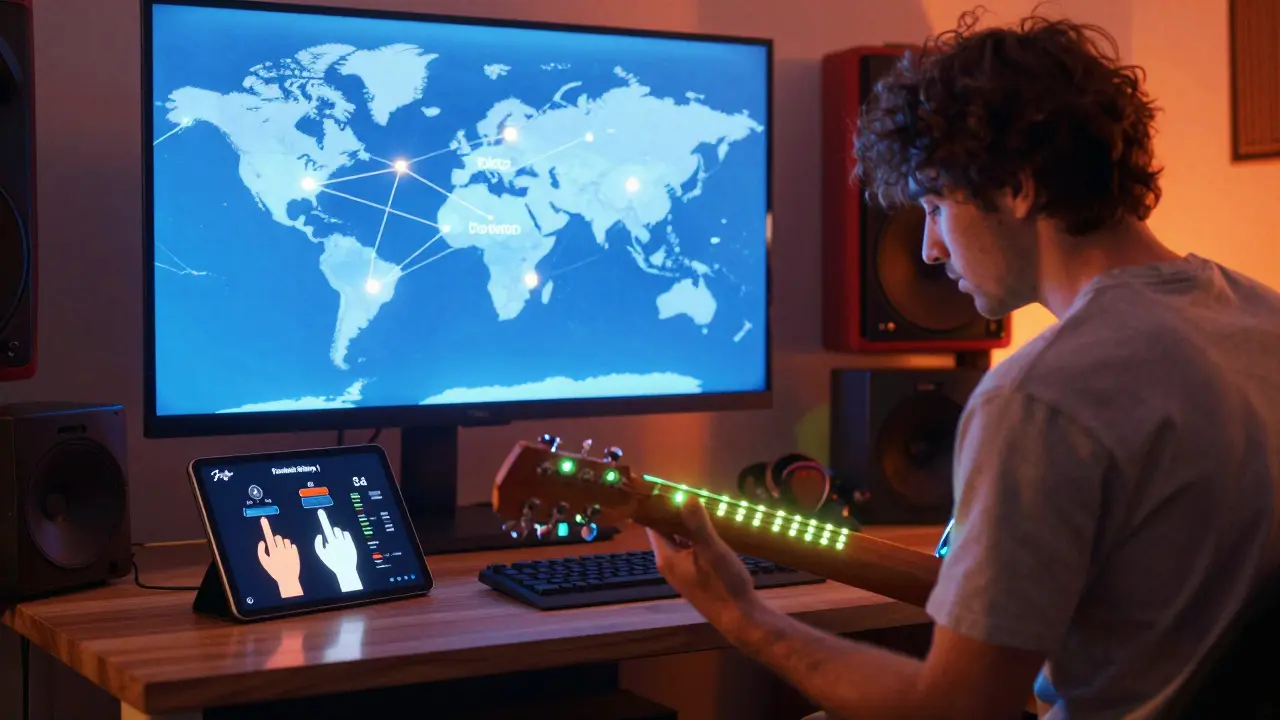
Before, if you wanted to jam with someone in Tokyo or Lagos, you’d need to fly. Now, platforms like Soundtrap is a cloud-based DAW that lets musicians record and edit together in real time, even with latency under 100 milliseconds let you play live with others, no matter where they are. A drummer in Berlin can lock into a bassline played by a cellist in Cape Town, and both can hear each other as if they’re in the same room.
Some systems even translate playing styles. The AI Music Translator is a tool that takes a jazz solo and converts it into a classical orchestration in real time, preserving the phrasing and emotion. It’s not just copying notes-it’s understanding intent. That opens doors for cross-genre experimentation that was nearly impossible before.
Accessibility and Inclusion
Technology is also breaking down barriers. For people with physical disabilities, traditional instruments can be impossible to play. But innovations like the EyeHarp is a musical interface controlled entirely by eye movements, allowing users to play chords and melodies with gaze are changing lives. Someone with limited limb mobility can now compose and perform complex pieces using just their eyes.
There’s also the NeuroFret is a wearable device that translates brainwave patterns into musical notes, designed for people with paralysis. It doesn’t require muscle movement. It just needs thought. These aren’t gimmicks-they’re lifelines for people who’ve been shut out of music for too long.
What’s Lost? What’s Gained?
Not everyone is excited. Some purists argue that technology strips away the soul of music. They say a violin should be shaped by hand, played by instinct, and shaped by imperfection. And they’re right-there’s magic in the wobble of an unamplified note, the breath before a phrase, the creak of an old wooden bridge.
But technology isn’t replacing that. It’s expanding the possibilities. A child in rural Australia can now learn to play a Stradivarius-quality violin on a $300 smart instrument. A musician with ALS can create symphonies with their thoughts. A producer in Lagos can collaborate with a violinist in Vienna without leaving their home studio.
The best instruments today aren’t the ones with the most buttons. They’re the ones that listen, adapt, and empower. They don’t just make sound-they make connection.
Are smart instruments replacing traditional ones?
No. Smart instruments are complementing, not replacing, traditional ones. Many professional musicians still use acoustic instruments for their tone and expressiveness. But smart instruments are becoming essential tools for learning, recording, and performing in modern settings. The best musicians today use both-acoustic for emotion, digital for flexibility.
Do I need expensive gear to use music technology?
Not at all. While high-end gear exists, affordable options are everywhere. A $150 MIDI keyboard, a free DAW like Cakewalk or GarageBand, and a smartphone app like Yousician can get you started. Many smart instruments, like the Yamaha Smart Pianist or Fender Play, come bundled with apps and lessons. You don’t need a studio to begin-just curiosity.
Can technology help me improve faster?
Yes, if you use it right. Tools that give real-time feedback-like pitch detection, timing analysis, or posture correction-help you spot mistakes before they become habits. But technology won’t replace practice. It just makes practice more efficient. A smart guitar won’t make you a better player-you still have to play. But now you’ll know exactly what to fix.
Are there any downsides to tech-heavy instruments?
Yes. Over-reliance on auto-correction can make you dependent. If your app fixes your timing, you might not learn to play in time yourself. Also, software updates can break compatibility, and battery-powered instruments won’t work if the power dies. Keep a backup-whether it’s an old acoustic instrument or a simple metronome. Tech should enhance, not replace, your core skills.
What’s the future of musical instruments?
The future is hybrid. Instruments will keep getting smarter-think AI that predicts your next note, haptic feedback that guides your finger placement, or instruments that change shape based on your playing style. But the heart of music won’t change. It’ll still be about emotion, expression, and human connection. Technology just gives us more ways to share it.