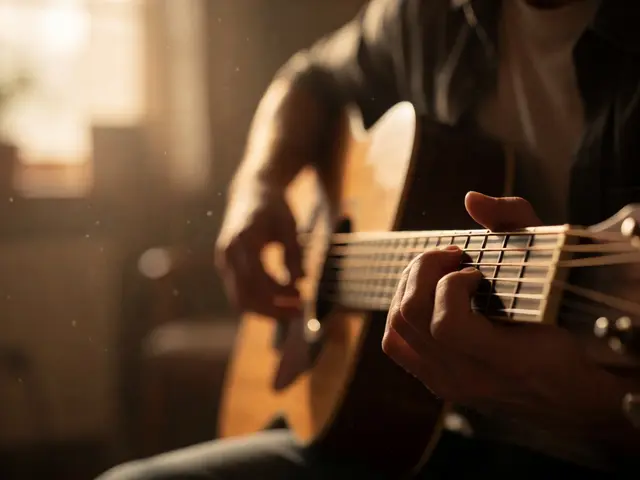
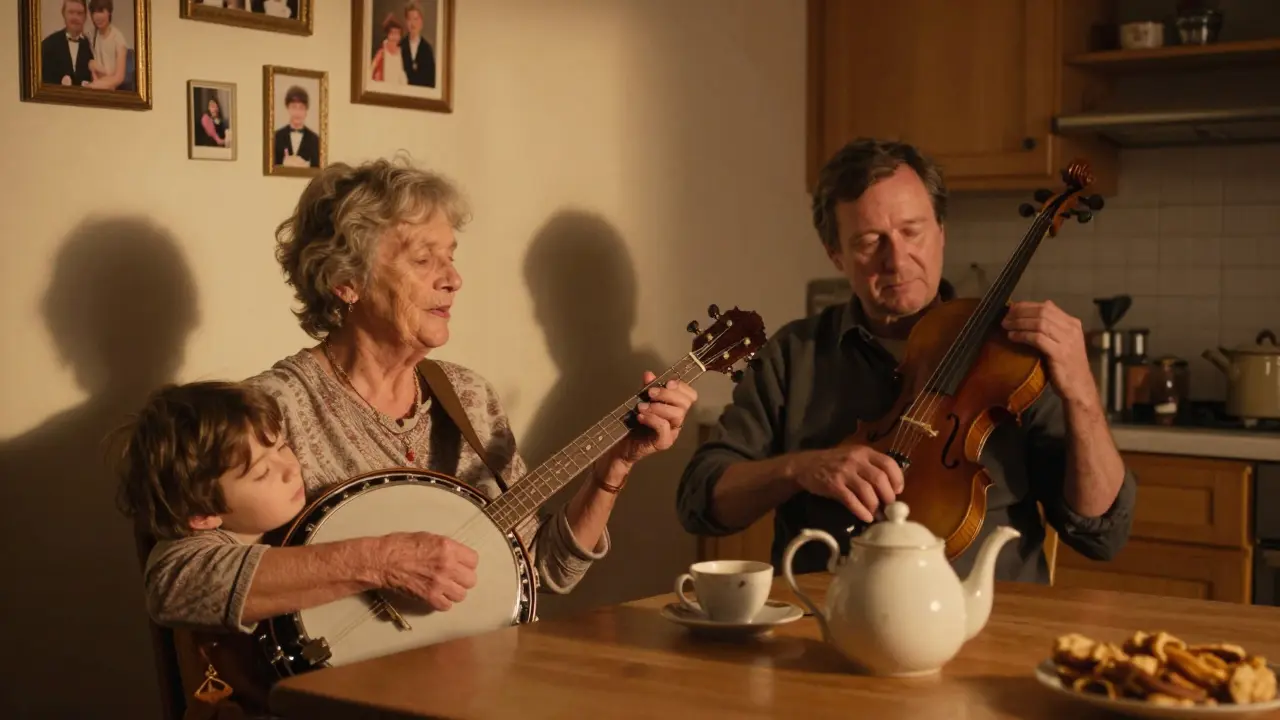
Folk music isn’t just old songs played on fiddles and banjos. It’s the sound of people remembering who they are. When your great-grandparents sang a lullaby passed down through five generations, they weren’t just soothing a baby-they were stitching their history into the next one. Folk music doesn’t need a stage or a record deal. It lives in kitchens, at harvest festivals, around campfires, and in the quiet moments between generations. And that’s exactly why it still matters today.
Roots in Everyday Life
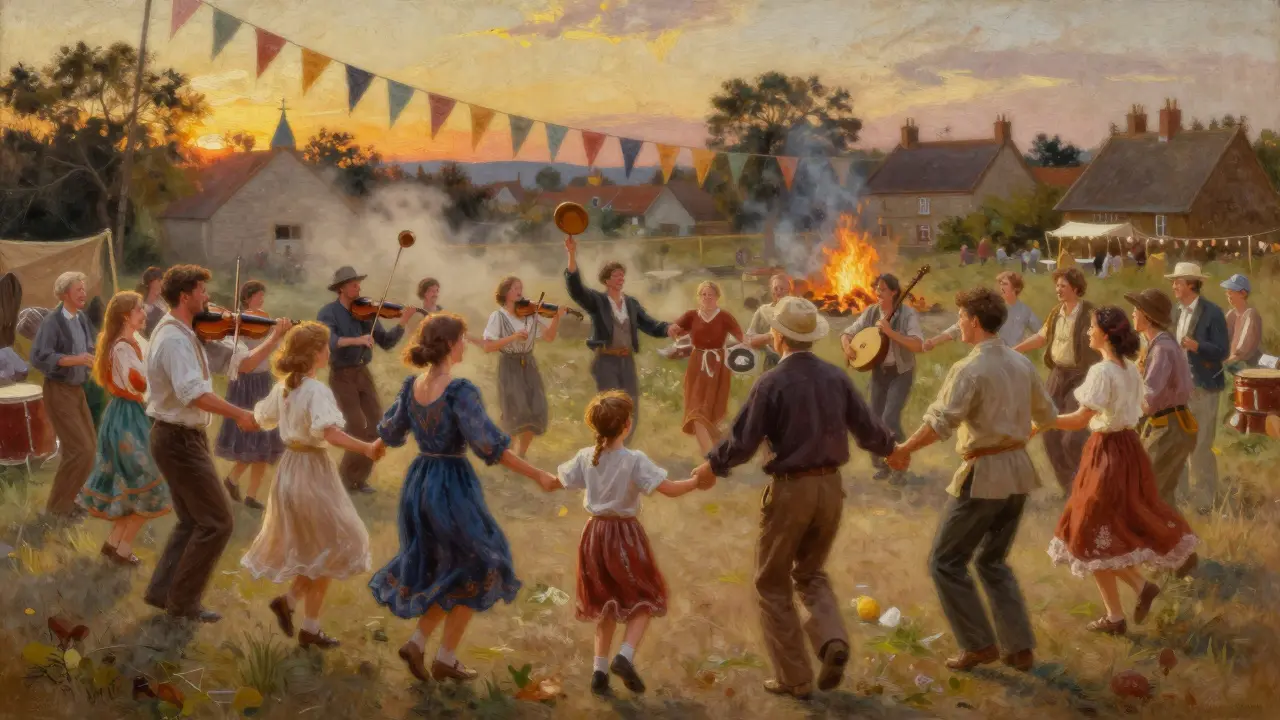
Folk music grows from daily life, not studios. It’s the work song of a fisherman hauling nets off the coast of Newfoundland, the protest chant of a textile worker in 1930s Manchester, or the wedding dance tune in a village near the Carpathians. These songs weren’t written by famous composers. They were shaped by sweat, loss, joy, and survival. Each melody carries a story that no textbook could fully capture.
Unlike pop songs that fade after a season, folk tunes stick around because they’re useful. They teach kids how to behave, remind elders of lost homelands, or help communities mourn together. In rural Appalachia, children learned to respect nature through ballads about bears and rivers. In Ireland, fiddle tunes kept Gaelic language alive when it was banned. Folk music doesn’t just reflect culture-it holds it together.
Identity Through Song
Think about what makes you feel like you belong. Is it the food you eat? The language you speak? Or maybe the songs your family sings at holidays? For millions, that sense of belonging comes from folk music. In Ukraine, the tradition of verkhovynka-a type of ritual song sung during spring festivals-was used to quietly resist cultural erasure during decades of Soviet rule. Singing these songs wasn’t entertainment. It was an act of survival.
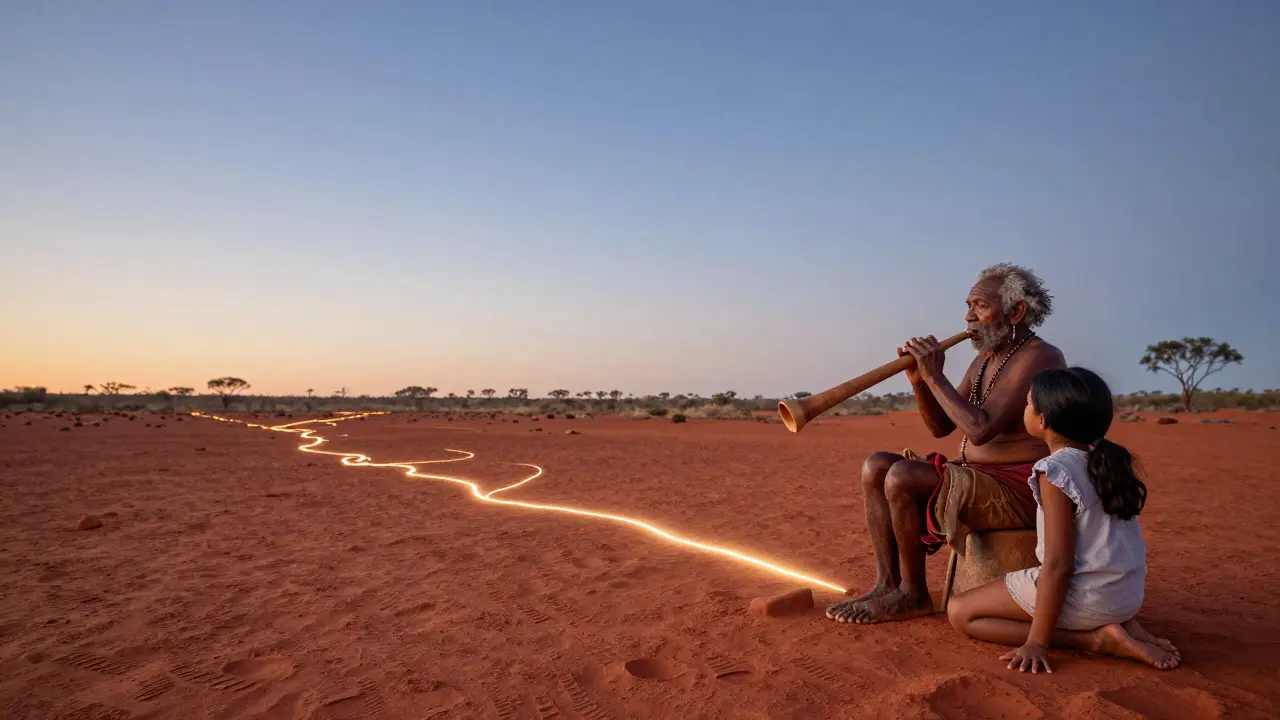
Same in Australia. Aboriginal communities preserved oral histories through songlines-musical maps that describe landscapes, ancestral journeys, and spiritual laws. These aren’t just stories. They’re living navigation systems, passed down through rhythm and melody. When you hear a didgeridoo drone layered with clapstick beats, you’re not listening to music. You’re hearing land, law, and identity all at once.
Shared Memory, Not Just Sound
Folk music doesn’t rely on perfect pitch or polished production. It thrives on imperfection. A slightly off-key voice, a broken string, a child joining in too early-these aren’t mistakes. They’re proof that the song belongs to everyone. That’s why folk songs change as they travel. A Scottish ballad picked up by Irish immigrants becomes a new version in Boston, then again in Melbourne. Each variation adds a layer: a new hardship, a new hope.
This fluidity is what keeps folk music alive. You won’t find one "correct" version of "The House of the Rising Sun" or "Barbara Allen." There are dozens. And each one tells you where it’s been. A version sung in a coal-mining town in Wales carries the weight of labor struggles. One sung in a Texas barn carries the ache of lost love. The song stays the same, but the meaning shifts with the people.
Why It Still Matters Today
In a world of algorithms and viral trends, folk music resists being packaged. It doesn’t chase likes. It doesn’t need influencers. It survives because it answers a deeper need: to feel connected. When young people in Poland start learning traditional polkas from elders, they’re not just learning dance steps. They’re reclaiming a part of themselves their grandparents fought to protect.
Even in cities, folk music finds its way back. In Perth, you’ll find teenagers gathering in small parks to play old English and Irish tunes on guitars and spoons. They don’t know the original lyrics, but they feel the rhythm. They’re not trying to be "authentic." They’re just trying to feel part of something older than Instagram.
Studies from the University of Edinburgh show that communities with strong folk music traditions report higher levels of social trust and collective resilience. It’s not magic. It’s practice. When you sing the same song as your neighbor, you’re saying: "I see you. I remember what you remember. We’re still here."
What Gets Lost When Folk Music Fades
When a folk tradition dies, it’s not just a song that’s gone. It’s a whole way of seeing the world. In Japan, the minyo songs of rural fishermen once taught children about tidal patterns, weather signs, and fishing ethics. Now, those songs are fading. Without them, younger generations lose not just melodies-but ecological wisdom.
Same in the American South. The call-and-response work songs of Black sharecroppers carried coded messages about escape routes and safe houses. Those songs didn’t just entertain. They saved lives. Today, many of those melodies are only preserved in archives. Without active singing, they become museum pieces, not living memory.
When we stop passing down folk songs, we stop teaching the next generation how to grieve, how to celebrate, how to resist, how to belong.
How to Keep Folk Music Alive
- Learn one traditional song from your family or community and sing it out loud-even if you’re off-key.
- Record an elder singing or telling the story behind a song. Audio doesn’t have to be perfect. Just real.
- Play folk music at family gatherings. Don’t wait for a "special occasion." Make it part of Sunday dinner.
- Support local folk musicians. Attend small concerts, buy handmade instruments, or donate to community music programs.
- Teach a child a folk tune. Don’t explain it. Just sing it. Let them absorb it like a heartbeat.
Folk music doesn’t need to be preserved like a relic. It needs to be lived.
What Folk Music Teaches Us About Belonging
At its core, folk music is the opposite of isolation. It says: "You are not alone. Others have felt this. Others have sung this. We are still singing it." In a time when loneliness is rising and communities are fracturing, folk music offers something rare: a shared voice.
You don’t need to be from a village in Romania or a coastal town in Newfoundland to feel its pull. You just need to have loved someone, lost something, or longed for home. That’s when folk music finds you.
Is folk music only from the past?
No. Folk music is always being made. Today’s folk songs are written by people singing about modern struggles: climate change, migration, digital isolation, or workplace burnout. The difference isn’t the subject-it’s the method. Modern folk still spreads through oral tradition, not streaming algorithms. A song written in a Toronto basement can become a community anthem in rural Mexico if people start singing it together.
Why do folk songs change over time?
Because people change. Folk songs aren’t fixed like sheet music. They adapt to new languages, new instruments, and new emotions. A war song might become a peace song. A love ballad might turn into a protest chant. This isn’t corruption-it’s evolution. The soul of the song stays, even if the words shift. That’s why you can hear a 200-year-old tune in a punk band’s cover and still recognize its heart.
Can someone from another culture sing folk music?
Yes-but with respect. Singing a song from another culture isn’t appropriation if you’re learning it from someone who lives it. The key is listening first. Ask: Who made this? Why was it sung? Who still keeps it alive? If you’re singing a traditional song just for performance, you risk turning it into a costume. But if you’re singing it to honor a community, to learn from it, or to help preserve it, you’re part of its living story.
Are there any modern folk music movements?
Absolutely. In Brazil, the MPB (Música Popular Brasileira) movement blends folk roots with modern politics. In West Africa, artists are reviving griot traditions with electric instruments. In the U.S., young musicians are reviving Appalachian ballads with hip-hop beats. Even in Australia, Indigenous artists are blending songlines with electronic soundscapes. These aren’t gimmicks. They’re continuations-new branches growing from old roots.
How do I find my own cultural folk music?
Start with your family. Ask grandparents what songs they remember from childhood. Visit local libraries or cultural centers-they often have recordings of regional music. Look for community sing-alongs, folk festivals, or workshops. You don’t need to be an expert. Just show up. The music is already there. You just need to listen long enough to hear it calling your name.