Think you know hip hop? If your mental playlist only holds Drake or Kendrick Lamar, you’re missing out on a massive chunk of musical history. Hip Hop is not just one sound; it’s a sprawling ecosystem of rhythms, rhymes, and regional identities that has evolved dramatically since its birth in the Bronx during the 1970s. From the boom-bap beats of New York to the trap hi-hats of Atlanta, the genre defies simple categorization. It absorbs local cultures, languages, and technologies, creating a mosaic so complex that even lifelong fans struggle to map it all. Why does this matter? Because understanding the diversity in hip hop music helps you appreciate how a single art form can speak to millions of different experiences simultaneously.
This guide breaks down the major branches of the family tree. We’ll look at how geography shapes sound, how production techniques define eras, and why the lines between genres are blurrier than ever in 2026. Whether you’re a casual listener or a crate-digging collector, recognizing these distinctions transforms passive listening into active engagement.
The Geographic Blueprint: How Location Shapes Sound
Geography is arguably the biggest driver of hip hop diversity. The environment where an MC grows up directly influences their flow, slang, and subject matter. When we talk about regionalism, we aren’t just talking about accents; we’re talking about sonic architecture.
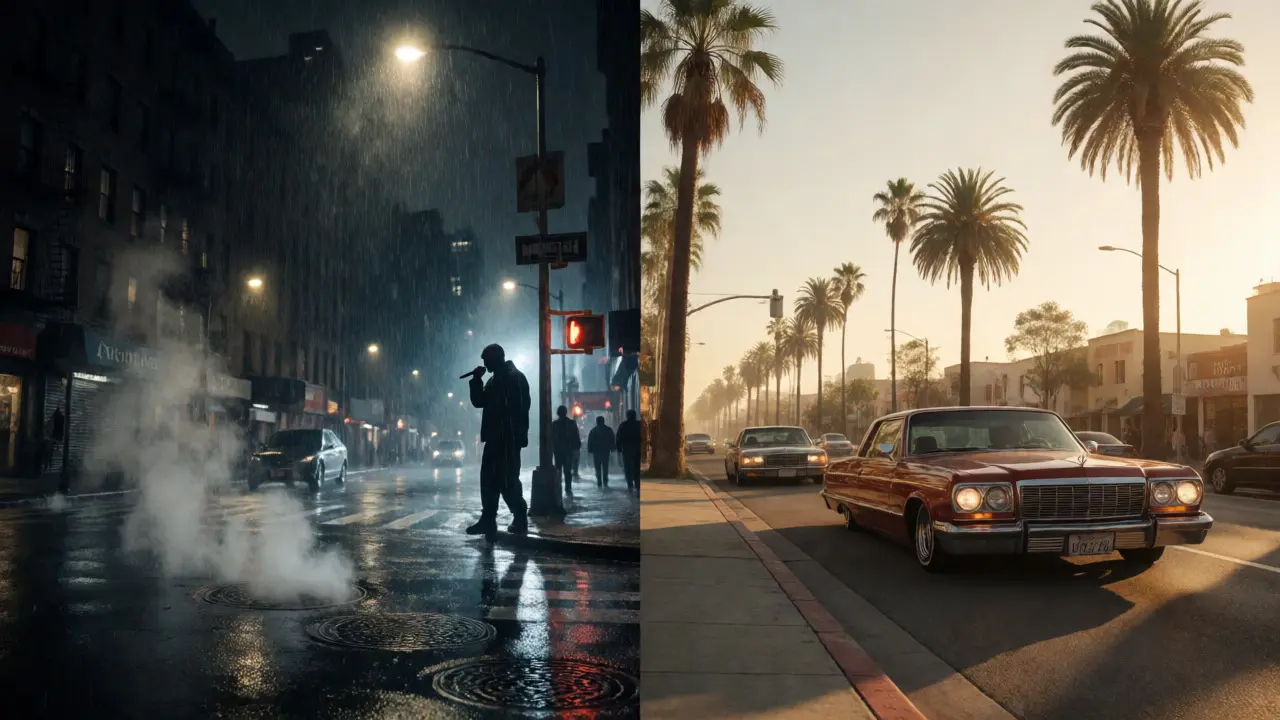
East Coast Hip Hop, often associated with NYC Rap, prioritizes lyrical complexity and jazz-influenced samples. Think Nas or Wu-Tang Clan. The beats are often gritty, loop-heavy, and designed to let the words breathe. Contrast this with West Coast Hip Hop, which leans heavily on funk samples, smoother grooves, and party-ready vibes, epitomized by Dr. Dre and Snoop Dogg. The sunny climate of Los Angeles literally changed the tempo of the music.
Then there’s the South, which completely rewired the genre in the 2000s. Southern Hip Hop encompasses diverse styles from the crunk energy of Memphis to the melodic trap of Atlanta. Artists like OutKast proved that Southern rap wasn’t just a copycat; it was an innovation hub. In recent years, cities like Chicago have contributed Drill Music, a dark, aggressive subgenre characterized by sliding basslines and ominous melodies. Each city acts as a distinct node in the network, exporting its own cultural fingerprint to the world.
| Region | Key Musical Traits | Prominent Pioneers | Cultural Vibe |
|---|---|---|---|
| East Coast (NYC) | Jazz samples, complex rhyme schemes, boom-bap drums | Nas, Jay-Z, Wu-Tang Clan | Gritty, intellectual, street-smart |
| West Coast (LA) | Funk loops, G-funk synthesizers, laid-back flow | Dr. Dre, Snoop Dogg, Tupac | Sunny, relaxed, car-culture focused |
| South (ATL/MEM) | 808 bass, triplet flows, rapid hi-hats, melodic hooks | OutKast, Three 6 Mafia, Migos | High-energy, innovative, danceable |
| Midwest (CHI/DET) | Dark piano loops, minimalistic beats, raw delivery | Kanye West, Eminem, Chief Keef | Introspective, industrial, intense |
Production Evolution: The Beat as the Star
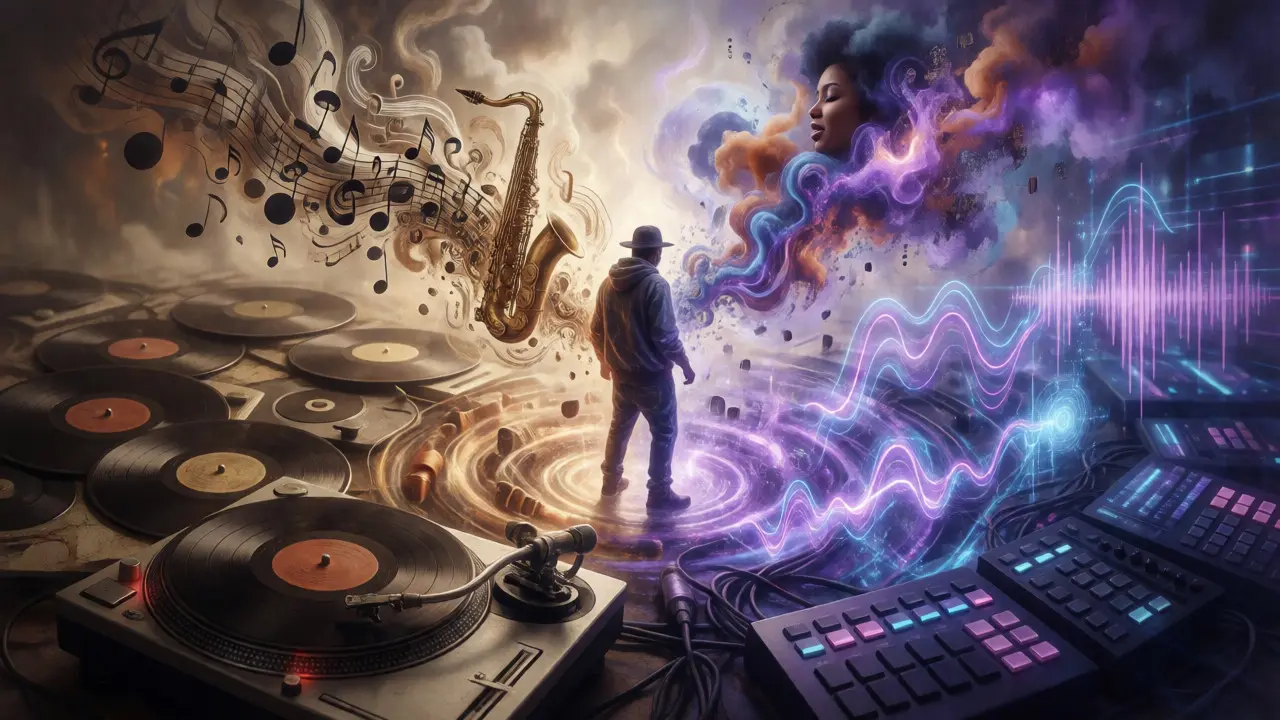
You can’t discuss diversity without looking at the producers. In hip hop, the beat isn’t just background noise; it’s half the song. As technology advanced, so did the soundscape. Early hip hop relied on breakbeats-looped sections of funk records played by DJs like Kool Herc. This created a raw, percussive foundation that demanded energetic dancing.
The introduction of samplers like the Akai MPC allowed producers to chop up existing records and rearrange them. This era gave us Boom Bap, defined by hard-hitting kick and snare patterns and jazz or soul samples. Producers like DJ Premier and Pete Rock turned sampling into high art. But then, software took over. Digital Audio Workstations (DAWs) like FL Studio made it easier for anyone to create beats, leading to an explosion of experimental sounds.
Enter Trap Music, which emerged from Atlanta in the early 2000s but dominated globally by the 2010s. Characterized by rattling hi-hats, deep 808 sub-bass, and minor-key melodies, trap shifted the focus from lyrical density to atmospheric mood. More recently, we’ve seen the rise of Cloud Rap, a dreamy, reverb-heavy style popularized by artists like Lil Uzi Vert and Playboi Carti. These production shifts prove that hip hop diversity is largely technological. Every new tool creates a new lane for expression.
Lyrical Themes and Flow Patterns
If the beat is the body, the lyrics are the soul. Here, the diversity is staggering. Some MCs prioritize multisyllabic rhyme schemes and internal rhymes, treating language like a puzzle. Others focus on storytelling, painting vivid pictures of life in specific neighborhoods. Then there are those who treat their voice as an instrument, focusing on cadence and melody rather than literal meaning.
Consider the contrast between Conscious Hip Hop, which addresses social issues, politics, and community struggles, and Mumble Rap, a controversial term used to describe flows where enunciation takes a backseat to vibe. Critics often dismiss mumble rap, but proponents argue it represents a shift toward emotional expression and melodic integration, akin to rock singing. Both approaches have valid artistic merits depending on the listener’s goal.
Storytelling remains a cornerstone. Artists like J. Cole or Noname use narrative structures that feel like short films. They build characters, set scenes, and deliver punchlines that land because of context, not just wordplay. On the other end of the spectrum, battle rap culture emphasizes wit and aggression, where the primary goal is to dismantle an opponent lyrically in real-time. This variety ensures that whether you want to think, feel, or dance, there’s a track for you.
Global Cross-Pollination: Hip Hop Beyond the US
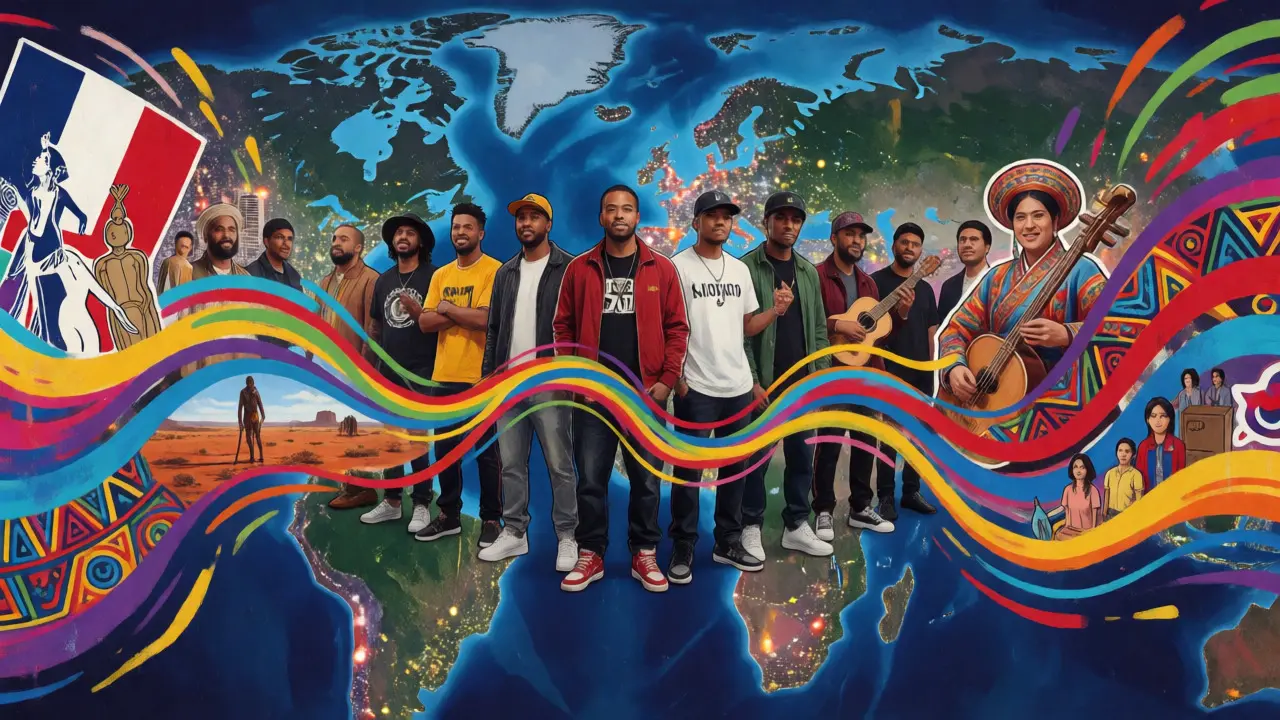
Hip hop is no longer an American export; it’s a global dialect. Local scenes adapt the framework to fit their own linguistic and musical traditions. In France, French hip hop has become the second-largest market in the world, blending American flows with chanson melodies and North African rhythms. Artists like IAM or PNL showcase how the genre can thrive while maintaining a distinct national identity.
In Australia, where I’m writing from, the scene has exploded. Groups like Hilltop Hoods brought Australian slang and cricket references to the mainstream, proving that hip hop doesn’t need to mimic New York to succeed. Meanwhile, in South Korea, K-Hip Hop integrates pop sensibilities with traditional Korean instruments, creating a hybrid that appeals to global audiences through platforms like YouTube and Spotify.
This international growth leads to fascinating fusions. You might hear Afrobeat rhythms mixed with drill beats in London, or Reggaeton influences in Latin Trap. The internet has erased borders, allowing a teenager in Melbourne to collaborate instantly with a producer in Lagos. This cross-pollination enriches the genre, preventing it from becoming stagnant. It turns hip hop into a universal language that speaks with many accents.
The Underground vs. Mainstream Divide
One of the most persistent debates in hip hop is the tension between underground authenticity and mainstream commercial success. The Underground Scene typically values creative freedom, niche appeal, and resistance to commercial formulas. Labels like Definitive Jux or platforms like Bandcamp allow artists to experiment without worrying about radio play. Fans of underground hip hop often seek out complex metaphors and unconventional beats that wouldn’t fit a club playlist.
Conversely, the Mainstream Industry prioritizes accessibility, catchy hooks, and viral potential. While critics sometimes accuse mainstream rap of homogenizing the sound, it also provides a platform for innovation to reach mass audiences. Many artists start underground and transition to the mainstream, bringing their unique styles with them. For example, Tyler, the Creator started with oddball horrorcore aesthetics before winning Grammy Awards for more polished, neo-soul-infused albums.
The line is blurring thanks to streaming algorithms. An obscure track can go viral overnight, bypassing traditional gatekeepers. This democratization means that "underground" is less about lack of exposure and more about aesthetic choices. Listeners now curate their own ecosystems, mixing top-40 hits with obscure SoundCloud finds. This personalization is perhaps the ultimate form of modern hip hop diversity.
How to Navigate the Genre
Feeling overwhelmed? Don’t be. Exploring hip hop diversity is a journey, not a destination. Start by identifying what draws you to music. Do you like fast rapping? Try Chopper style artists like Twista. Do you prefer moody atmospheres? Explore Cloud Rap or Lo-Fi Hip Hop. Are you interested in social commentary? Dive into Conscious Hip Hop.
Use streaming services strategically. Follow playlists curated by experts, not just algorithms. Check out blogs dedicated to specific subgenres. Attend local shows if possible-live performances often reveal nuances that recordings miss. And don’t be afraid to skip tracks. Not every subgenre will resonate with you, and that’s okay. The beauty of hip hop lies in its breadth. There is always something new to discover, whether it’s a forgotten 90s tape or a fresh upload from Jakarta.
What defines the difference between old school and new school hip hop?
Old school hip hop generally refers to the late 1970s and early 1980s, characterized by simpler drum breaks, disco/funk samples, and a focus on party themes. New school, emerging in the mid-to-late 1980s, introduced more complex lyrical structures, socially conscious topics, and harder-hitting beats. Today, the terms are less rigid, but they still help distinguish foundational styles from modern evolutions.
Is trap music considered a separate genre from hip hop?
Trap is a subgenre of hip hop, not a separate genre entirely. It originated in the Southern United States, specifically Atlanta, in the early 2000s. It is defined by its distinctive rhythm section, including rapid hi-hats and heavy 808 bass. While it has influenced pop and electronic music, it remains rooted in hip hop culture and structure.
Why is regionalism important in hip hop diversity?
Regionalism matters because local environments shape the slang, stories, and musical tastes of artists. A rapper from Chicago faces different realities than one from Houston, leading to distinct lyrical content and production styles. This geographic variation prevents the genre from becoming monolithic and keeps it culturally relevant across different communities.
What is conscious hip hop?
Conscious hip hop focuses on social and political issues, such as poverty, racism, and inequality. Unlike mainstream rap, which may prioritize entertainment or status, conscious rap aims to educate and provoke thought. Artists like Common, Mos Def, and Immortal Technique are known for this style, which often features dense lyricism and introspective themes.
How has technology increased hip hop diversity?
Technology lowered the barrier to entry. Affordable software allows anyone to produce professional-quality beats, leading to a surge in experimental sounds. Streaming platforms enable niche subgenres to find global audiences without major label support. This accessibility fosters innovation and allows diverse voices from around the world to participate in the conversation.