Some lyrics stick with you long after the song ends. Not because they’re poetic, but because they feel like they were carved into your bones. Rock music has always been about more than noise-it’s about truth, rebellion, pain, and joy packed into a few lines. These aren’t just words sung by musicians. They’re the shouts, whispers, and screams of generations that found their voice in a guitar riff and a raw vocal.
"You Can’t Always Get What You Want" - The Rolling Stones
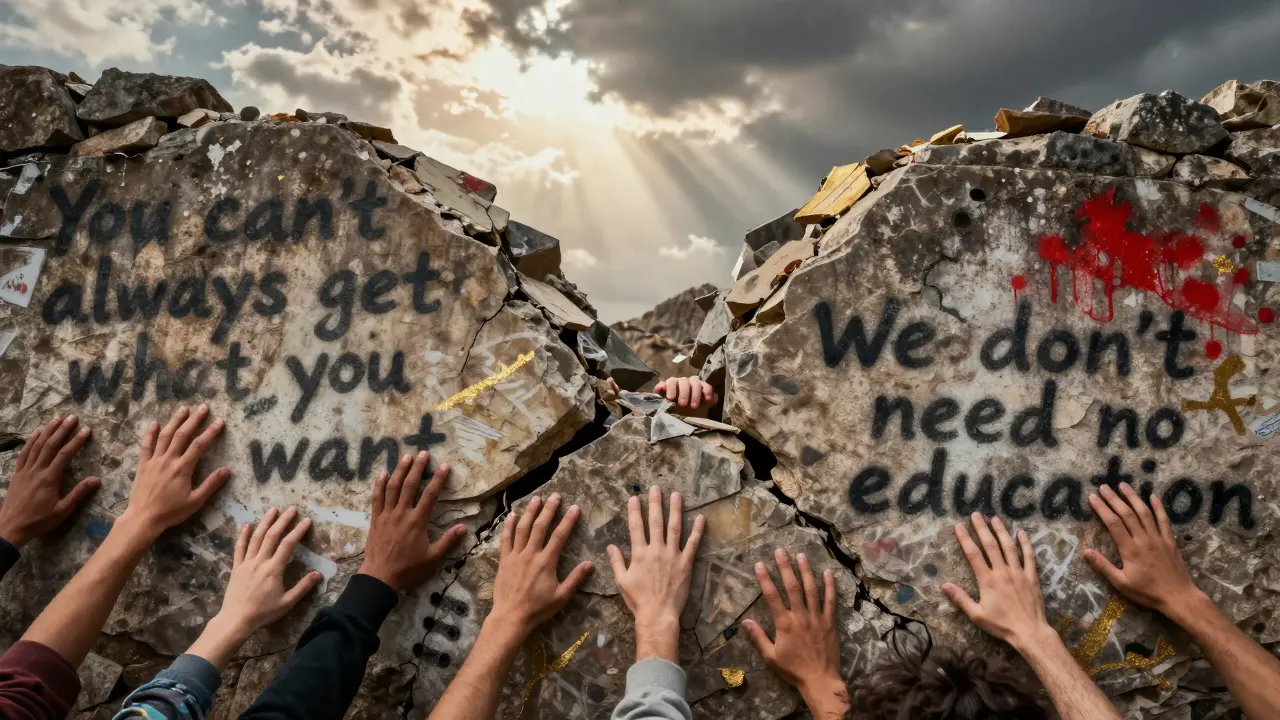
It starts with a choir, ends with a piano, and in between, Mick Jagger delivers one of rock’s most honest lines: "You can’t always get what you want." It’s not a complaint. It’s a lesson. Written in 1969, it came from a place of exhaustion-touring, fame, and the cost of chasing dreams. But it didn’t feel dated. It felt real. People still play this at funerals, weddings, and late-night drives. Why? Because everyone’s been there. You worked hard. You hoped. You didn’t win. And yet, somehow, you kept going. That’s the power of this lyric. It doesn’t promise victory. It promises endurance.
"Born to Run" - Bruce Springsteen
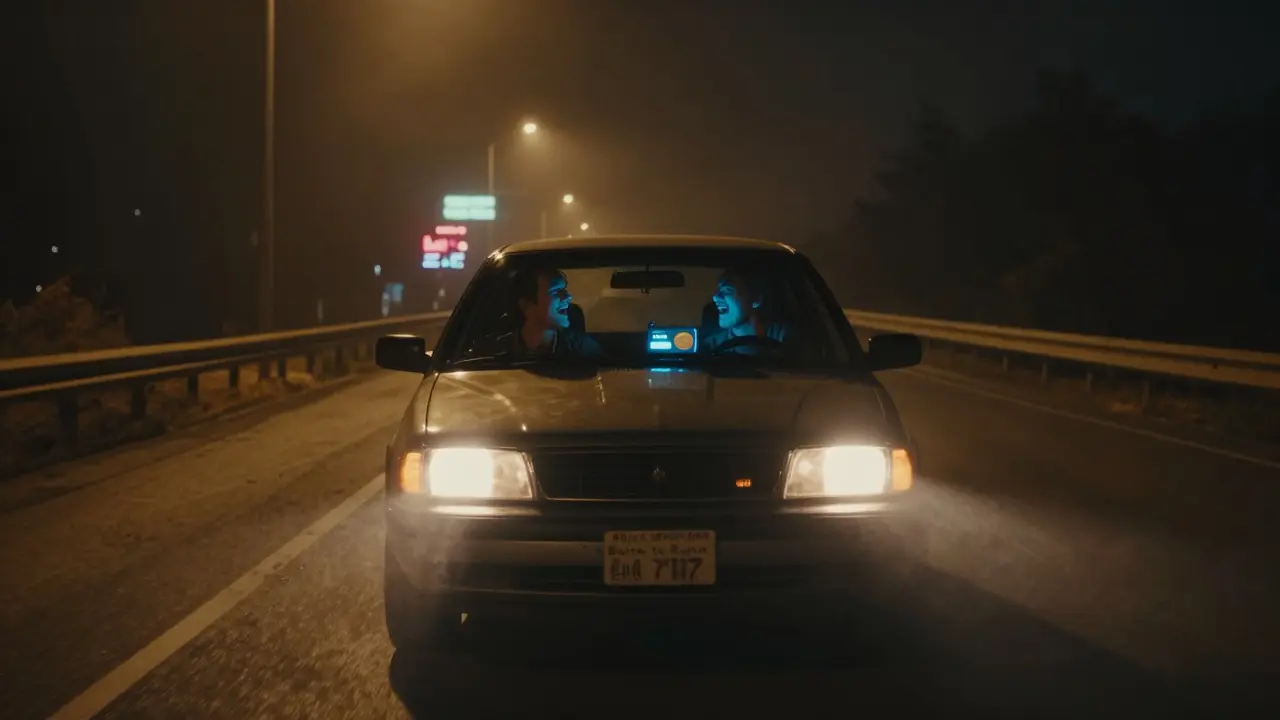
"Tramps like us, baby we were born to run." That line isn’t just a chorus. It’s a manifesto. Springsteen wrote it in 1975 about two kids stuck in a dead-end town, dreaming of escape. He didn’t write about kings or millionaires. He wrote about people who felt invisible. The lyrics paint a picture: headlights on a highway, a radio playing, the smell of gasoline. It’s not glamorous. It’s gritty. And that’s why it still hits. In 2026, young people in small towns from Ohio to Perth still feel that same pull. They don’t need to be running from anything literal. They’re running from silence. From being told they’re not enough. Springsteen gave them a battle cry-and a soundtrack.
"Smells Like Teen Spirit" - Nirvana
Kurt Cobain never meant for this to be an anthem. He called it a rip-off of the Pixies, wrote it in ten minutes, and didn’t even like the lyrics. But lines like "Here we are now, entertain us" became the cry of a generation that felt ignored. Teenagers in the 90s didn’t have leaders. They had apathy. And Cobain captured it perfectly. The song didn’t explain the anger. It mirrored it. Today, when Gen Z scrolls through endless feeds and feels hollowed out by algorithms, they still hum those words. It’s not about rebellion anymore. It’s about recognition. You’re not alone in feeling this way. That’s what made it unforgettable.
"Hotel California" - Eagles
"You can check out any time you like, but you can never leave." That line doesn’t just rhyme-it haunts. Written in 1976, it was a metaphor for the dark side of the American Dream. But over time, it became something bigger. A warning about addiction, fame, consumerism, even mental health. People interpret it differently now than they did back then. Some hear it as a critique of excess. Others hear it as a cry for help. The beauty of this lyric is its ambiguity. It doesn’t tell you what to think. It just shows you the door-and lets you decide if you want to walk through it.
"We Will Rock You" - Queen
Stomp. Stomp. Clap. Three simple actions. One unforgettable lyric. Brian May wrote this in 1977 as a call to arms for fans to become part of the music. No instruments. Just bodies. It was meant for stadiums, not headphones. And it worked. Even today, at every rock show-from Melbourne’s Sidney Myer Music Bowl to Wembley Stadium-you’ll see 50,000 people stomping in unison. Why? Because it doesn’t ask you to listen. It asks you to participate. It’s not about the band. It’s about you. That’s why it’s still played at World Cup finals, graduations, and protest marches. It turns silence into power.
"I Am the Walrus" - The Beatles
"I am the eggman, they are the eggmen, I am the walrus, goo goo g’joob." On paper, it’s nonsense. But that’s the point. John Lennon wrote this in 1967 to confuse critics who over-analyzed his lyrics. He threw in random phrases, old nursery rhymes, and surreal imagery. And somehow, it became one of the most quoted lines in rock history. Why? Because it gave permission to be weird. In a world that demands logic, this lyric says: embrace the chaos. Today, when people feel pressured to be "productive," "polished," or "perfect," they still turn to this song. It’s a reminder that not everything needs to make sense to matter.
"Sweet Child O’ Mine" - Guns N’ Roses
"Sweet child o’ mine, you’re my fire, the one desire." Axl Rose wrote this for his girlfriend, but it became about more than romance. It’s a raw, unfiltered look at love in the middle of chaos. The lyrics don’t hide the fear: "Where do we go now?" That question echoes louder now than it did in 1987. People today are more isolated, more anxious, more uncertain. But they still sing this song at karaoke bars, in cars, and in bedrooms. Why? Because it’s not about perfection. It’s about holding on-to someone, to a moment, to yourself-when everything else is falling apart.
"The Times They Are A-Changin’" - Bob Dylan (covered by rock acts)
Even though Dylan’s not strictly a rock artist, his lyrics were adopted by every rock band that ever wanted to change the world. "Come senators, congressmen, please heed the call. Don’t stand in the doorway, don’t block up the hall." It was written in 1964. But in 2026, it’s still played at climate marches, student protests, and union rallies. The words haven’t aged. The problems haven’t gone away. They’ve just changed shape. This lyric doesn’t ask for permission. It demands action. And that’s why it survives. Rock music doesn’t just reflect culture. It pushes it forward. And this line? It’s still pushing.
"Bohemian Rhapsody" - Queen
"Mama, just killed a man." That opening line doesn’t explain anything. It doesn’t need to. It pulls you in. Freddie Mercury wrote this as a personal confession wrapped in opera and madness. No one knew what it meant-not even the band. But people didn’t care. They felt it. The song shifts from ballad to hard rock to choir, and through it all, the lyrics never explain. They just reveal. Today, people use this song to process grief, identity, and loss. It’s a mirror. You don’t need to understand it to feel it. And that’s why it’s still the most-streamed rock song of all time.

"Don’t Stop Believin’" - Journey
"Just a small-town girl, living in a lonely world." This song was a flop when it came out in 1977. Then it showed up in The Sopranos, Glee, and every sports movie ever made. Now, it’s played at every major event, from hospital deliveries to playoff wins. Why? Because it’s not about fame. It’s about hope. The lyrics follow three strangers-each broken, each trying. And then they all sing together: "Don’t stop believin’, hold on to that feelin’." It’s simple. It’s sincere. And in a world that tells you to give up, it says: keep going. Even if you don’t know why.
"Another Brick in the Wall (Part 2)" - Pink Floyd
"We don’t need no education." Those words were shouted by schoolchildren in the 1979 music video. And they became a global protest chant. Roger Waters wrote it about the dehumanizing nature of rigid schooling. But it grew beyond that. It became a symbol for resisting control-in schools, workplaces, governments. In 2026, students in Melbourne, Tokyo, and Chicago still wear this lyric on their shirts. They’re not just singing about school. They’re singing about autonomy. About being seen as people, not numbers. The song’s power isn’t in the melody. It’s in the chorus of voices that now echo it.
"Imagine" - John Lennon (rock-adjacent, but essential)
"Imagine all the people living life in peace." It’s not loud. It’s not angry. But it’s one of the most powerful rock lyrics ever written. Lennon didn’t shout. He invited. He asked you to picture a world without borders, religion, or greed. It sounds naive. But in 2026, with wars still raging and divisions deepening, that simplicity is radical. People don’t sing this to be idealistic. They sing it to remember what’s possible. It’s not a solution. It’s a question. And sometimes, that’s enough.
Why These Lyrics Last
These aren’t the most complex lyrics. They’re not the most poetic. But they’re the most human. They speak to fear, longing, confusion, and hope-without pretending to have answers. Rock music doesn’t need to be smart. It needs to be true. And the best lyrics? They’re the ones you didn’t know you needed until you heard them.
What makes a rock lyric memorable?
A memorable rock lyric connects emotionally, not just intellectually. It uses simple, vivid language to express universal feelings-loneliness, anger, hope, rebellion. It often comes from personal truth, not clichés. The best ones feel like they were written just for you, even if they were written decades ago.
Are old rock lyrics still relevant today?
Yes. The struggles they describe-feeling trapped, searching for identity, resisting control-are timeless. Modern listeners hear the same emotions in songs from the 70s and 80s as they do in today’s indie rock or punk. Rock lyrics survive because they don’t chase trends. They capture truths.
Do rock lyrics have to be poetic to be powerful?
No. Some of the most powerful lines are blunt: "I am the walrus," "We don’t need no education," "You can’t always get what you want." They work because they’re honest, not fancy. Emotion beats elegance every time in rock.
Why do people still sing these lyrics at concerts?
Because singing them together turns strangers into a community. It’s not about the band anymore-it’s about you and everyone around you sharing a moment of truth. That’s why stadiums erupt when "Born to Run" or "We Will Rock You" starts. You’re not just listening. You’re remembering.
Can a lyric become more meaningful over time?
Absolutely. "Hotel California" meant something different in 1976 than it does now. "Smells Like Teen Spirit" wasn’t about mental health in 1991-but it is now. Lyrics gain layers as life changes. They become mirrors for each generation’s struggles.