There’s something about a guitar solo that stops you in your tracks. One note, one bend, one scream through the amp - and suddenly the whole room feels different. No lyrics. No drums. Just pure emotion shaped by steel strings and raw skill. These aren’t just solos. They’re moments carved into rock history. And some of them changed how we think about music forever.
Jimmy Page - "Stairway to Heaven" (Led Zeppelin, 1971)
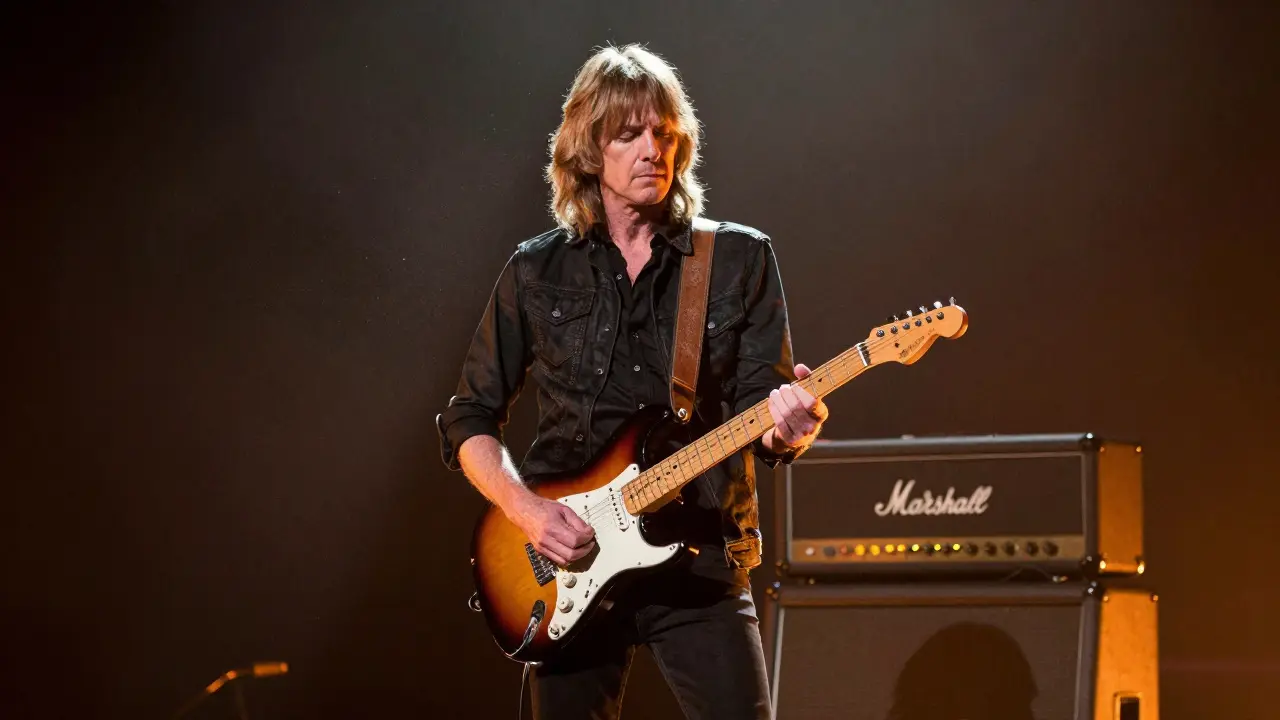
It starts quiet. Acoustic. Almost delicate. But by the time it hits the fifth minute, you’re not listening anymore - you’re holding your breath. Jimmy Page builds that solo like a storm. It climbs. It hesitates. It screams. And when it finally lets go at the 7:05 mark, it doesn’t just end - it explodes. This solo wasn’t just played; it was sculpted. Page used a Fender Telecaster through a Marshall stack, and he recorded it in one take. No overdubs. No edits. Just pure instinct. The solo’s magic? It doesn’t show off. It serves the song. Every note feels earned. That’s why it still gives people chills 50 years later.
Eddie Van Halen - "Eruption" (Van Halen, 1978)
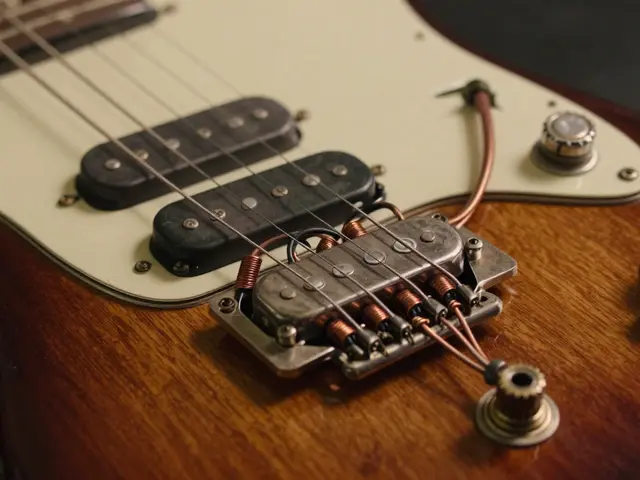
Before Eddie Van Halen, guitar solos were mostly about melody. After "Eruption," they became a physics experiment. This 1:40 solo, recorded live in the studio with no effects except a Marshall amp and a modified Stratocaster, introduced tapping to the mainstream. He didn’t just play notes - he hammered, pulled, and slid them like a percussionist on acid. The solo opened Van Halen’s debut album. No intro. No warning. Just 10 seconds of pure sonic chaos that made every other guitarist in the world rethink their practice routine. Eddie used a 1977 Strat with a homemade humbucker, and he tuned the low E down to D to make the harmonics ring louder. The result? A solo that still sounds futuristic, even today.
David Gilmour - "Comfortably Numb" (Pink Floyd, 1979)
Two solos. One song. Two different feelings. The first is restrained, aching - like someone trying to speak through a fog. The second? It’s a cry from the edge of consciousness. David Gilmour played both on a black Stratocaster, using a Big Muff pedal for the first, and a Tube Screamer with a delay for the second. He recorded them separately, over days. The second solo? It’s the one that gets stuck in your head. That long, singing bend at 5:18? It’s not fast. It’s not flashy. But it’s the most human thing in rock. Gilmour said he played it like he was crying. And you can hear it. Every note vibrates with pain, longing, and release. It’s not about technique. It’s about truth.
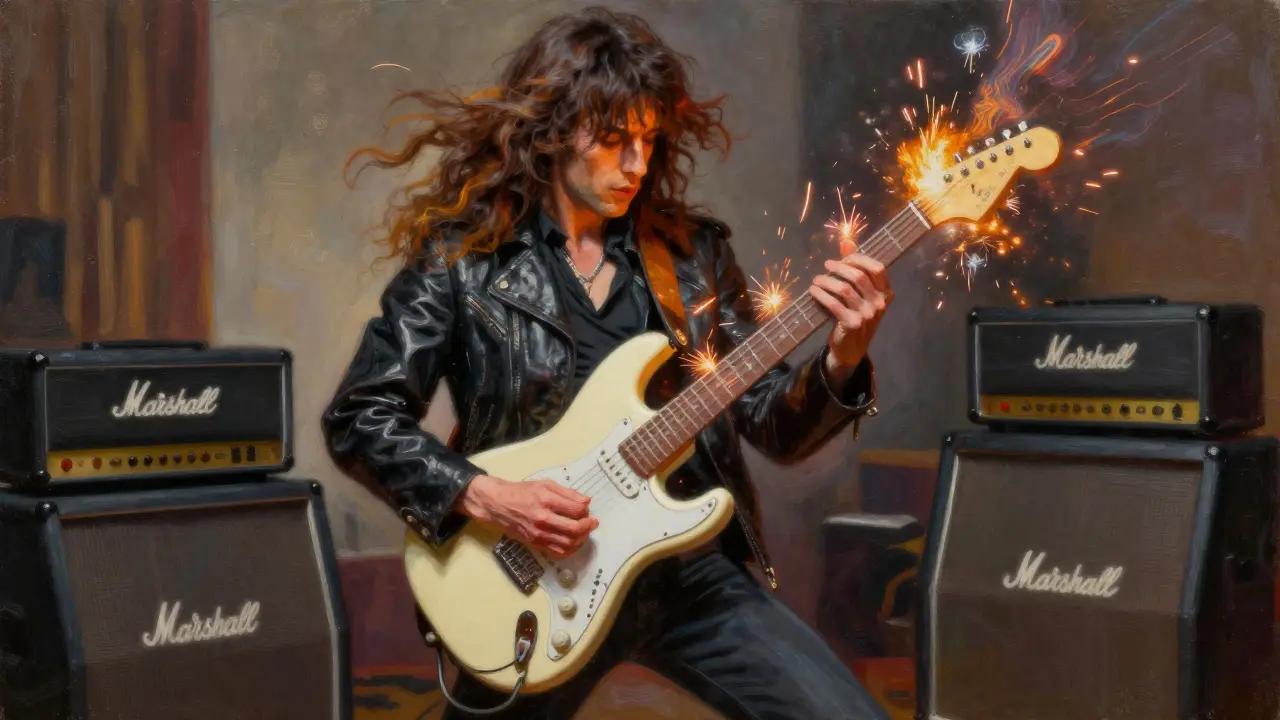
Randy Rhoads - "Crazy Train" (Ozzy Osbourne, 1980)
Randy Rhoads was only 25 when he died. But in his short life, he rewrote what a metal guitar solo could be. "Crazy Train" isn’t just a riff - it’s a machine. And that solo? It’s the engine. He blended neoclassical scales with heavy rock, using arpeggios that sounded like Bach if he’d picked up a Marshall. Rhoads used a Jackson guitar with a Floyd Rose tremolo and played through a Marshall JMP. The solo’s structure is mathematical - ascending triplets, hammer-ons, pull-offs - but it never feels cold. It’s wild, precise, and dangerous. He made complex sound simple. And he made metal feel like art.
Steve Vai - "The Attitude Song" (1993)
Steve Vai doesn’t play guitar. He conducts it. "The Attitude Song" is a 3-minute masterclass in control. He uses whammy bar dives, harmonics, tapping, and sweep picking like a painter uses brushes. But here’s the twist: this solo isn’t meant to impress. It’s meant to make you laugh, then cry, then stand up and cheer. Vai recorded it live with no edits. The solo starts with a squealing harmonic, then dives into a sequence of 16th-note runs that feel like a rollercoaster with no brakes. He uses a custom Ibanez JEM with a floating tremolo, and he tuned the guitar to drop D to give the low notes more weight. What makes it epic? It’s not the speed. It’s the personality. You can hear his grin in every note.
Slash - "Sweet Child O’ Mine" (Guns N’ Roses, 1987)
Slash’s solo on "Sweet Child O’ Mine" is the most recognizable in rock. It’s simple. It’s melodic. It’s unforgettable. He built it on the spot during a rehearsal. No plan. No script. Just a Gibson Les Paul and a Fender Twin Reverb. The solo starts with a three-note motif - G, B, D - and then spirals into a soaring, singing line that feels like a hug from an old friend. Slash said he was thinking of the melody of the chorus, and just followed it. He used light gauge strings and played with his fingers, not a pick, to get that smooth glide. The solo’s power? It doesn’t try to be anything. It just is. And that’s why it still plays on radios, at weddings, and in stadiums 35 years later.
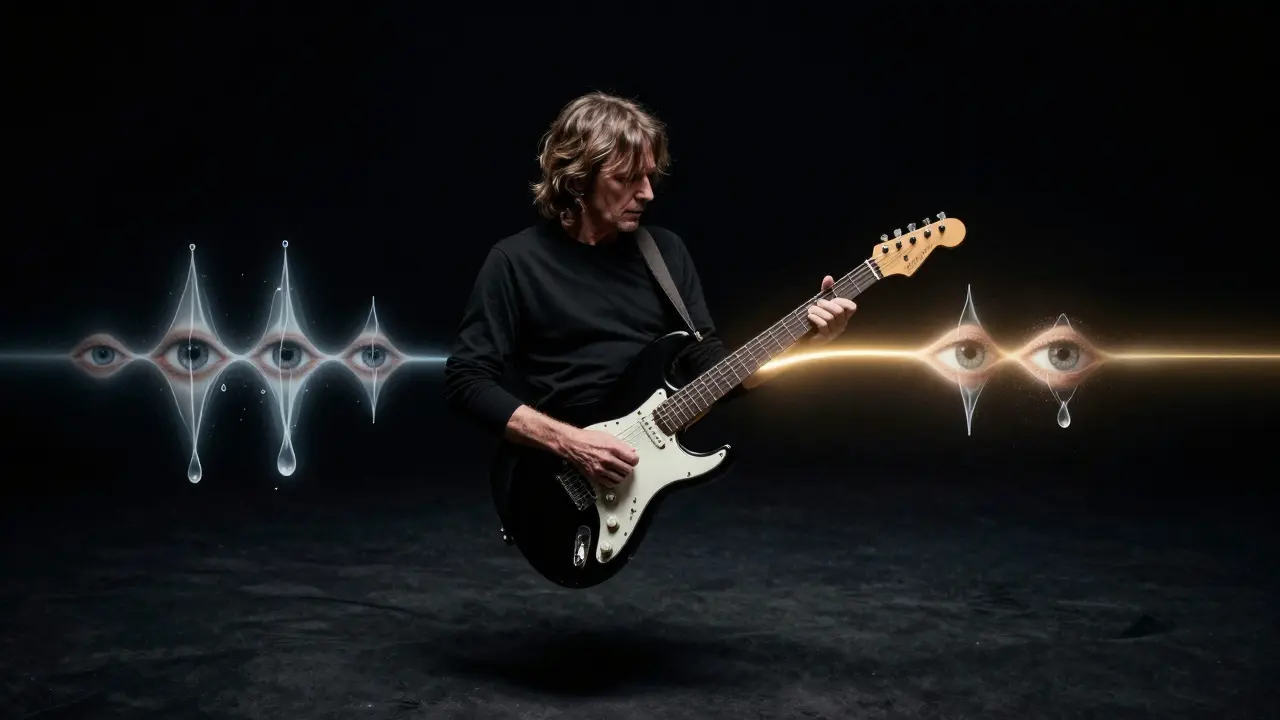
Jeff Beck - "A Day in the Life" (1967, with The Yardbirds)
Before Hendrix, before Page, there was Jeff Beck. His solo on "Heart Full of Soul" (1965) and "Over Under Sideways Down" (1966) were the first to treat the guitar like a voice - not an instrument. But his most emotional moment came in 1967, during a live version of "A Day in the Life." He used a Fender Stratocaster, a Vox AC30, and a Maestro Fuzz-Tone. The solo is short - only 20 seconds - but it’s full of pain, confusion, and release. He bent notes so hard they sounded like a human sob. He used volume swells to make notes fade in like whispers. And he left space. Silence was part of the solo. That’s rare. Most guitarists fill every second. Beck let the air breathe. He proved you don’t need 100 notes to say everything.
John Mayer - "Gravity" (2006)
People forget John Mayer is a guitar wizard. He doesn’t scream. He doesn’t shred. He just plays. "Gravity" is a slow-burning soul ballad. But the solo? It’s a masterclass in feel. Mayer used a PRS Custom 24, a Tube Screamer, and a delay pedal. He played it with a light touch, letting each note ring and decay. He bends the notes just a hair - not half-steps, not whole tones, but microtonal shifts that make the emotion ache. The solo is only 45 seconds long. No fireworks. No pyrotechnics. Just perfect phrasing. He said he wanted it to sound like a man whispering to his lover. And it does. It’s proof that epic doesn’t mean loud. Sometimes, it means quiet.
Why These Solos Matter
These aren’t just solos. They’re emotional landmarks. Each one tells a story without words. They don’t all use the same techniques. Some are fast. Some are slow. Some are noisy. Some are silent. But they all have one thing in common: they were played from the gut. Not the brain. Not the fingers. The heart.
Modern guitarists often chase speed. They count frets. They memorize scales. They practice for hours. But the greatest solos weren’t built in a practice room. They were born in the moment - when the music took over, and the player just got out of the way.
That’s the real lesson. Epic solos aren’t about how many notes you play. They’re about how much you leave unsaid.
What makes a guitar solo "epic"?
An epic guitar solo doesn’t rely on speed or complexity. It connects emotionally. It has a clear beginning, a journey, and a release. The best ones feel like they were played in the moment - not rehearsed. They use space, dynamics, and phrasing to tell a story. A solo that makes you stop what you’re doing, close your eyes, and feel something - that’s epic.
Do you need to play fast to have an epic solo?
No. In fact, some of the most iconic solos are slow. David Gilmour’s "Comfortably Numb" solo and John Mayer’s "Gravity" solo barely break a medium tempo. What matters is how you shape each note - the vibrato, the bend, the sustain. A single well-placed note can move people more than a hundred fast ones.
Which guitar models are most used in these solos?
The Fender Stratocaster and Gibson Les Paul dominate. Eddie Van Halen used a modified Strat, Slash used a Les Paul, Gilmour played a Strat, and Rhoads used a Jackson. The gear matters less than how it’s used. Many players achieved iconic tones with basic amps - Marshall, Fender Twin, or Vox AC30 - paired with simple pedals like the Tube Screamer or Big Muff.
Can a solo be epic even if it’s short?
Absolutely. Jeff Beck’s solo in "A Day in the Life" lasts less than 20 seconds. Slash’s solo on "Sweet Child O’ Mine" is under a minute. What makes them epic isn’t length - it’s impact. A short solo can be more powerful than a long one if every note carries weight and emotion.
Are modern guitarists still creating epic solos?
Yes - but they’re less visible. Bands like Greta Van Fleet, The Black Keys, and even newer acts like King Gizzard & The Lizard Wizard are bringing back expressive, song-first solos. Artists like Yvette Young and Orianthi are also pushing boundaries with tone and emotion. Epic solos aren’t dead - they’ve just stopped needing to be loud to be heard.