Blues music isn’t just a genre; it’s the heartbeat of modern American music. If you listen closely to rock, jazz, R&B, or even hip-hop, you’ll hear its DNA pulsing through every chord and lyric. But how did this raw, emotional sound evolve from field hollers in the Mississippi Delta to stadium-filling anthems? The journey is messy, brilliant, and deeply human.
Understanding blues music is a musical genre characterized by specific chord progressions, call-and-response patterns, and expressive vocal techniques that originated among African Americans in the Deep South requires looking beyond the notes. It’s about survival, migration, technology, and rebellion. This guide walks you through the distinct eras that shaped the blues, showing how each decade redefined what the music could be.
The Roots: Field Hollers and the Birth of the Delta Blues
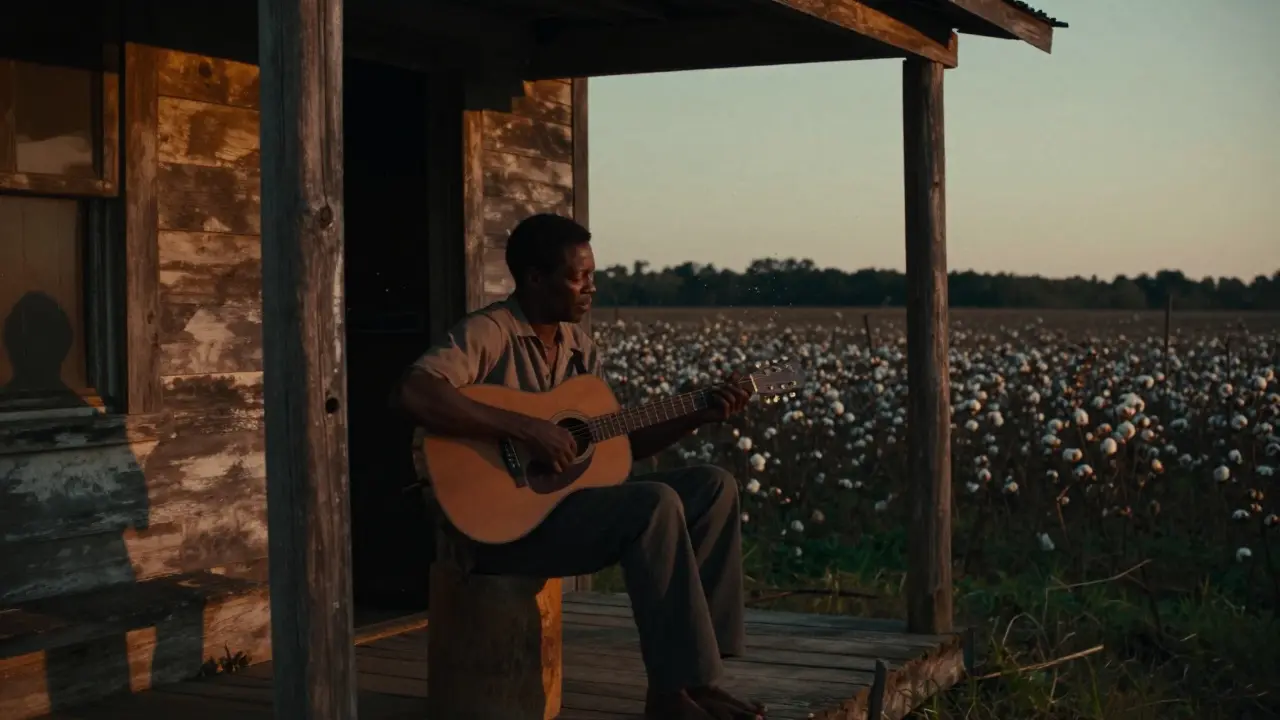
Before there were records or radios, there was the work song. In the late 19th century, enslaved people and sharecroppers in the Mississippi Delta used field hollers are solo vocal improvisations used by agricultural workers to coordinate labor and express emotion to cope with grueling days. These calls featured blue notes-flattened thirds, fifths, and sevenths-that gave the music its signature mournful quality.
By the 1890s, these oral traditions merged with spirituals, ragtime, and brass band marches. The result was the Delta Blues, a sparse, intense style played primarily on acoustic guitars. Artists like Charley Patton, known as the "Father of the Delta Blues," developed complex guitar techniques that mimicked voices and drums simultaneously. His slide guitar playing became a template for future generations.
- Key Characteristic: Acoustic instrumentation, often solo performance.
- Vocal Style: Raw, unpolished, highly emotive delivery.
- Themes: Hardship, poverty, love, and supernatural folklore.
This era laid the groundwork for everything that followed. Without the Delta Blues, there would be no Robert Johnson, no Muddy Waters, and ultimately, no Elvis Presley or Chuck Berry.
The Great Migration and the Rise of Chicago Blues
In the 1910s and 1920s, millions of African Americans fled the Jim Crow South for industrial jobs in northern cities like Chicago, Detroit, and St. Louis. This demographic shift changed the blues forever. In crowded apartment buildings, musicians couldn’t play loud acoustic guitars without disturbing neighbors. They needed amplification.
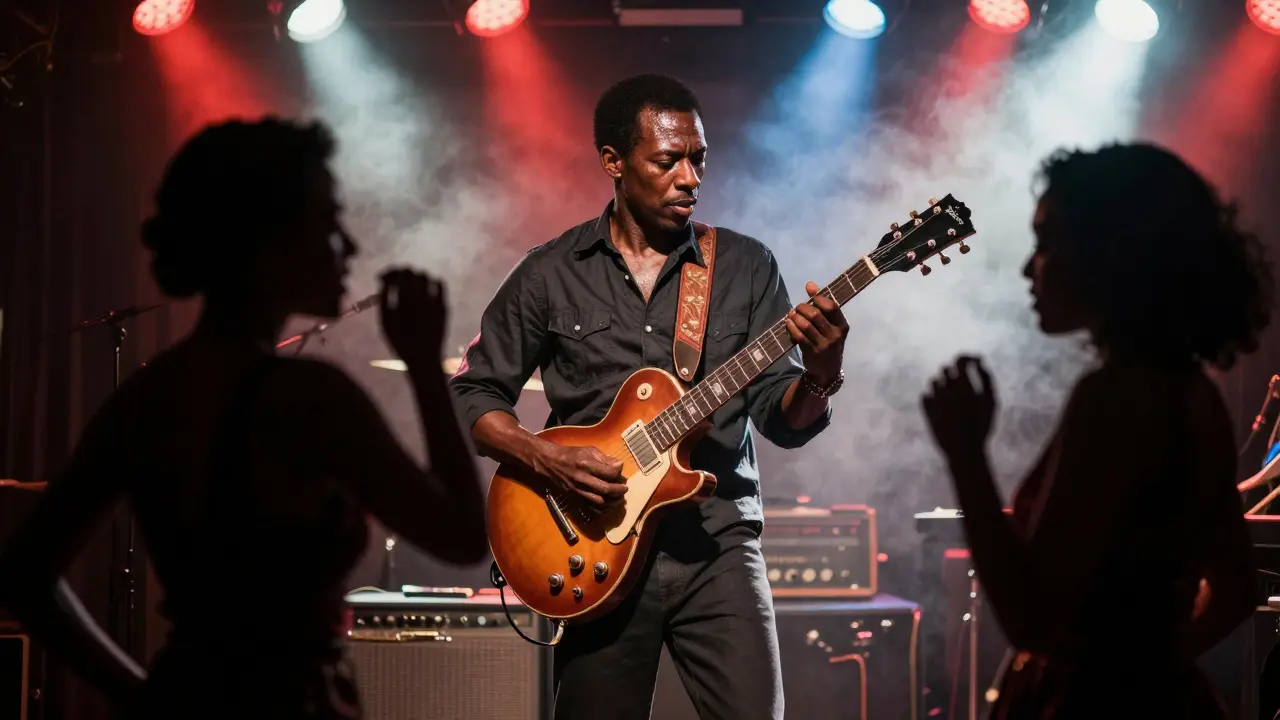
Enter the electric guitar. By the 1940s, pioneers like Muddy Waters brought the Delta sound to Chicago but plugged in his guitar, adding bass and drums to create a louder, more rhythmic style. This became known as Chicago Blues is an electrified style of blues music that emerged in Chicago during the mid-20th century, featuring amplified guitars, harmonicas, and driving rhythms.
| Feature | Delta Blues | Chicago Blues |
|---|---|---|
| Instrumentation | Acoustic guitar, harmonica | Electric guitar, bass, drums, piano |
| Rhythm | Loose, rubato feel | Driving, steady beat (4/4 time) |
| Venue | Porches, juke joints | Clubs, dance halls |
| Key Artist | Robert Johnson | Howlin' Wolf |
This electrification made the blues danceable and commercially viable. It also set the stage for rock and roll. When British bands like The Rolling Stones and The Yardbirds discovered Chicago blues records in the 1960s, they sparked a global blues revival.
The Electric Revolution: Rock and Roll Meets the Blues
The 1950s and 1960s saw the blues cross racial and geographic boundaries. White teenagers bought records by Black blues artists, and young white musicians learned to emulate their styles. This cultural exchange birthed British Blues Invasion refers to the wave of British rock bands in the mid-1960s who popularized American blues music worldwide.
Artists like B.B. King bridged the gap between traditional blues and pop culture. His refined, melodic style appealed to broader audiences, while still retaining the emotional depth of the genre. Meanwhile, younger players like Jimi Hendrix pushed the boundaries further, using feedback, distortion, and wah-wah pedals to create psychedelic blues-rock hybrids.
During this period, the blues evolved into several subgenres:
- Blues-Rock: Faster tempos, heavier guitar riffs (e.g., Led Zeppelin).
- Soul Blues: Incorporating elements of soul music with smoother vocals (e.g., Otis Redding).
- Jump Blues: Up-tempo, big-band influenced blues that preceded rock and roll.
This era proved that the blues wasn’t static-it could absorb new influences and remain relevant. However, some purists argued that commercialization diluted the music’s authenticity. This tension between tradition and innovation continues today.
Modern Blues: Fusion and Global Influence
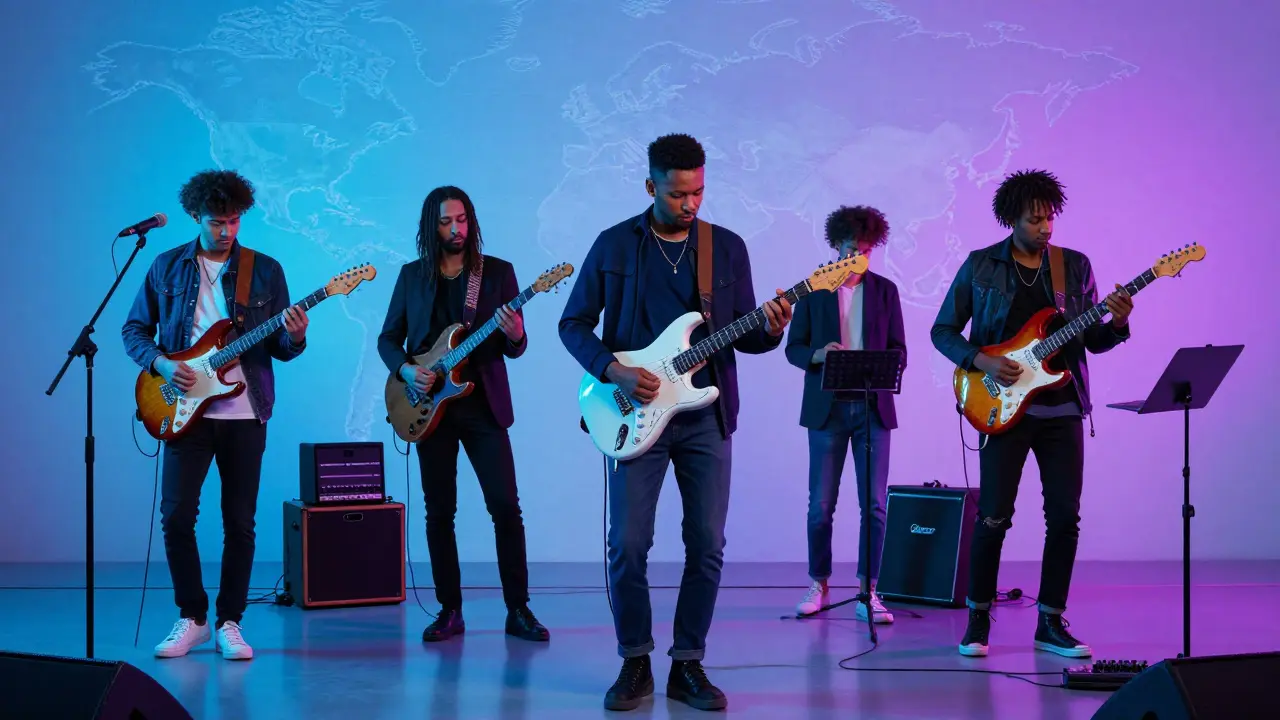
By the 1980s and 1990s, the blues faced an identity crisis. Rock dominated airwaves, and rap emerged as the voice of urban youth. Yet, the blues didn’t disappear; it adapted. Musicians began blending blues with funk, metal, and electronic music.
Stevie Ray Vaughan led a resurgence in the 1980s with his Texas blues style, combining technical virtuosity with raw emotion. His album Texas Flood introduced a new generation to the power of the electric guitar. Later, artists like Gary Clark Jr. fused blues with hip-hop beats and rock energy, creating a sound that resonated with millennials.
Today, the blues is more global than ever. Japanese blues festivals draw thousands, and European bands experiment with folk-blues fusions. Digital streaming platforms have democratized access, allowing niche subgenres like Neo-Soul Blues combines traditional blues structures with contemporary production techniques and lyrical themes to find audiences worldwide.
Current Trends in Blues Music (2020s)
- Genre Blending: Artists increasingly mix blues with electronic, country, and world music.
- Digital Production: Home studios allow independent artists to release high-quality recordings without major label support.
- Revival of Acoustic Styles: A counter-movement emphasizes raw, unplugged performances reminiscent of the Delta era.
Why the Blues Still Matters
The blues teaches us how to process pain, joy, and everything in between. Its structure-the twelve-bar progression-is simple enough for beginners yet complex enough for masters. This accessibility ensures its survival across generations.
Moreover, the blues remains a powerful tool for social commentary. Contemporary artists use the genre to address issues like police brutality, economic inequality, and mental health. By keeping the conversation honest and direct, they honor the tradition while pushing it forward.
If you’re new to the blues, start with the classics: Muddy Waters’ Electric Mud, B.B. King’s Live at the Regal, or Janis Joplin’s I Got Dem Ol’ Kozmic Blues Again Mama!. Then explore modern interpretations by Tinsley Extension or Beth Hart. You’ll discover that the blues isn’t just history-it’s alive, evolving, and waiting for your ears.
What is the difference between Delta Blues and Chicago Blues?
Delta Blues is acoustic, sparse, and rooted in rural Mississippi, featuring solo guitar and vocal performances. Chicago Blues is electrified, louder, and incorporates full bands with drums, bass, and piano, reflecting the urban environment of the Great Migration.
Who invented the blues?
No single person invented the blues. It evolved from African American work songs, spirituals, and field hollers in the late 19th century. Early figures like Charley Patton and W.C. Handy helped codify and popularize the style.
Is blues music still popular today?
Yes, though it’s less dominant on mainstream radio. Blues thrives in live venues, festivals, and online communities. Modern artists blend it with other genres, keeping it relevant for younger audiences.
What are the main instruments in blues music?
The core instruments include the guitar (acoustic or electric), harmonica, piano, bass, and drums. Vocals are also central, often using call-and-response patterns.
How did the blues influence rock and roll?
Rock and roll borrowed heavily from blues chord progressions, rhythms, and guitar techniques. Artists like Chuck Berry and Little Richard built directly on blues foundations, speeding up the tempo and adding energetic vocals.