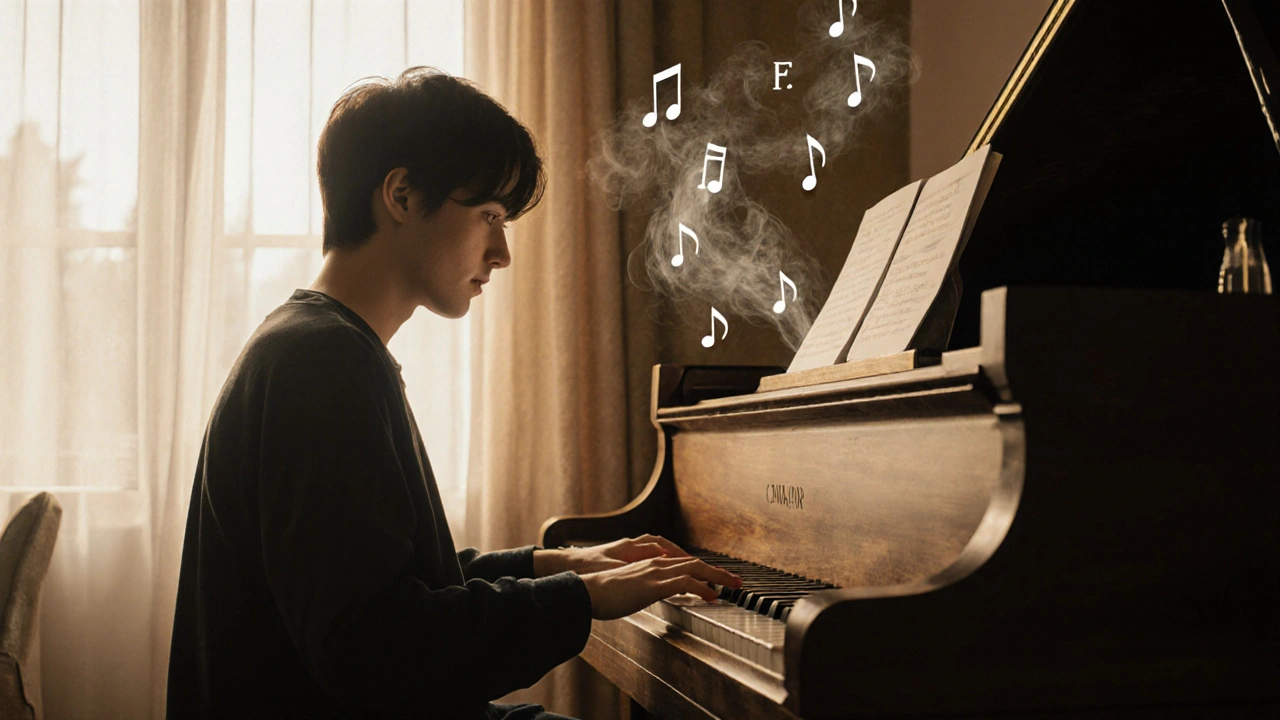
When you hear a jazz piano, a dynamic blend of harmonic complexity, rhythmic swing, and spontaneous improvisation that defines the heart of jazz music. It’s not just playing notes—it’s telling a story with every chord, every pause, every unexpected turn. Jazz piano doesn’t sit still. It breathes. It leans into the groove, pushes against the beat, and sometimes walks right off the edge—only to pull you back in with a sweet, unexpected resolution. This is where tradition meets freedom, and where a single performer can sound like an entire band.
Behind every great jazz pianist is a deep understanding of swing rhythm, the lopsided, bouncy pulse that makes jazz feel alive and human, not mechanical. Think of it as the heartbeat of the music—slightly behind the beat, slightly ahead, never exactly on it. Then there’s jazz harmony, the rich, layered chords that go beyond basic major and minor, using 7ths, 9ths, and altered tones to create tension and release. These aren’t just fancy chords—they’re emotional tools. A minor 11th doesn’t just sound sad; it sounds like a late-night conversation you can’t forget. And then there’s piano improvisation, the art of making up melodies on the spot, rooted in scale patterns but shaped by instinct, mood, and the energy of the moment. It’s not random. It’s calculated chaos.
Jazz piano didn’t just stay in smoky clubs. It bled into everything. The bassline in a Kendrick Lamar track? Probably borrowed from a Bill Evans left hand. The groove in a modern R&B song? Laid down by a jazz-trained pianist who learned to swing before they learned pop. It’s the hidden language of today’s music, even if most listeners don’t know it. You hear it in film scores, in hip-hop beats, even in the intro to a pop song you thought was just catchy. That’s the power of jazz piano—it doesn’t need to be the star to change the whole song.
What you’ll find here isn’t just a list of posts. It’s a map. You’ll see how jazz piano connects to the roots of blues, how it shaped modern hip-hop through sampling, and how its structure still echoes in today’s most unexpected sounds. No theory lectures. No fluff. Just real connections, real artists, and real music that moves. Whether you play, listen, or just feel it in your chest—this is where the rhythm lives.