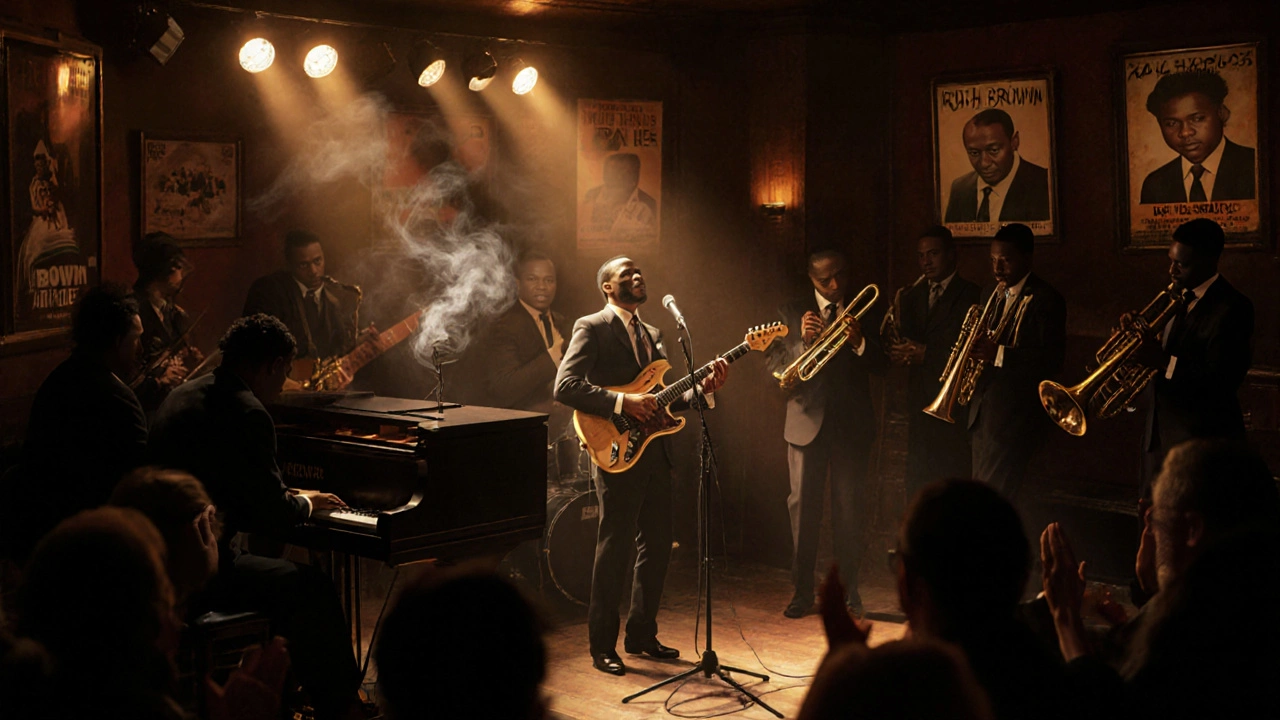
When you hear a guitar wail, a voice crack with pain, or a drum hit just behind the beat, you’re hearing the blues roots, a raw, emotional musical tradition born in the American South that became the foundation for nearly every popular genre today. Also known as Delta blues, this style didn’t just influence music—it built its skeleton. It’s not just an old sound. It’s the reason rock guitar solos scream, why hip-hop samples old vinyl, and why even pop songs still use the same three chords over and over.
The 12-bar blues, a simple, repeating chord pattern that gives blues its heartbeat. Also known as blues structure, it’s the most copied framework in popular music. You don’t need to know music theory to feel it—it’s in the way the notes drag, pause, then punch back in. That pattern? It’s in Rolling Stones songs, in Kendrick Lamar’s beats, even in the outro of a Taylor Swift ballad. And the I-IV-V chords, the three basic chords that form the backbone of blues progressions. Also known as blues chord progression, they’re the reason your foot taps without you asking it to. These aren’t fancy. They’re basic. That’s why they stuck. They’re the DNA of emotion in music.
Blues didn’t stay in the fields or the juke joints. It traveled. It got louder. It mixed with gospel, with country, with rhythm and blues, and then exploded into rock and roll. The same raw honesty that made Robert Johnson’s guitar cry in 1936 is the same honesty that makes Gary Clark Jr. sound like he’s singing straight from your chest today. You’ll find it in the way modern rock bands build tension, in how jazz musicians bend notes, even in the soulful pauses in today’s R&B hooks. This isn’t history you read about—it’s the sound you can’t ignore when you turn up the volume.
What you’ll find below isn’t a list of old records. It’s proof that the blues didn’t die—it multiplied. From deep dives into how the 12-bar form shapes today’s hip-hop, to how modern artists still rewrite its rules, these posts show you the living, breathing legacy of the blues roots. No nostalgia. Just real connections between what came before and what’s still moving people now.