
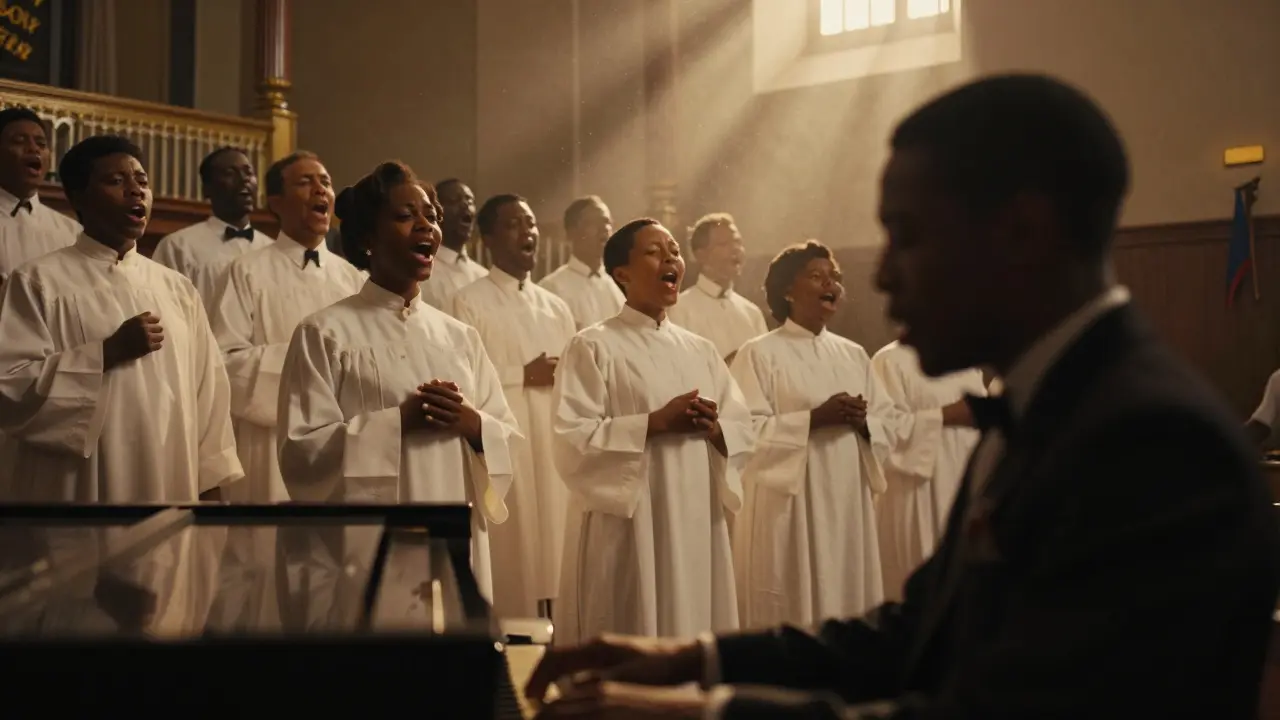
Have you ever heard a voice that felt like it was pulling right at your chest? That’s Soul Music. It is not just a genre; it is an emotional experience. Born in the United States during the late 1950s and early 1960s, this sound fused the raw energy of rhythm and blues with the spiritual depth of gospel music. The result was a style defined by its passion, its pain, and its undeniable groove.
When we talk about soul, we are talking about music that refuses to hide emotion. It is the sound of struggle turning into strength. From the polished studios of Detroit to the church pews of Memphis, soul music created a new language for African American expression. Today, its influence echoes through every major pop song you hear on the radio. But to understand why it matters, we have to look back at where it started and who built it.
The Gospel Roots of a Secular Sound
You cannot understand soul without understanding the Black church. In the mid-20th century, gospel music was the dominant form of musical expression for many African Americans. It featured powerful choirs, call-and-response patterns, and singers who used vocal techniques like melisma (stretching a single syllable over multiple notes) to convey intense feeling.
Ray Charles is often credited as the first person to bridge the gap between sacred and secular. In 1954, he released "I Got a Woman," a track that took the harmonic structure and vocal intensity of a gospel hymn but applied it to lyrics about romantic love. This move was controversial at the time. Some critics called it sacrilegious. But listeners loved it. They heard their own emotions reflected in a way that R&B had never captured before.
This fusion created the blueprint for the genre. Soul music kept the rhythmic drive of blues and jazz but adopted the vocal delivery and chord progressions of gospel. It turned personal heartbreak into universal anthems. The key difference was the intent: while gospel pointed upward to God, soul pointed inward to the human condition.
Motown: The Sound of Young America
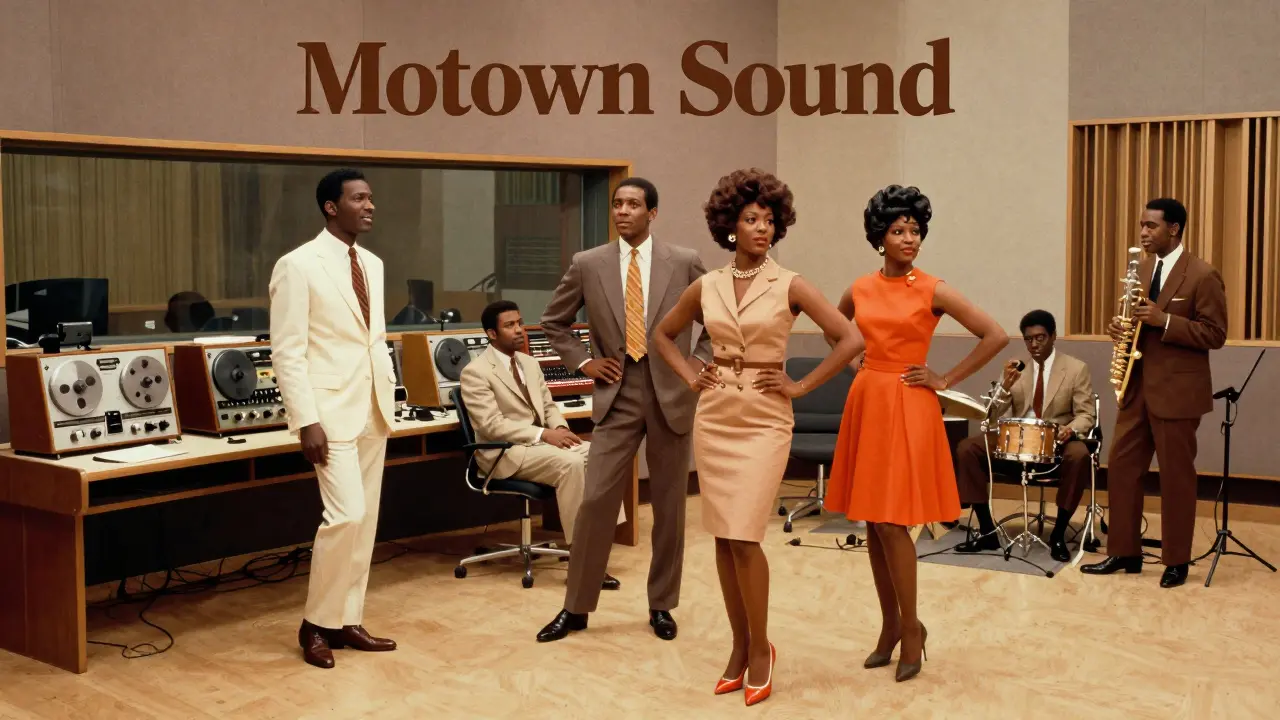
In 1959, Berry Gordy founded Motown Records in Detroit. His vision was ambitious: create a label that produced hits appealing to both Black and white audiences. He wanted soul music that was polished, professional, and ready for mainstream success. This approach became known as the "Motown Sound."
Gordy treated his studio like an assembly line, drawing on his experience in automotive manufacturing. He established a team of songwriters, arrangers, and session musicians known as The Funk Brothers. These unsung heroes played on nearly every hit record from the label. Their tight, disciplined playing provided the perfect backdrop for stars like Stevie Wonder, Marvin Gaye, and Diana Ross.
The Motown sound was characterized by:
- A strong bassline that drove the rhythm forward.
- Horn sections that added brightness and energy.
- Background vocals that created lush harmonies.
- Clean production that avoided the raw grit of other soul styles.
This polish made Motown records safe for radio play across racial lines. When The Supremes or The Temptations performed on television, they were dressed sharply and moved with choreographed precision. This image helped break down barriers in the entertainment industry, bringing Black artists into living rooms across America in a way that had rarely happened before.
Southern Soul: The Raw Heartbeat of Memphis and Muscle Shoals
While Motown refined soul in the North, a different version was exploding in the South. Here, the connection to the church remained stronger, and the sound was rougher, louder, and more immediate. Two hubs dominated this scene: Stax Records in Memphis, Tennessee, and FAME Studios in Muscle Shoals, Alabama.
Stax Records operated with an integrated house band called Booker T. & the M.G.'s. Unlike Motown’s separate writing and performance teams, Stax encouraged improvisation. The result was a grittier, more organic sound. Artists like Otis Redding brought a visceral power to their performances. Redding’s "Respect" (before Aretha Franklin covered it) and "Try a Little Tenderness" showcase a voice that cracks with genuine emotion.
In Muscle Shoals, a group of white session musicians known as The Muscle Shoals Rhythm Section (or "The Swampers") developed a distinctive drum beat. It was slower, heavier, and swung harder than the Motown shuffle. This groove anchored records for artists ranging from Wilson Pickett to Aretha Franklin herself, who recorded some of her biggest hits there after leaving Atlantic’s initial arrangements.
| Feature | Motown (Detroit) | Southern Soul (Memphis/Muscle Shoals) |
|---|---|---|
| Production Style | Polished, orchestrated, clean | Raw, gritty, live instrumentation |
| Vocal Approach | Smooth, controlled, melodic | Passionate, shouted, improvisational |
| Rhythm Section | Tight, danceable, steady beat | Heavy swing, deep pocket, loose feel |
| Target Audience | Cross-racial, mainstream pop | Primarily Black audiences, later crossover |
| Key Label | Motown Records | Stax Records, Atlantic Records |
The Queen of Soul and the Voice of a Generation
If there is one name synonymous with the genre, it is Aretha Franklin. Known as the Queen of Soul, Franklin did not just sing songs; she commanded them. Her breakthrough came in 1967 with "(You Make Me Feel Like) A Natural Woman" and "I Never Loved a Man (The Way I Love You)," recorded at Atlantic Records. But it was her cover of Otis Redding’s "Respect" that changed everything.
Franklin transformed a man’s plea for respect into a woman’s demand for dignity. She added the iconic "R-E-S-P-E-C-T" spelling and the backing shouts of "sock it to me." This song became an anthem for both the Civil Rights Movement and the burgeoning feminist movement. Franklin’s ability to blend technical perfection with raw vulnerability set a standard that few could match. She proved that soul music could be both commercially viable and politically potent.
Alongside Franklin, James Brown pushed the boundaries of what soul could do. Often called the Godfather of Soul, Brown focused less on melody and more on rhythm. His tracks like "Papa’s Got a Brand New Bag" and "Cold Sweat" stripped away complex chords in favor of a hypnotic, repetitive groove. This shift laid the groundwork for funk music, which would dominate the 1970s.
Soul Music and Social Change
Soul music did not exist in a vacuum. It emerged during a time of immense social upheaval in the United States. The Civil Rights Movement was gaining momentum, and Black Americans were demanding equality and justice. Soul music gave voice to these struggles.
Artists began writing songs that addressed political issues directly. Sam Cooke’s "A Change Is Gonna Come," written in 1964, remains one of the most powerful protest songs in history. Inspired by hearing Bob Dylan’s "Blowin’ in the Wind," Cooke poured his own experiences with racism into the track. It was a somber, beautiful declaration of hope in the face of despair.
Similarly, Marvin Gaye’s 1971 album What’s Going On marked a turning point. Instead of singing about romance, Gaye explored war, poverty, and environmental degradation. The album’s cohesive narrative and lush orchestration showed that soul music could tackle complex societal issues without losing its commercial appeal. It forced the music industry to recognize Black artists as serious commentators on culture, not just entertainers.
The Evolution: Neo-Soul and Modern Influence
By the late 1980s, traditional soul had largely been absorbed into pop and R&B. However, a revival began in the 1990s with the emergence of Neo-Soul. Artists like Erykah Badu, D’Angelo, and Lauryn Hill looked back to the 1970s roots of soul but filtered them through contemporary hip-hop beats and production techniques.
Neo-soul rejected the synthetic sheen of 1980s pop in favor of live instruments, complex harmonies, and introspective lyrics. D’Angelo’s debut album Brown Sugar (1995) is a prime example. It combined the smoothness of classic soul with the rhythmic complexity of hip-hop, creating a sound that felt both timeless and modern.
Today, the influence of soul is everywhere. Pop stars like Beyoncé and Bruno Mars frequently incorporate soulful elements into their work. Beyoncé’s Lemonade album draws heavily on Southern soul traditions, while Bruno Mars’s 24K Magic pays homage to the funk and soul of the 1970s. Even in electronic music, producers sample soul vocals to add emotional depth to their tracks.
Why Soul Music Still Matters
In an age of digital perfection, soul music reminds us of the value of imperfection. It celebrates the crack in the voice, the slight drag behind the beat, and the unpolished cry of emotion. These flaws are what make the music human.
Listening to soul is not a passive activity. It demands engagement. It asks you to feel the joy, the sorrow, and the resilience embedded in every note. Whether you are hearing Ray Charles’s piano boogie or Aretha Franklin’s soaring high notes, you are connecting with a legacy of artistic excellence and cultural resistance.
Soul music taught the world that pain can be transformed into beauty. It showed that music can be a tool for social change and personal healing. As long as people continue to seek authentic expression, soul music will remain relevant. It is not just a chapter in music history; it is a living, breathing force that continues to shape how we create and consume art today.
What is the difference between soul music and R&B?
While the terms are often used interchangeably, soul music specifically emphasizes the gospel-influenced vocal style and emotional intensity derived from Black church traditions. R&B (Rhythm and Blues) is a broader category that includes soul but also encompasses smoother, more pop-oriented sounds. Soul tends to be grittier and more vocally driven, whereas modern R&B often incorporates electronic production and hip-hop rhythms.
Who is considered the father of soul music?
Ray Charles is widely regarded as the father of soul music because he was the first major artist to successfully combine gospel music structures with secular R&B lyrics. However, James Brown is also frequently cited due to his foundational role in developing the rhythmic aspects of soul and funk. Both artists contributed essential elements to the genre's formation.
What are the key characteristics of soul music?
Key characteristics include powerful, emotive vocals often featuring melisma and call-and-response patterns. The instrumentation typically features a strong rhythm section with prominent basslines and drums, along with horns and keyboards. Lyrically, soul music focuses on themes of love, struggle, civil rights, and personal empowerment. The production style varies from the polished Motown sound to the rawer Southern soul aesthetic.
How did Motown influence popular culture?
Motown Records broke racial barriers in the music industry by producing hits that appealed to both Black and white audiences. It presented Black artists as polished, professional, and aspirational, which helped change perceptions during the Civil Rights era. Motown also pioneered the use of background vocal groups and sophisticated arrangement techniques that became standard in pop music.
Is neo-soul still popular today?
Yes, neo-soul remains influential. While it may not dominate the top 40 charts as frequently as mainstream pop, it has a dedicated fanbase and continues to inspire contemporary artists. Many modern R&B and hip-hop producers sample neo-soul tracks or collaborate with artists in the genre. The emphasis on live instrumentation and authentic vocal performance in neo-soul resonates with listeners seeking depth in an increasingly digital music landscape.