
Have you ever scrolled through a playlist labeled 'Rock' only to find yourself listening to something that sounds nothing like Led Zeppelin? Maybe it’s faster, heavier, or filled with synthesizers. You’re not hearing things wrong. You are encountering the reality of music subgenres. These specific styles branch off from broader categories, creating a vast, intricate map of sound that defines modern culture. Understanding them isn’t just about memorizing labels; it is about recognizing the DNA of a song.
The Anatomy of a Genre Tree
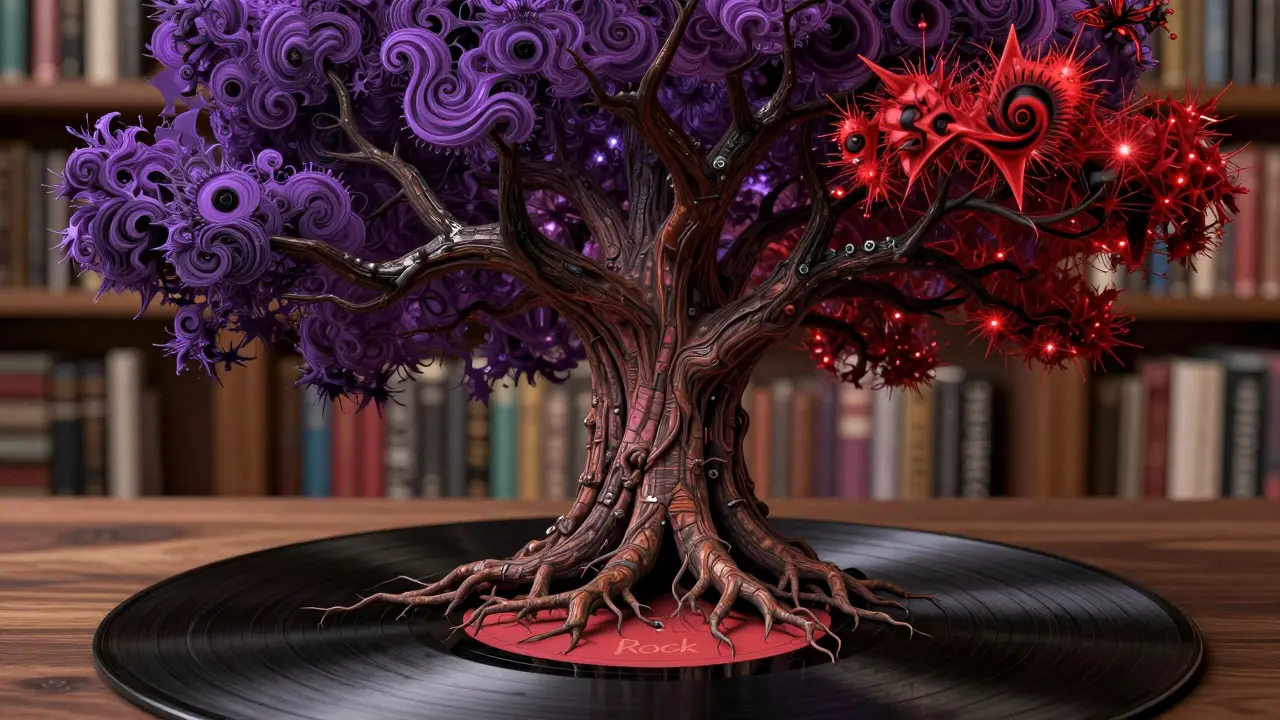
Music does not evolve in straight lines. It grows like a tree. At the base, you have broad genres like Rock, Jazz, Electronic, or Hip Hop. As these styles mature, artists begin to experiment. They tweak the tempo, change the instrumentation, or borrow elements from other traditions. When enough people start doing this, a new branch forms. This is a subgenre.
Consider Rock. It started as a rebellion against the polished sound of early 1950s pop. But by the late 1960s, bands began pushing boundaries. Some slowed down and added psychedelic effects, creating Psychedelic Rock. Others sped up and turned up the distortion, leading to Heavy Metal. From there, it splits again. Thrash Metal emerges from Heavy Metal, focusing on speed and aggression. Death Metal takes it further with growled vocals and complex rhythms. Each step away from the root creates a more specific identity. Knowing where a subgenre sits on this tree helps you understand its history and why it sounds the way it does.
Sonic Fingerprints: Identifying Key Elements
You can identify a subgenre by looking at three main components: rhythm, instrumentation, and production style. These are the sonic fingerprints.
- Rhythm and Tempo: The heartbeat of the track. Drum and Bass operates at 170-180 beats per minute (BPM) with a breakbeat pattern. In contrast, Lo-Fi Hip Hop usually sits around 70-90 BPM with a laid-back, swung drum feel. If you hear a fast, driving beat, you are likely in an electronic or punk-adjacent territory. A slow, syncopated groove points toward Soul, R&B, or certain types of House music.
- Instrumentation: What instruments are present? Indie Folk relies heavily on acoustic guitars, banjos, and harmonicas. Synthwave uses analog synthesizers to recreate the sound of 1980s movie scores. If you hear a distorted electric guitar playing power chords, you are probably in Rock or Metal. If you hear a prominent bassline with minimal percussion, think Funk or Dubstep.
- Vocal Style: How does the singer deliver the lyrics? Rap involves rhythmic speech over a beat. Operatic singing requires classical technique. Sprechgesang, a spoken-sung style, appears in genres like Neue Deutsche Welle or some experimental electronic music. The delivery method often dictates the subgenre more than the melody itself.
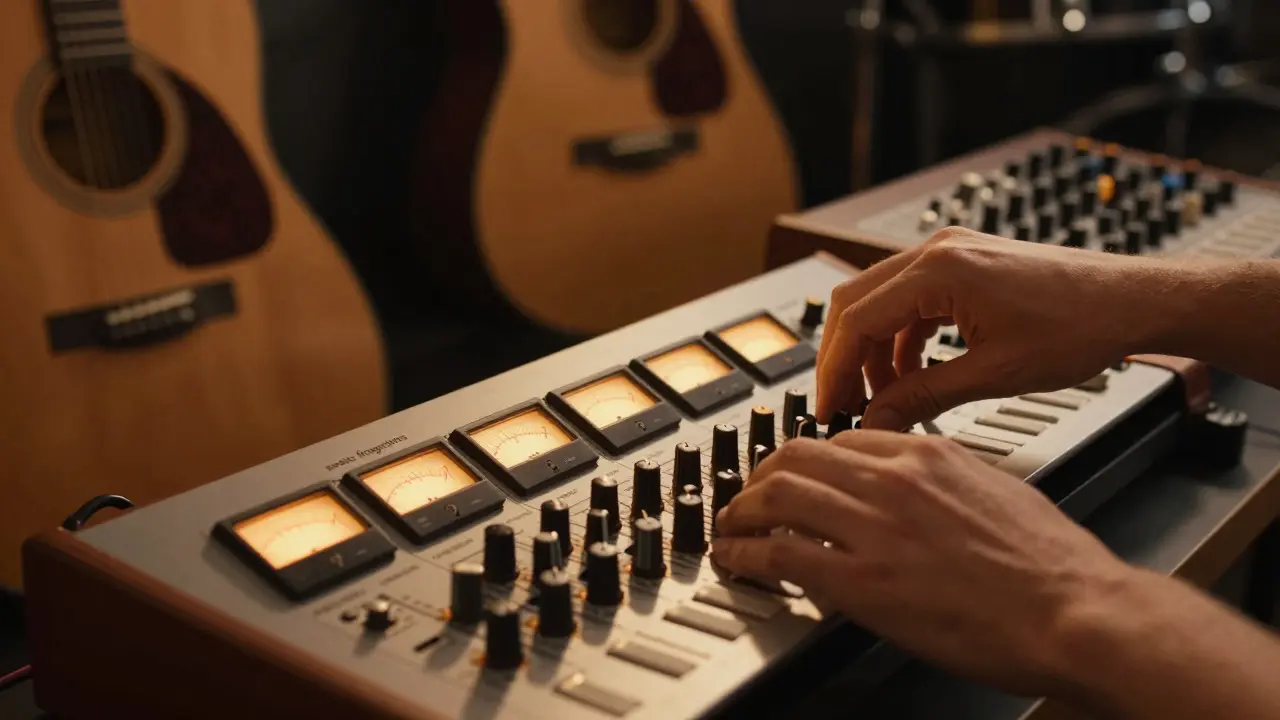
Production techniques also play a huge role. Vaporwave, for instance, is defined by its use of slowed-down samples, reverb, and pitch-shifting to create a dreamy, nostalgic atmosphere. Without those specific production choices, it would just be generic pop. The way a record is mixed and mastered is part of its genetic code.
Regional Roots and Cultural Context
Where a subgenre originates shapes its sound. Geography influences the available instruments, the local climate, and the social issues artists want to address. Take Reggae. It evolved in Jamaica during the 1960s, blending American R&B and jazz with traditional mento and calypso. The distinctive 'one-drop' rhythm, where the emphasis is on the third beat, reflects the relaxed yet resilient spirit of Jamaican culture. You cannot fully understand Reggae without understanding its roots in Kingston.
Similarly, K-Pop is not just a style of singing; it is a highly structured industry model originating in South Korea. It combines catchy hooks, precise choreography, and visual aesthetics into a cohesive package. The subgenre thrives on group dynamics and fan engagement strategies that differ significantly from Western pop models. Ignoring the cultural context leads to a superficial understanding of the music.
| Parent Genre | Subgenre | Key Characteristics | Origin Era/Region |
|---|---|---|---|
| Electronic | Techno | Repetitive 4/4 beat, synthesized sounds, industrial texture | 1980s, Detroit, USA |
| Electronic | House | Four-on-the-floor kick drum, soulful vocals, disco influence | 1980s, Chicago, USA |
| Rock | Punk | Fast tempos, short songs, raw production, anti-establishment lyrics | 1970s, New York/London |
| Rock | Shoegaze | Wall of sound, heavy reverb, obscured vocals, melodic focus | 1980s, UK |
| Hip Hop | Trap | Rapid hi-hats, deep 808 bass, dark melodies, triplet flows | 1990s/2000s, Atlanta, USA |
The Blurring Lines: Hybrid Genres
In today’s digital age, strict boundaries are disappearing. Artists freely mix elements from different worlds, creating hybrid subgenres. Country Rap, for example, blends storytelling and twang with hip-hop beats. Artists like Lil Nas X popularized this fusion, challenging purists who insist genres must remain separate. Is it Country? Is it Rap? It is both, and that duality is its strength.
Another example is Jazz-Fusion. It takes the improvisational freedom of Jazz and combines it with the electric instruments and rock rhythms of the 1970s. Bands like Weather Report created a sound that was sophisticated yet danceable. These hybrids show that music is fluid. Trying to force a song into one box often misses the point of its innovation.
Why Labels Matter (And When They Don't)
Labels help us navigate the overwhelming amount of music available. Streaming algorithms rely on tags to recommend songs. If you like 'Math Rock,' the system needs to know what that means-complex time signatures, interlocking guitar parts-to suggest similar tracks. Without these classifications, discovery becomes random.
However, labels can also limit perception. If you label a band as 'Indie,' you might expect a certain lo-fi aesthetic. If they release a polished, major-label sounding album, fans might reject it, even if the songwriting is strong. Over-reliance on subgenre tags can create echo chambers where listeners only hear what fits their preconceived notions. It is important to listen first and label second.
How to Expand Your Musical Horizons
If you want to deepen your understanding of subgenres, start by picking one parent genre you already love. Then, explore its branches. If you like Pop, look into City Pop, Bubblegum Bass, or Hyperpop. Notice how each changes the core formula.
- Listen actively: Pay attention to the drums, the bass line, and the vocal processing. Ask yourself what makes this different from the last song I heard?
- Read liner notes and interviews: Artists often explain their influences. Knowing that a producer used a specific vintage drum machine can reveal why a track has that gritty texture.
- Explore regional scenes: Dive into the music of a specific city during a specific decade. For example, exploring Manchester in the late 1980s will introduce you to Madchester and Baggy, a blend of indie rock and acid house.
Understanding subgenres transforms passive listening into active engagement. You start to hear the connections between songs decades apart. You realize that the bassline in a modern EDM track echoes the funk records of the 1970s. This knowledge enriches every moment you spend with music.
What is the difference between a genre and a subgenre?
A genre is a broad category of music, such as Rock, Jazz, or Electronic. A subgenre is a more specific style within that category, characterized by distinct musical features. For example, Punk is a subgenre of Rock, and Techno is a subgenre of Electronic music. Subgenres share the core elements of their parent genre but add unique twists in rhythm, instrumentation, or production.
Why do new music subgenres keep emerging?
New subgenres emerge because artists constantly seek to innovate and express new ideas. As technology evolves, so do the tools available for making music. Additionally, cultural shifts and social movements influence how people create and consume art. When a group of artists starts experimenting in a similar direction, a new subgenre is born.
Can a song belong to multiple subgenres?
Yes, many songs blend elements from different subgenres, creating hybrid styles. For instance, a track might combine the lyrical themes of Folk with the electronic production of Ambient music. These crossovers are common in modern music and reflect the fluid nature of artistic expression.
How do streaming services classify music subgenres?
Streaming platforms use a combination of human curators and algorithmic analysis to classify music. Algorithms analyze audio features like tempo, key, and energy levels, while curators assign tags based on cultural context and artist intent. This dual approach helps ensure accurate recommendations for listeners.
Is it important to know music subgenres?
Knowing subgenres enhances your listening experience by helping you discover new music and understand its historical context. It allows you to communicate more precisely about what you like and enables deeper appreciation of the technical and creative choices artists make. However, it is not strictly necessary to enjoy music; personal connection matters most.