Hip Hop Culture Quiz
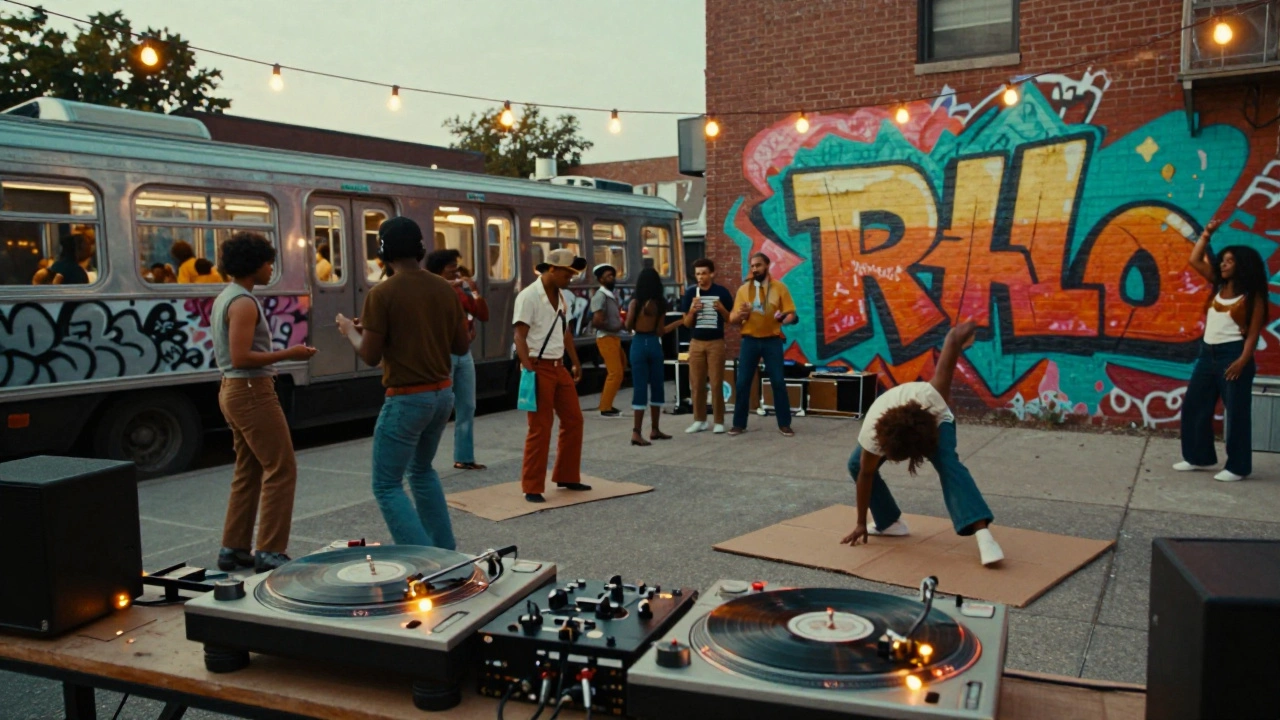
Hip hop music didn’t start in a studio. It didn’t begin with a record deal or a viral TikTok clip. It started on street corners in the Bronx, with DJs spinning breakbeats on two turntables, MCs rhyming over the rhythm, kids breaking dance in circles, and graffiti artists turning subway cars into canvases. This wasn’t just music-it was a full-blown language spoken through sound, movement, and color. And over 50 years later, it’s still the most adaptable, unpredictable, and powerful force in popular culture.
Where It All Began: The Bronx in the 1970s
In the early 1970s, the Bronx was dealing with economic collapse, urban decay, and systemic neglect. But in the middle of that, something raw and brilliant was being built. Block parties became the heartbeat of the neighborhood. DJs like Kool Herc, Afrika Bambaataa, and Grandmaster Flash started isolating the instrumental breaks in funk and soul records-the parts people danced to the hardest. They’d use two turntables to extend those breaks, creating a continuous rhythm. That’s how the breakbeat was born.
MCs stepped in to hype the crowd. At first, they just shouted simple lines like “Give the drummer some!” or “You’re a fool if you think you can dance like me!” But soon, rhymes got more complex. Wordplay, rhythm, and storytelling became the focus. This wasn’t singing. It was speaking with a beat-and it was revolutionary.
Meanwhile, graffiti artists like Lee Quiñones and Dondi painted trains and walls with bold letters and characters. They weren’t just tagging names-they were claiming space in a city that had forgotten them. And b-boys and b-girls spun on cardboard, flipped, and froze in midair, turning sidewalks into stages. Hip hop wasn’t one thing. It was four elements: DJing, MCing, breaking, and graffiti. Together, they formed a culture that said: We’re here. We’re creative. And we’re not going away.
The Sound Evolves: From the Block to the Billboard
By the 1980s, hip hop had escaped the Bronx. It hit radio stations, then MTV, then record stores across the country. Run-D.M.C. brought rock guitars into rap with “Walk This Way,” teaming up with Aerosmith. LL Cool J dropped albums that sold over a million copies before he turned 20. Public Enemy used samples of James Brown and spoken-word poetry to deliver political messages with punch. Hip hop wasn’t just entertainment anymore-it was a megaphone.
On the West Coast, N.W.A. turned police brutality and gang life into hard-hitting truth. “F*** tha Police” wasn’t just a song-it was a protest. In the South, artists like OutKast and Geto Boys mixed soulful grooves with gritty narratives. The East Coast had Nas and The Wu-Tang Clan, who turned lyricism into an art form. Each region developed its own sound, its own slang, its own identity.
By the 1990s, hip hop was the biggest genre in America. It outsold rock. It dominated fashion. It changed how people talked. And it wasn’t just Black artists anymore. Latino, Asian, and white MCs started finding their voices. The genre stopped being about where you were from and started being about what you had to say.

Innovation That Never Stops
Hip hop’s secret weapon? It never stays still. Every decade, it reinvents itself.
In the 2000s, producers like Timbaland and The Neptunes brought electronic beats and odd time signatures into rap. Lil Wayne turned Auto-Tune into an emotional tool, not just a gimmick. Kanye West sampled soul records and layered them with orchestral strings, turning albums like My Beautiful Dark Twisted Fantasy into sonic masterpieces.
Then came trap music-hi-hats that snapped like gunfire, 808 bass that shook your chest, and lyrics about survival, street life, and success. Artists like Gucci Mane, Future, and Migos made trap the new standard. By 2015, trap beats were everywhere-from pop songs to video game soundtracks.
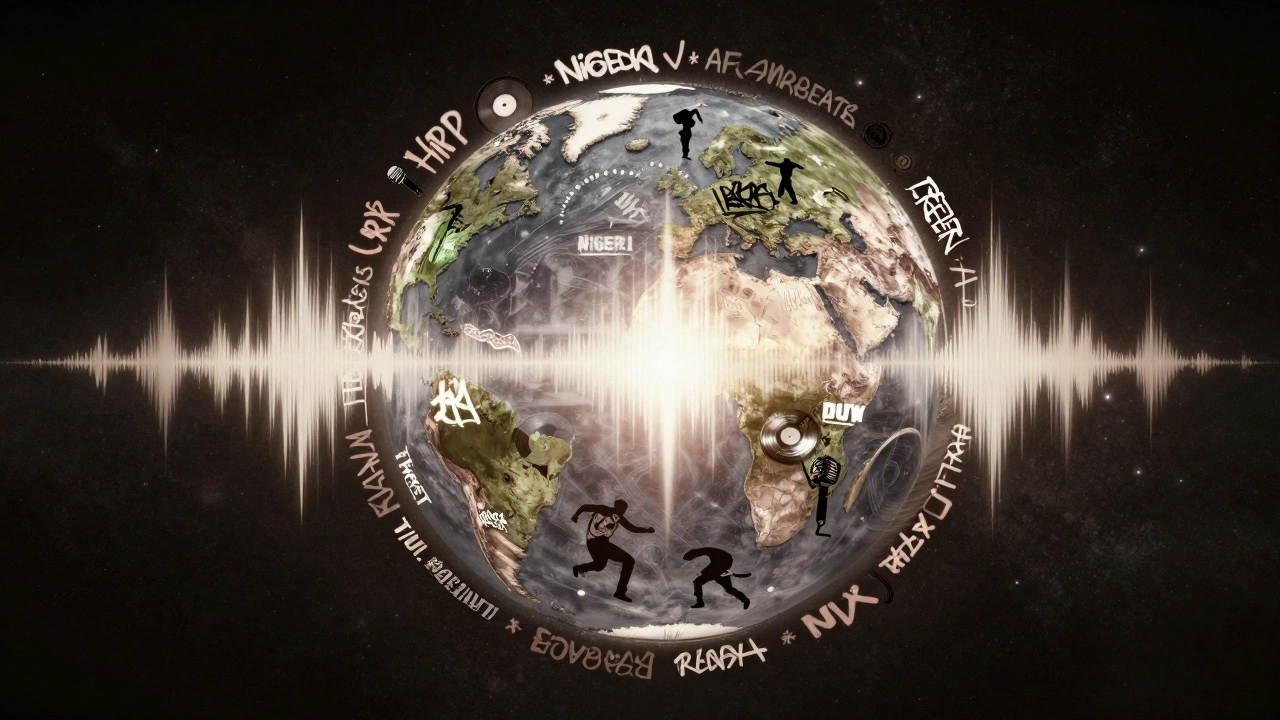
Today, hip hop is even more fragmented-and more powerful. Gen Z rappers like Ice Spice and Lil Uzi Vert blend melodic singing with rapid-fire bars. Female artists like Cardi B, Megan Thee Stallion, and Doja Cat own the charts with unapologetic confidence. International artists from Nigeria, the UK, South Korea, and Brazil are adding their own flavors. Nigerian afrobeats meet Atlanta trap. Korean rappers rhyme in English, Korean, and Spanglish. The lines between genres are gone.
Hip hop doesn’t just borrow from other styles-it eats them and spits out something new. Jazz samples. Rock riffs. Reggae rhythms. Electronic synths. Country twang. It doesn’t matter what it starts with. It always ends up sounding like hip hop.
Why It Still Matters
Why does hip hop still dominate? Because it’s the most honest genre left.
When you hear a rap verse, you’re not just hearing words. You’re hearing someone’s life. A kid from Compton describing his first gun. A girl from Chicago talking about her mom working three jobs. A guy in London telling his story of immigration and identity. Hip hop doesn’t sugarcoat. It doesn’t hide. It shouts, whispers, laughs, and cries-all in the same song.
It’s also the most democratic art form. You don’t need an instrument. You don’t need a studio. All you need is your voice, a beat, and something to say. That’s why it’s spread faster than any genre in history. From refugee camps in Kenya to high schools in Oslo, kids are writing raps because they have stories that need to be heard.
And it’s not just about music. Hip hop changed how we dress, how we talk, how we move. It gave us slang that became global. It made sneakers a status symbol. It turned street art into gallery pieces. It taught us that creativity can come from nothing-and still change the world.
The Future Is Everywhere
There’s no single “next big thing” in hip hop because there are a thousand things happening at once. In Atlanta, rappers are layering trap with gospel choirs. In Paris, French MCs are blending jazz and poetry. In Johannesburg, producers are fusing hip hop with amapiano beats. In Australia, young artists from Indigenous communities are using rap to reclaim language and history.
Technology plays a role too. AI-generated beats, voice modulation tools, and free DAWs mean anyone with a phone can make a hit. Platforms like SoundCloud and YouTube let unknown artists go viral overnight. The gatekeepers are gone. The only thing that matters now is authenticity.
Hip hop doesn’t care if you’re rich or poor, famous or unknown. It cares if you’ve got something real to say. That’s why it’s still alive. That’s why it’s still growing. And that’s why it’s not going anywhere.
It’s Not Just Music. It’s a Movement.
Hip hop music is more than beats and rhymes. It’s a response to silence. It’s a tool for the voiceless. It’s a way to turn pain into power, isolation into connection, and struggle into strength.
When you listen to a hip hop track, you’re not just hearing a song. You’re hearing a history. A protest. A celebration. A cry for justice. A laugh in the face of adversity.
And that’s why, no matter where you are in the world, if you’ve ever felt unheard-you’ll understand hip hop. Because it was never made for the spotlight. It was made for the people who never got one.
What are the four elements of hip hop culture?
The four original elements of hip hop culture are DJing (turntablism), MCing (rapping), breaking (breakdancing), and graffiti writing. These four pillars formed the foundation of hip hop in the 1970s in the Bronx. While DJing and MCing became the most visible in music, breaking and graffiti remain vital parts of the culture’s expression and identity.
Who is credited with starting hip hop music?
DJ Kool Herc is widely credited as the father of hip hop music. In 1973, at a back-to-school party in the Bronx, he used two turntables to extend the instrumental break sections of funk records-creating the first continuous dance beat. This technique, known as the breakbeat, became the backbone of hip hop. His parties inspired other pioneers like Afrika Bambaataa and Grandmaster Flash to build on his innovations.
How did hip hop spread globally?
Hip hop spread globally through music videos, movies like Wild Style and Beat Street, and the rise of cassette tapes and later, the internet. Artists in the UK, France, Japan, Brazil, and South Africa began adapting the sound to their own languages and struggles. Local scenes emerged, blending hip hop with regional music styles-like Afrobeat in Nigeria or amapiano in South Africa. Social media and platforms like YouTube removed traditional barriers, letting anyone with a mic and a beat reach a worldwide audience.
Why is hip hop considered a form of social commentary?
Hip hop emerged from marginalized communities facing poverty, racism, and police violence. Early rappers used their lyrics to document daily realities that mainstream media ignored. Groups like Public Enemy and N.W.A. directly addressed systemic injustice. Today, artists like Kendrick Lamar and J. Cole continue this tradition, using their music to explore identity, inequality, and mental health. Hip hop gives voice to experiences often silenced in other genres.
Can anyone make hip hop music?
Yes. Unlike many music genres that require formal training or expensive instruments, hip hop only requires a voice, a beat, and a message. With free software like Audacity or GarageBand, and beats available online, anyone can start making music today. The barrier to entry is low, but the standard for impact is high. What separates good hip hop from great hip hop isn’t equipment-it’s honesty, originality, and the ability to connect.
From the Bronx to Perth, from 1973 to 2025, hip hop has never needed permission to exist. It just needed people who had something to say-and the courage to say it loud.