
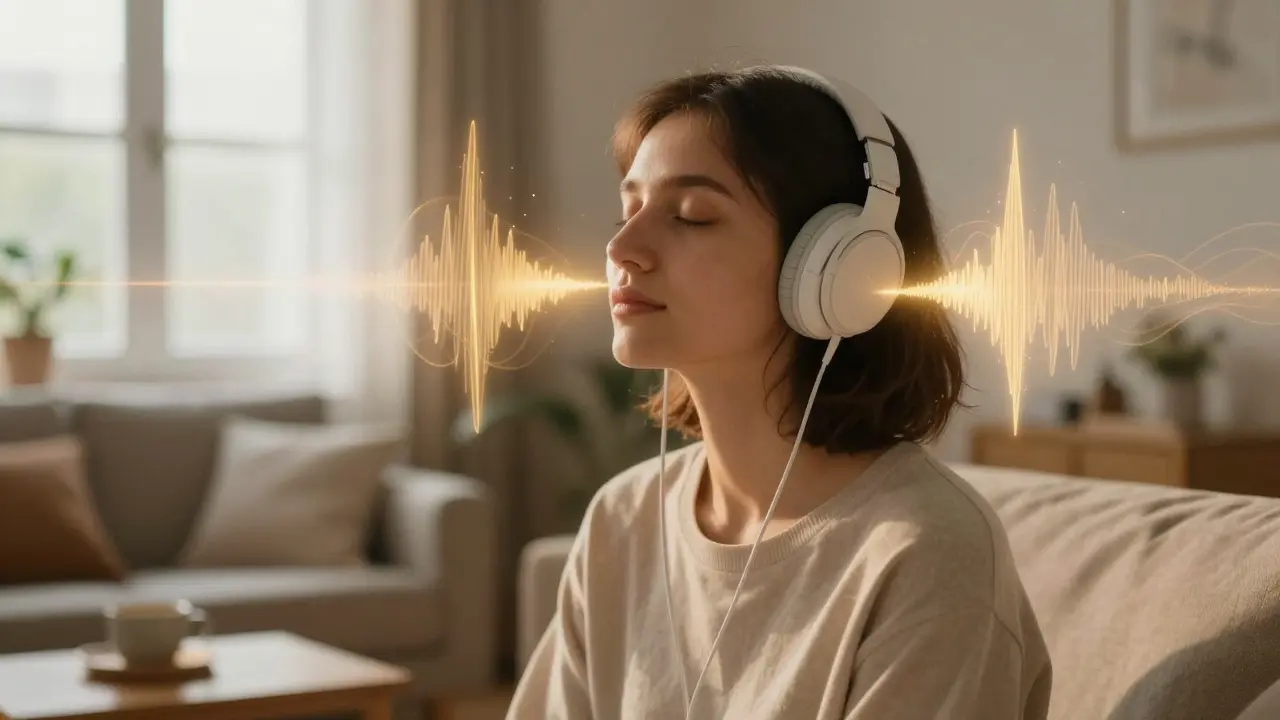
Key Takeaways for Your Mindful Listening Journey
- Active listening transforms music from a background hum into a meditative exercise.
- Different eras, like the Baroque or Romantic periods, affect your mood and focus differently.
- Combining orchestral sounds with breathwork can lower cortisol levels more effectively than silence.
- You don't need a degree in music theory to benefit from the emotional depth of a symphony.
The Science of Sound and Stillness
Why does a violin concerto feel different than a pop song? It comes down to the architecture of the music. Mindfulness is the psychological process of bringing one's attention to experiences occurring in the present moment without judgment. When you apply this to music, you're essentially performing a brain scan in real-time. You notice the tension in a chord, the breath of the flutist, and the sudden silence between movements.
Research into auditory stimulation shows that slow-tempo music-specifically pieces with around 60 beats per minute-can induce alpha brain waves. These are the same waves present when you're relaxed or in a light meditative state. When you listen to a Adagio (a slow movement), your heart rate tends to synchronize with the rhythm, a process called entrainment. This is why classical music mindfulness works; it's not magic, it's biology. Your body simply follows the lead of the conductor.
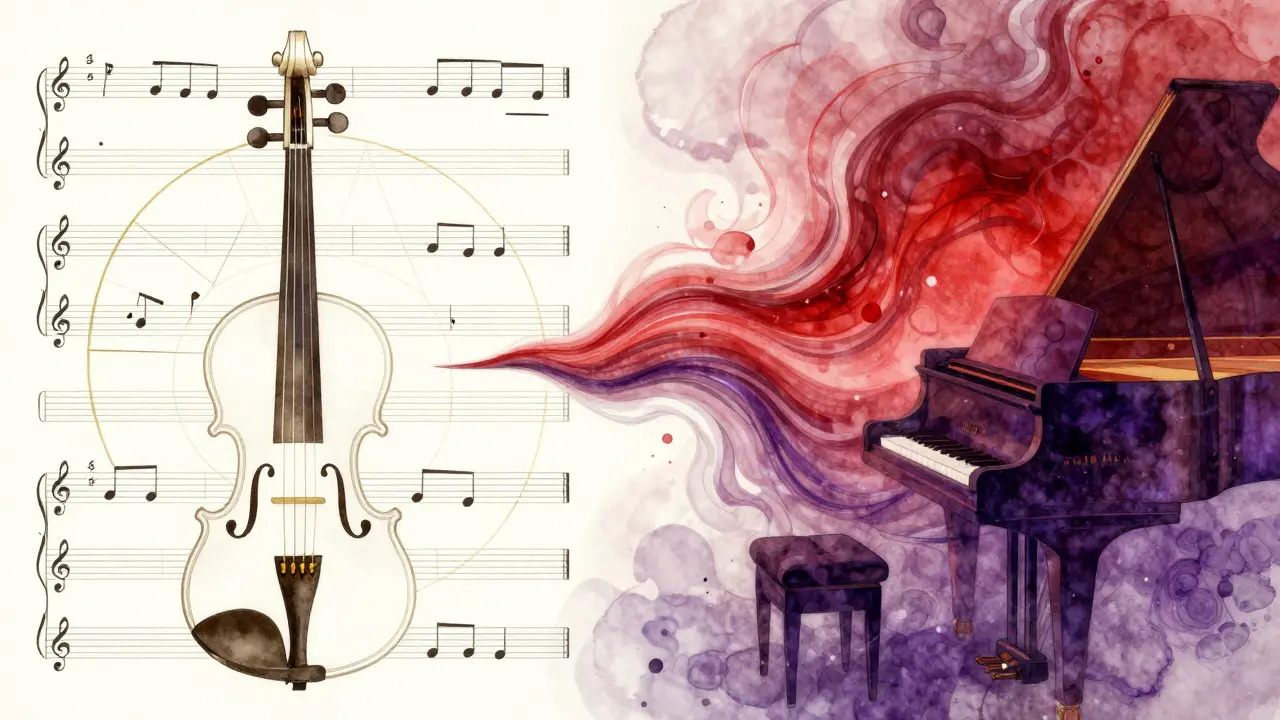
Choosing the Right Era for Your Mental State
Not all classical music is created equal. If you're trying to lower your blood pressure, blasting a loud Wagner opera probably won't help. You need to match the music to the "job" your mind needs to do. Depending on whether you need to focus, release grief, or simply breathe, different periods offer different emotional frequencies.
The Baroque Period, spanning roughly 1600 to 1750, is famous for its mathematical precision. Composers like Johann Sebastian Bach created works with a steady, predictable pulse. This makes Baroque music incredible for productivity and anxiety. Because the structure is so stable, your brain doesn't have to work hard to predict what comes next, which frees up mental energy for the present moment.
On the other hand, the Romantic Era is all about raw emotion. Think of Pyotr Ilyich Tchaikovsky or Frédéric Chopin. These pieces are less about stability and more about the "surge." If you are using mindfulness to process an emotion-like sadness or longing-these compositions provide a safe vessel for those feelings to exist and then pass through you.
| Era | Key Characteristic | Best For... | Example Composer |
|---|---|---|---|
| Baroque | Mathematical/Structured | Focus, Study, Anxiety | Vivaldi |
| Classical | Balanced/Clear | Mental Clarity, Order | Mozart |
| Romantic | Emotional/Expansive | Emotional Release, Catharsis | Beethoven |
| Impressionist | Atmospheric/Fluid | Deep Relaxation, Dreaming | Debussy |
How to Practice Active Listening
If you want to move from "hearing" to "listening," you need a strategy. Most of us are too distracted by our phones to actually hear the music. To turn a symphony into a meditation, try this specific approach. It's not about judging the music; it's about observing it.
- The Isolation Technique: Pick one instrument. Maybe it's the cellos or the horns. For five minutes, try to follow only that instrument's melody, ignoring everything else. When your mind wanders to your to-do list, gently bring it back to the sound of the cello.
- The Physical Scan: Close your eyes. As the music swells, notice where you feel it in your body. Does a high violin note create a tingle in your chest? Does a deep bass drum feel like a vibration in your stomach?
- Breath Synchronization: Inhale during the build-up of a phrase and exhale during the resolution. This ties your physiological state directly to the musical narrative, creating a loop of relaxation.
A great starting point for this is Erik Satie. His Gymnopédies are almost designed for this. They are slow, sparse, and give you plenty of "white space" to simply exist without being overwhelmed by sound.

Common Pitfalls in Musical Meditation
A lot of people make the mistake of trying to "force" a feeling. They play a "relaxation" playlist and get frustrated when they still feel stressed. Mindfulness isn't about forcing yourself to be calm; it's about noticing that you're stressed and allowing the music to be the companion to that stress.
Another trap is the "perfectionist's ear." You don't need to know what a sonata is or understand the difference between a major and minor key to benefit from this. If you spend your time wondering if you're "listening correctly," you've left the present moment. The only "correct" way to listen is to notice the sound as it happens. If the music sounds discordant or annoying, notice that feeling. That's mindfulness.
Building Your Mindful Soundscape
You don't have to spend three hours listening to a full opera to get the benefits. In fact, shorter, intentional bursts are often more effective for modern lifestyles. Consider creating "anchor points" in your day. Use a specific piece of music to signal to your brain that it's time to shift gears.
For example, use a short Nocturne (a short, lyrical piece inspired by the night) during your lunch break. This acts as a mental palate cleanser, wiping away the stress of the morning before you start the afternoon. When you associate a specific melody with a state of calm, your brain eventually creates a shortcut. After a few weeks, simply hearing the first three notes of that piece can trigger a relaxation response in your body.
Do I need high-end headphones to experience this?
Not at all. While high-fidelity audio can help you hear subtle details (like the breathing of a performer), the psychological benefits of mindfulness come from your attention, not your hardware. A simple pair of earbuds or even a room speaker is plenty. The goal is to focus on the sound, regardless of the quality.
What if I find classical music boring?
Boredom is actually a great gateway to mindfulness. When you feel bored, your mind starts to wander. Use that as a cue. Instead of switching the song, ask yourself: "What does this boredom feel like in my body?" By observing the boredom, you're practicing mindfulness. Also, try switching genres within classical-move from the rigidness of Bach to the dreamlike quality of Claude Debussy.
Can I listen to this while working?
Yes, but that's "passive listening." To get the mindfulness benefits, you need "active listening," which requires your full attention. If you're working, the music is just a tool for focus. To truly reset your nervous system, give yourself at least 10 minutes of dedicated, eyes-closed listening.
Are there specific composers best for sleep?
Look for composers of the Impressionist movement, like Maurice Ravel or Debussy. Their music often lacks a heavy, driving beat and instead feels like a wash of sound. This lack of a strong rhythmic "demand" allows the brain to drift more easily into sleep.
Does it matter if the music is recorded or live?
Live music is often more powerful because you can feel the physical vibrations of the instruments, which enhances the somatic experience. However, recordings allow you to control the environment and repeat specific sections that you find particularly calming, which is helpful for structured meditation.